Elli Rhiannon Müller Osborne
Thale Berg

“All werewolves have a story. This is the Norwegian one.”
After witnessing a grotesque murder at a party in her new town, a teenager starts having strange visions and bizarre desires.
Official
I’ve seen enough werewolf movies to know the drill: the full moon rises, the teeth come out, the blood sprays. But Viking Wolf doesn’t just follow the rules—it buries them under a foot of Norwegian snow and lets the cold do the talking. This isn’t a film about transformation; it’s about the thing that comes after, when the fur recedes and the girl is left staring at her own hands, wondering what they’ve done.
And whether they’ll do it again.
The first image that sticks with me isn’t the violence—though there’s plenty of that, sudden and messy—but the way the camera lingers on Thale’s (Elli Rhiannon Müller Osborne) face after she wakes from a nightmare. She’s not screaming. She’s just there, her breath fogging the air in her bedroom, her eyes wide but unblinking, like she’s already accepted what’s coming.
That stillness is the film’s secret weapon. Scandinavian horror has a knack for turning quiet into dread (Let the Right One In did it with a vampire; Thelma with a girl’s repressed powers), and Viking Wolf leans hard into the idea that the scariest monsters aren’t the ones that chase you, but the ones that grow inside you, cell by cell, until you don’t recognize yourself anymore.
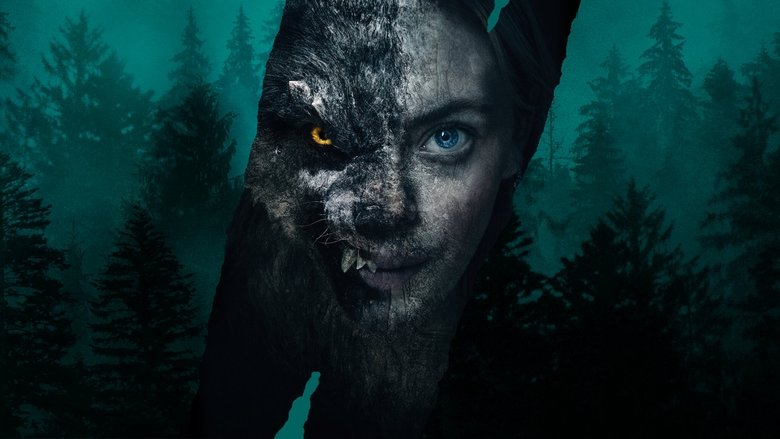
Director Stig Svendsen has a background in tension-heavy thrillers (Hidden, The Tunnel), and it shows in the way he paces the film’s early acts. The first kill happens at a party—because of course it does, where else would teenagers invite doom?—but the real horror isn’t the gore (though the practical effects here are impressively tactile, all snapping bones and glistening fur).
It’s the way the camera refuses to look away from Thale’s face as she watches, her expression caught between horror and something dangerously close to fascination. That ambiguity is the film’s spine. Is she a victim?
A predator? Or just a girl who’s finally realizing that the world isn’t as simple as she thought?
The werewolf myth has always been a metaphor in search of a home—lust, puberty, addiction, the beast within. Viking Wolf roots its version in Norse folklore, but it’s less interested in the lore itself than in what it means to carry it. The title isn’t just a gimmick; it’s a promise. This isn’t another werewolf story.
It’s the Norwegian one. And in Norway, where the winters are long and the nights are longer, the line between myth and reality has always been thinner. The film leans into that cultural DNA, using the country’s stark landscapes as more than just a backdrop.
The forests aren’t just trees; they’re a labyrinth, a place where the rules of civilization don’t apply. The snow isn’t just cold; it’s a blank slate, ready to be stained.
That said, the film isn’t without its stumbles. The second act drags in places, particularly when it leans too heavily on the procedural elements of the mystery. There’s a subplot involving Thale’s mother (Liv Mjönes) and a local cop (Vidar Magnussen) that feels like it belongs in a different movie—one with fewer werewolves and more small-town politics.
The dialogue, too, can be clunky, especially in the English subtitles, where the translation occasionally loses the rhythm of the original Norwegian. (There’s a moment where Thale snaps at her mother, “You don’t know what I’m going through,” and it lands with all the subtlety of a sledgehammer. Sometimes, though, that’s the point.
Teenagers are sledgehammers.)
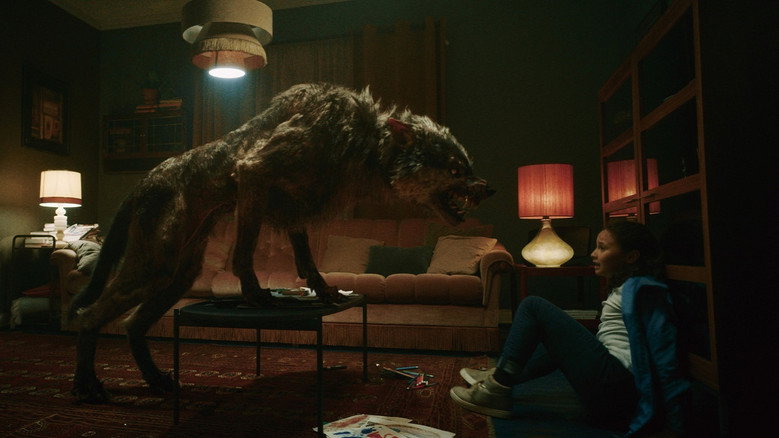
But the film’s strengths far outweigh its missteps. The practical effects, for one, are a revelation. Too many modern horror films rely on CGI werewolves that look like they were rendered in a high school computer lab. Viking Wolf’s creature is a hulking, fur-covered nightmare, all muscle and teeth, and the way it moves—low to the ground, almost feline—makes it feel like something that could actually exist in the wild.
The transformation scenes are brutal, but they’re also oddly beautiful, like watching a body reject its own humanity. And the sound design! The crunch of snow underfoot, the wet snap of bone breaking, the guttural growls that vibrate in your chest—it’s immersive in a way that too many horror films forget to be.
The real star, though, is Elli Rhiannon Müller Osborne. She carries the film with a quiet intensity that’s rare for a young actor. There’s a scene midway through where Thale, now fully aware of what she’s becoming, stares at her reflection in a mirror.
She doesn’t scream. She doesn’t cry. She just looks, her fingers tracing the faint scars on her skin, her breath shallow.
It’s a small moment, but it’s the kind that lingers. Osborne doesn’t play Thale as a victim or a monster. She plays her as a girl who’s trying to outrun something that’s already part of her.
And that, more than any jump scare or gory kill, is what makes Viking Wolf worth watching.
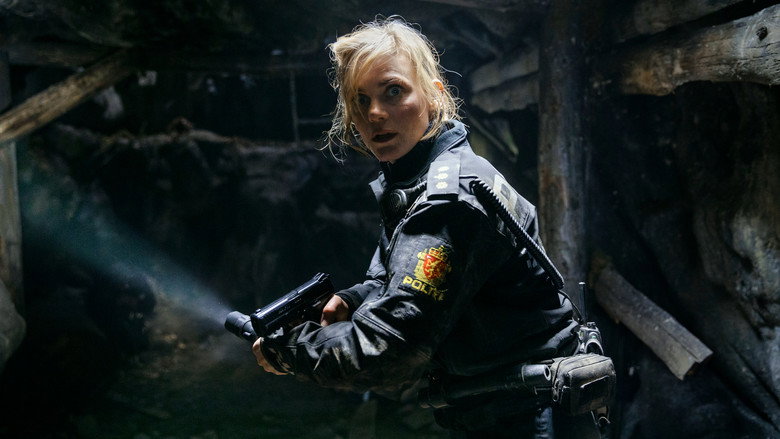
The film’s reception has been… mixed, to put it kindly. SensCritique gave it a 4.5/10, and while I wouldn’t go that far, I can see why it didn’t land for everyone. It’s not a film that holds your hand.
It doesn’t explain its mythology or spell out its themes. It trusts the audience to keep up, and if you’re not paying attention, it’s easy to get lost in the snow. But for those who are paying attention, Viking Wolf offers something rare in modern horror: a story that’s as much about the aftermath of violence as it is about the violence itself.
There’s a moment near the end where Thale, now fully transformed, stands at the edge of the forest, her breath ragged, her body trembling. She’s not howling at the moon. She’s just standing there, like she’s waiting for something.
Maybe for the world to tell her what she is. Maybe for the world to tell her it’s okay. The film never gives her an answer.
And that, in the end, is the point. The werewolf isn’t the monster. The monster is the question.
And the question is always the same: What do you do when you don’t recognize yourself anymore?
I don’t know if Viking Wolf will join the ranks of the great Scandinavian horror films. But I do know this: I haven’t stopped thinking about that girl in the snow. And I don’t think I will for a long time.
"A visually atmospheric but uneven Norwegian horror-thriller whose execution doesn't match its ambitious premise."
The eerie Scandinavian setting and the attempt to blend folklore with modern horror are strengths, but the plot is convoluted and the pacing inconsistent. The cast is solid, though some characters are underdeveloped, leaving the story’s potential unfulfilled.
Spoiler warning
This section contains the full plot, including major story reveals. Overview above stays spoiler-free.
Netflix’s Viking Wolf (2022) brought a fresh twist to the werewolf genre, blending Nordic horror with a modern thriller edge. Directed by Stig Svendsen, the film follows a small Norwegian town rocked by a series of brutal murders tied to a mythical beast. latestnetflix.com's take is that while the movie’s premise is gripping, details about its production remain surprisingly scarce—leaving fans to piece together what little is known.
Viking Wolf stands out as one of the few Norwegian-language horror films to gain international attention, thanks to its Netflix release. The movie stars Elli Rhiannon Müller Osborne as Thale, a teenager who uncovers dark secrets about her town’s violent past. Liv Mjönes co-stars as her mother, a police officer investigating the killings, while Arthur Hakalahti and Vidar Magnussen round out the cast.
The film’s original title, Vikingulven, hints at its cultural roots, though Netflix rebranded it as Viking Wolf for global audiences. Clocking in at 97 minutes, it balances horror and thriller elements, earning mixed but passionate reactions—with some viewers praising its atmosphere and others critiquing its pacing.
Behind-the-scenes details are thin, but a few key points emerge:
Critics and audiences have been divided. SensCritique users rated it 4.5/10 based on 432 votes, calling it a flawed but ambitious effort. Meanwhile, YouTube reviews—ranging from Hindi explainers to English-language breakdowns —debate its ending, lore, and whether it lives up to classic werewolf tropes.
Rumors about a sequel or expanded universe remain unconfirmed. Given the film’s cult following, speculation persists, but no official announcements have been made.
Viking Wolf’s appeal lies in its fresh setting. Unlike most werewolf stories set in North America or the UK, it leans into Norwegian folklore and wintery isolation. The trailer’s eerie tone and Netflix’s global reach helped it find an audience, even if its reception was uneven.
For now, the film remains a curious entry in Netflix’s horror library—one with untapped potential but few concrete details about its making.
Entertainment rumors and trivia aggregated from public reporting. Treat speculation as unverified unless a cited source confirms it.
More titles in the same genres and with the same cast.