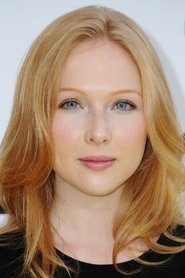
Molly C. Quinn
Sister Mary
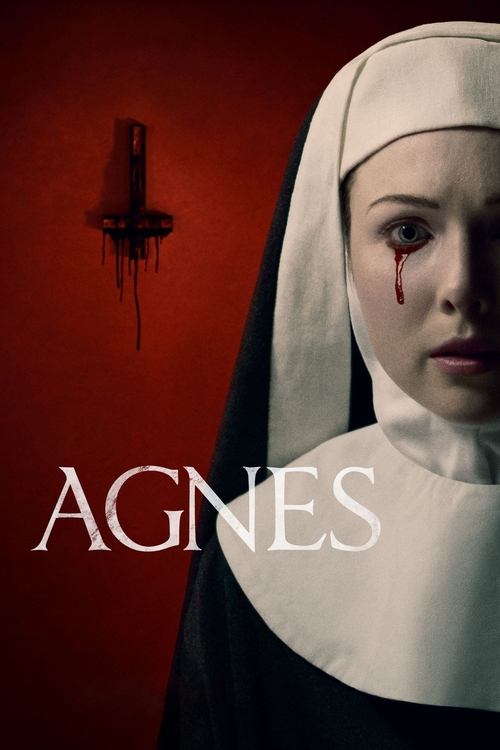
Rumors of demonic possession at a religious convent prompts a church investigation into the strange goings-on among its nuns. A disaffected priest and his neophyte are confronted with temptation, bloodshed and a crisis of faith.
Official
Molly C. Quinn
Sister Mary
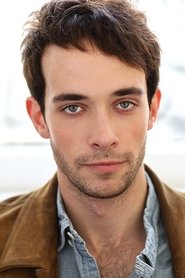
Jake Horowitz
Benjamin

Hayley McFarland
Sister Agnes

Rachel True
Sister Ruth

Zandy Hartig
Sister Honey
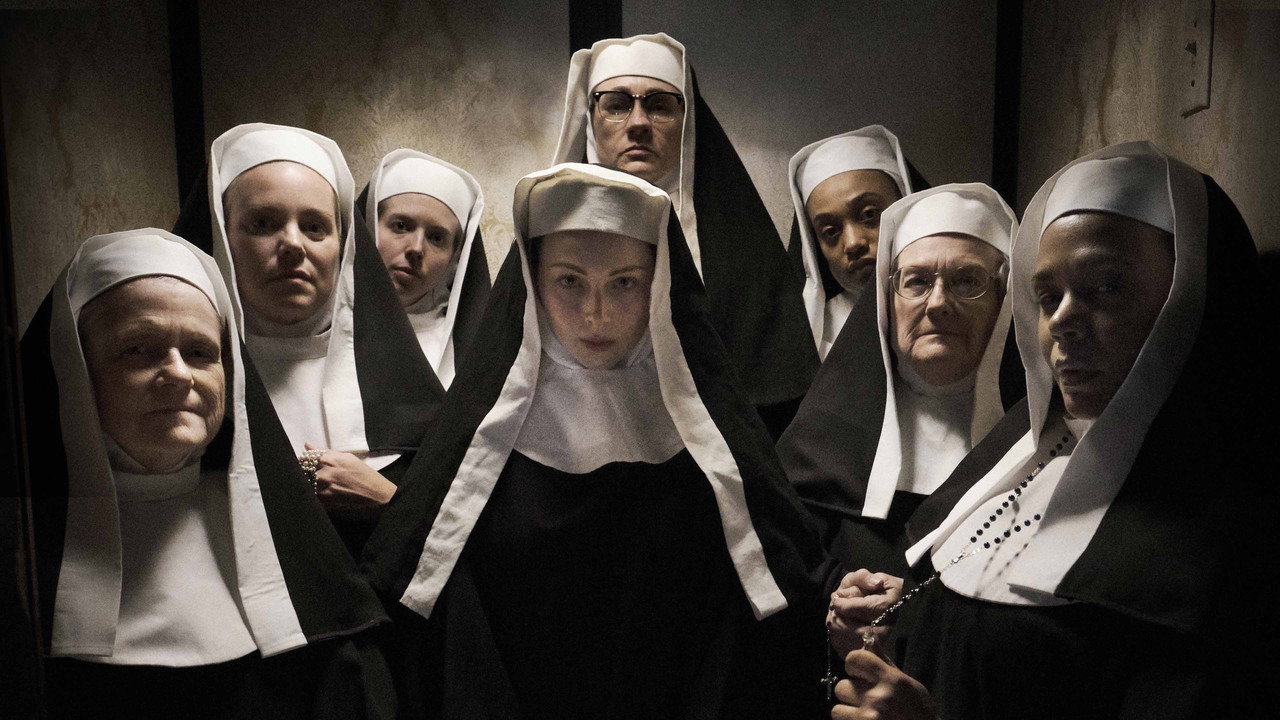
I went into Agnes expecting the usual: a slow-burn convent horror, crucifixes glinting in candlelight, nuns whispering Latin under their breath. What I got instead was something far quieter—and far more interesting. Mickey Reece’s film doesn’t just subvert the exorcism genre; it sidesteps it entirely, treating the demonic possession at its center like a prologue rather than the main event.
The real horror, it turns out, isn’t the devil. It’s the silence that follows.
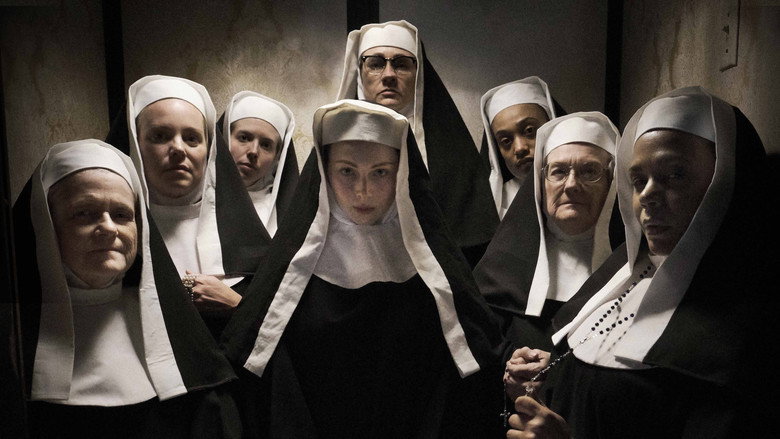
The film opens with a jolt: a young nun, Mary (Molly C. Quinn), watches in frozen horror as her friend Agnes convulses on the floor, her body twisting in ways that defy anatomy. The camera doesn’t flinch.
It holds on Mary’s face—her wide eyes, her clenched jaw—as if daring us to look away. But then, just as suddenly as it began, the exorcism is over. The priest intones his final blessing, the demon is cast out (or so we’re told), and the film cuts to black.
When we return, Agnes is gone. The convent is empty. And the real story begins.
This is where Agnes reveals its hand. The exorcism wasn’t the point. It was the inciting incident, the spark that sets the rest of the film’s slow, smoldering fuse.
What follows is less a horror movie and more a character study of faith in freefall, with Father Black (Jake Horowitz), a disaffected priest, and his wide-eyed neophyte, Father Ben (Ben Hall), sent to investigate the rumors of possession. Their arrival at the convent feels like stepping into a ghost story, but the ghosts here aren’t supernatural. They’re the specters of doubt, of institutional rot, of the unspoken sins that fester in places meant to be holy.
Reece’s direction is deliberate, almost languid, as if he’s in no hurry to get to the next scare. The camera lingers on empty corridors, on the play of light through stained glass, on the way the nuns move through the space like figures in a dream. There’s a hypnotic quality to it, a sense that we’re watching something unfold in real time.
(Or maybe that’s just the film’s 93-minute runtime stretching out like a held breath.) The horror, when it comes, isn’t in jump scares or gore—though there’s a moment involving a pair of scissors that made me wince—but in the creeping realization that the real evil might be the system itself.
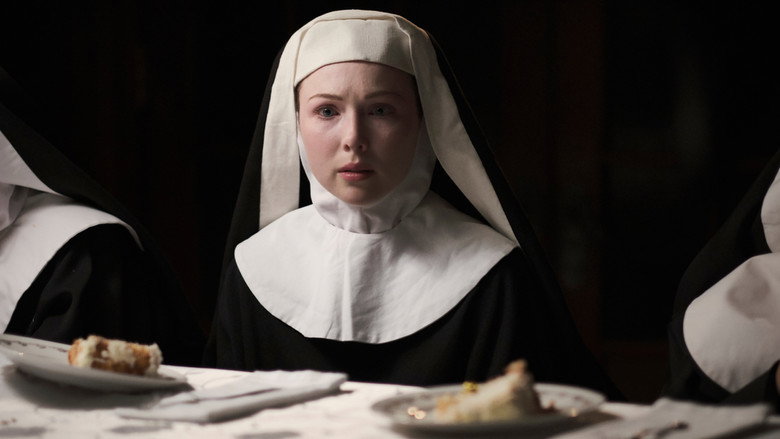
Molly C. Quinn is the film’s secret weapon. As Mary, the nun who witnessed Agnes’s possession, she carries the weight of the story in her silence.
There’s a scene midway through where she sits across from Father Black, her hands folded in her lap, her gaze steady. He asks her what she saw. She doesn’t answer.
Not because she’s hiding something, but because she doesn’t have the words. Quinn plays this moment with a restraint that’s devastating. You can see the memory of what she witnessed flickering behind her eyes, but she’s not going to give it to him—not because she’s defiant, but because some things can’t be put into language.
It’s a masterclass in understatement, and it’s the emotional core of the film.
The supporting cast is equally strong, particularly Rachel True as Sister Ruth, a nun whose dry wit masks a deep well of sorrow. There’s a moment where she tells Father Black, “We’re not monsters, Father. We’re just women who’ve been forgotten.” It’s a line that lands like a punch, not because it’s showy, but because it’s so matter-of-fact.
The film is full of these small, cutting observations about faith and gender, about the way institutions chew up the people who serve them. It’s not preachy, though. Reece trusts the audience to connect the dots.
That said, Agnes isn’t without its flaws. The pacing lags in the middle act, and there’s a subplot involving a missing nun that feels underdeveloped. (I kept waiting for it to pay off, but it fizzles out like a damp firecracker.) And while the film’s refusal to lean into traditional horror tropes is refreshing, there are moments where it feels like it’s holding back too much.
A little more dread, a little more unease, might have elevated it from “interesting” to “unforgettable.”
But maybe that’s the point. Agnes isn’t interested in giving us the catharsis of a traditional horror film. It’s more concerned with the aftermath—the way trauma lingers, the way faith can curdle into doubt, the way silence can be its own kind of violence. RogerEbert.com called it an “effective—and unexpected—exorcism drama,” and that’s exactly right.
It’s not the exorcism that sticks with you. It’s the emptiness that comes after.
I left the theater thinking about that scene with Mary and Father Black. About the way she never answers his question. About the way some things can’t be explained, only endured. Agnes isn’t a film that wraps itself up neatly.
It’s messy, ambiguous, and at times frustratingly opaque. But that’s also why it works. Life doesn’t come with jump scares or neat resolutions.
Neither does faith. Neither, it turns out, does horror.
"A slow-burn horror-drama with an unconventional approach that divides opinion: its atmosphere wins praise, while its vagueness frustrates."
The film's eerie, offbeat tone and its cast, particularly Molly C. Quinn, add depth to the religious horror premise. But the story meanders without clear direction, leaves key questions unanswered, and the payoff disappoints anyone expecting traditional scares or a resolution.
Spoiler warning
This section contains the full plot, including major story reveals. Overview above stays spoiler-free.
Mickey Reece’s Agnes (2021) arrived with a quiet buzz, promising a fresh take on horror and drama. Starring Molly C. Quinn (Castle, The Rookie) and a supporting cast including Jake Horowitz and Sean Gunn, the film premiered at the Tribeca Film Festival, where its offbeat tone and layered storytelling caught attention. But what went into making this indie gem? latestnetflix.com's read is that Interviews with Reece and Quinn offer a peek behind the curtain—without the usual Hollywood hype.
Reece didn’t set out to make a conventional horror film. In interviews, he described Agnes as a blend of genres, inspired by an unlikely mix: the grit of Dead Presidents (1995) and the eerie atmosphere of nun-themed horror. "I wanted to make Dead Presidents," Reece admitted in one clip, clarifying that he aimed for a story with weight, not just scares. The film follows a group of nuns whose lives unravel after a traumatic exorcism, but Reece’s focus was on character depth over jump scares.
Quinn, who plays the titular Agnes, echoed this approach. In multiple interviews, she praised Reece’s ability to balance drama and horror, calling the script "unlike anything [she’d] read before". The director’s hands-on style—shooting in Oklahoma with a tight-knit crew—kept the production intimate, a far cry from the bloated budgets of mainstream horror.
For Quinn, Agnes marked a departure from her TV roles. Best known as Alexis Castle on Castle, she took a gamble on the indie project, drawn to its emotional core. "I loved that Agnes wasn’t just a victim," Quinn said in a Tribeca interview. "She’s complicated, and the film lets her be messy".
The role required physical and emotional intensity. Quinn’s performance—haunted, raw, and at times unsettling—became a talking point among critics. In a "hot seat" interview, she joked about the challenges of playing a nun, including the wardrobe (a habit that "smelled like mothballs") and the pressure of carrying a horror film. Reece, for his part, called her "fearless," noting that she embraced the role’s darker moments without hesitation.
Agnes was shot in Oklahoma, far from Hollywood’s usual horror hubs. Reece, a longtime indie filmmaker, leaned into the constraints, using local talent and minimal resources to craft the film’s eerie atmosphere. The cast bonded quickly—Quinn and Horowitz, in particular, developed a rapport that translated on-screen. Gunn, a frequent collaborator with James Gunn (Guardians of the Galaxy), brought a mix of humor and gravitas to his supporting role, though details about his character remain scarce.
The film’s 93-minute runtime reflects Reece’s disciplined approach. Unlike bloated studio horror, Agnes moves at a deliberate pace, prioritizing mood over cheap thrills. That said, the production wasn’t without its quirks. In one interview, Quinn and Reece laughed about the film’s most bizarre moment: a scene involving a live goat, which reportedly caused chaos on set. (No further details were shared—leaving fans to imagine the mayhem.)
Critics were divided. Some praised the film’s ambition and Quinn’s performance, while others found its slow burn frustrating. Rotten Tomatoes’ sparse reviews (as of the evidence) suggest a niche appeal, but Agnes has cultivated a cult following among horror fans who appreciate its offbeat tone.
As for the future, rumors swirl about a potential sequel or expanded universe, though nothing’s confirmed. Reece has hinted at more genre-blending projects, while Quinn has expressed interest in continuing to explore darker roles. For now, Agnes shows indie horror’s ability to surprise—when given the chance.
Entertainment rumors and trivia aggregated from public reporting. Treat speculation as unverified unless a cited source confirms it.
More titles in the same genres and with the same cast.