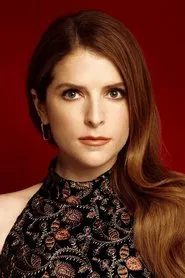
Anna Kendrick
Sheryl Bradshaw

“The perfect bachelor”
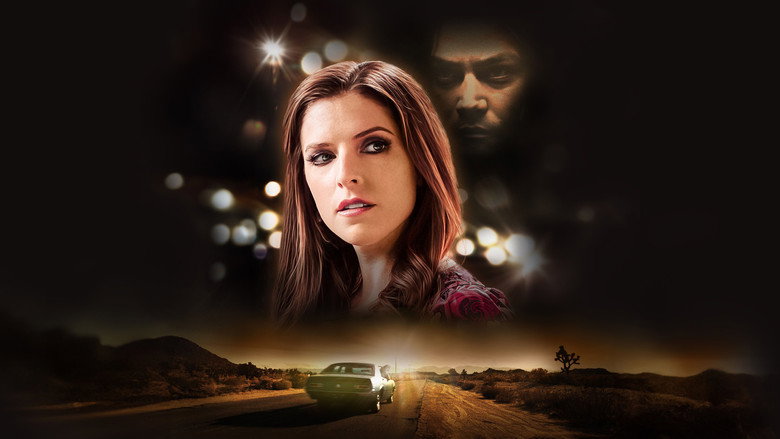
An aspiring actress crosses paths with a prolific serial killer in '70s LA when they're cast on an episode of "The Dating Game."
Official
I’ve rewatched the tiki-bar scene three times now, and each time I feel the same prickle at the back of my neck. Sheryl Bradshaw—played by Anna Kendrick in a performance that’s all quiet, coiled tension—sits across from Rodney Alcala, the man who would later be known as the Dating Game Killer. The camera lingers on her face, not his.
We see her eyes flicker, her smile tighten just a fraction. She’s reading him. Or trying to.
And in that moment, Woman of the Hour does something rare for a true-crime thriller: it makes the act of looking dangerous.
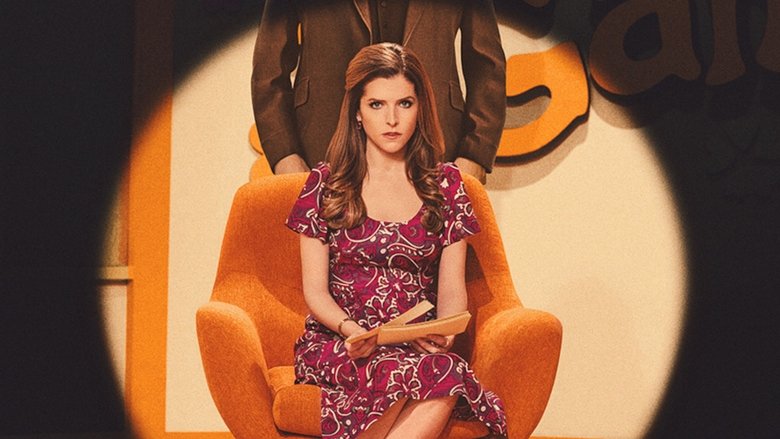
Kendrick’s directorial debut isn’t interested in the gore or the police procedural beats we’ve come to expect from stories about serial killers. Instead, it fixates on the gaze—who gets to look, who gets looked at, and what happens when those roles reverse. The film’s most unsettling moments aren’t the ones where violence is shown, but the ones where it’s implied through a shift in eye contact, a pause too long, a woman realizing she’s being studied like prey.
It’s a choice that feels deliberate, almost personal. Kendrick has spoken about how the project forced her to confront her own experiences with being objectified in Hollywood, and that discomfort seeps into every frame. This isn’t just a story about a killer; it’s a story about the women who see him before anyone else does.
The film’s structure mirrors its themes. We meet Sheryl in 1978 Los Angeles, an aspiring actress auditioning for The Dating Game, the campy, flirtatious TV show where a bachelorette quizzes three bachelors hidden behind a wall before picking one for a date. The premise is absurd, almost farcical—until it isn’t.
Rodney Alcala, playing the part of the charming photographer, wins the date. The real Cheryl Bradshaw refused to go out with him after the show, sensing something off. The film fictionalizes that refusal, turning it into a slow-burn cat-and-mouse game where Sheryl’s instincts become her only weapon.
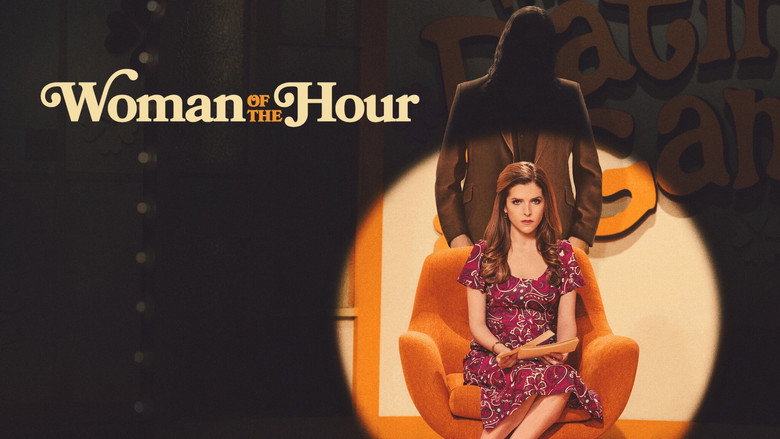
Kendrick’s direction is at its strongest in these moments of quiet dread. The walk to the parking lot after the show, for instance, is a masterclass in tension. Sheryl and Rodney move through the lot, the camera holding on their backs as they navigate the space between the studio and the real world.
There’s no score, no jump scares—just the sound of their footsteps and the hum of a distant freeway. It’s a minimalist exercise in suspense, and it works because Kendrick trusts the audience to feel the unease without being spoon-fed. The scene reminded me of the best moments in Zodiac or The Night Of, where the horror isn’t in what happens, but in what could happen.
That said, the film isn’t without its stumbles. The non-linear editing, which jumps between the game show, the tiki bar, and a later confrontation, can feel disjointed at times. Some critics, like Alissa Wilkinson in The New York Times, have noted that the script occasionally becomes "self-consciously illustrative," as if it’s afraid the audience won’t pick up on its themes without a nudge.
I’m not entirely sure that’s a flaw—sometimes a story should feel a little heavy-handed, especially when it’s grappling with something as monstrous as Alcala’s crimes. But there are moments where the film’s academic detachment clashes with its emotional core. The character of Laura (Nicolette Robinson), a composite of the women who tried to warn Sheryl, is underdeveloped, reduced to little more than a narrative device.
It’s a shame, because Robinson has a magnetic presence, and her scenes with Kendrick crackle with potential.
The real star here, though, is Kendrick’s performance. She’s always been a gifted comedic actress, but Woman of the Hour proves she can disappear into a role that demands something darker, more internal. Sheryl isn’t a scream queen or a damsel in distress.
She’s a woman who’s spent her life being told to smile, to be polite, to play the game—until the game becomes something else entirely. Kendrick communicates all of this through small, telling details: the way Sheryl’s fingers tighten around her purse strap, the way her voice lilts just a little too brightly when she’s nervous. There’s a moment during the game show where she locks eyes with a waitress in the audience, and the two share a look that says everything.
It’s a silent acknowledgment of the unspoken rules women navigate every day. I see you. You see me. We’re not safe.
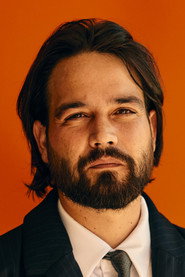
Daniel Zovatto, as Rodney Alcala, is equally compelling, though in a different way. He plays Alcala as a man who’s spent his life perfecting the art of charm, a predator who knows exactly how to disarm his prey. There’s a chilling scene where he recounts a story about photographing a woman who later accused him of assault.
His tone is light, almost wistful, as if he’s sharing a fond memory. It’s a performance that lingers, not because it’s showy, but because it’s convincing. Alcala wasn’t a monster in the traditional sense—he was a man who knew how to blend in, how to make people like him.
Zovatto captures that duality perfectly.
What Woman of the Hour does best is reframe the true-crime genre. Too often, these stories focus on the killers, turning them into antiheroes or objects of morbid fascination. Kendrick flips the script.
This is a film about the women who almost became victims, about the systems that failed them, and about the quiet, everyday courage it takes to trust your instincts. It’s not a perfect film—its pacing can drag, and its supporting characters often feel like afterthoughts—but it’s a necessary one. In an era where true crime has become a form of entertainment, Woman of the Hour forces us to confront the cost of that fascination.
I keep coming back to that tiki-bar scene. Sheryl is trying to figure out if Rodney is a threat, but she’s also trying to figure out if she’s allowed to see him as one. The film’s genius is in making us feel the weight of that question.
How many times have we all second-guessed our instincts because we didn’t want to seem rude, or paranoid, or ungrateful? How many times have we smiled when we wanted to scream? Woman of the Hour doesn’t just tell a story about a serial killer. It tells a story about the women who looked at him—and lived.
"A gripping but uneven true-crime drama whose strong performances struggle against a slow-burn narrative."
Anna Kendrick’s portrayal of Cheryl Bradshaw anchors the film with depth and authenticity. But the pacing and reliance on familiar crime-drama tropes call for more originality and tighter storytelling. The supporting cast fades into the background, leaving the central relationship as the main draw.
Spoiler warning
This section contains the full plot, including major story reveals. Overview above stays spoiler-free.
Anna Kendrick trades her signature comedic charm for a darker, more personal role in Woman of the Hour, her directorial debut that dives into the twisted true story of Rodney Alcala, the so-called "Dating Game Killer." latestnetflix.com's view is that The Netflix thriller, which premiered in 2024, marks a bold shift for Kendrick, who not only directs but also stars as Sheryl Bradshaw, a contestant on the 1970s dating show The Dating Game who unknowingly crossed paths with a serial killer.
Kendrick’s pivot to directing wasn’t just a creative whim—it was a deeply personal project. In interviews, she’s described Woman of the Hour as her "most revealing" film yet, pulling from her own "absurd" experiences in Hollywood to craft a story that blurs the line between horror and dark comedy. The film’s tone is a stark departure from her usual work, trading quippy rom-com energy for a slow-burn thriller that leans into the unsettling reality of Alcala’s crimes.
The movie’s script, written by Ian McDonald, is based on the true story of Alcala’s 1978 appearance on The Dating Game, where he won a date with contestant Cheryl Bradshaw (renamed Sheryl in the film). Bradshaw famously refused to go out with him after the show, sensing something off—a gut instinct that likely saved her life. Alcala, who was later convicted of multiple murders, was executed in 2021.
Kendrick isn’t the only familiar face in Woman of the Hour. The film’s ensemble includes Veep’s Tony Hale as Ed, the show’s host, and The Office’s Pete Holmes in a supporting role. But the standout performance might belong to Daniel Zovatto, who plays Rodney Alcala with eerie charm, embodying the killer’s unsettling mix of charisma and menace.
The rest of the cast—Nicolette Robinson, Jedidiah Goodacre, Autumn Best, Kelley Jakle, Kathryn Gallagher, and Matt Visser—round out the dating show contestants and crew, each adding layers to the film’s tense atmosphere. Reviews have praised Kendrick’s ability to balance the film’s darker themes with moments of dark humor, though some critics note the tonal shifts can feel uneven.
While Woman of the Hour sticks closely to the real-life events, it does take some creative liberties. The film condenses timelines, alters some character names, and adds fictionalized dialogue to heighten the drama. For example, the real Cheryl Bradshaw never had a romantic subplot with another contestant, but the movie introduces one to add emotional stakes.
Kendrick has been vocal about the challenges of adapting such a disturbing story, especially one that hits close to home. In a Rolling Stone interview, she described the project as a way to process her own experiences with toxic relationships, framing the film as both a thriller and a character study.
Critics have been divided on Woman of the Hour, with some praising Kendrick’s bold direction and others finding the film’s tone inconsistent. The ABC News review called it a "convincing" shift into darker territory, though it noted the film’s pacing can drag in places. Meanwhile, Deadline highlighted Kendrick’s ability to draw from her own Hollywood experiences to ground the story in something personal.
Whether Woman of the Hour becomes a breakout hit or a cult favorite remains to be seen, but one thing is clear: Kendrick isn’t afraid to take risks. After years of being typecast as the lovable rom-com lead, she’s proving she can tackle true crime with the same intensity she brings to her performances.
Entertainment rumors and trivia aggregated from public reporting. Treat speculation as unverified unless a cited source confirms it.
More titles in the same genres and with the same cast.