Alan Saldaña

Mexican comedian Alan Saldaña is back, poking gentle fun at himself and parceling advice, especially about how to stay married and how to be parents.
I’ve always thought stand-up comedy is the art of turning your life into a series of tiny, survivable disasters. Alan Saldaña’s Locked Up doesn’t just embrace that idea—it builds a whole set around it. The special, clocking in at a lean 49 minutes, feels like eavesdropping on a friend who’s just realized he’s been doing everything wrong, but in the funniest way possible.
There’s no grand spectacle here, no viral bits or shock-value punchlines. Instead, Saldaña offers something rarer: the quiet comedy of being a person who’s trying, failing, and somehow still making it to the next day.
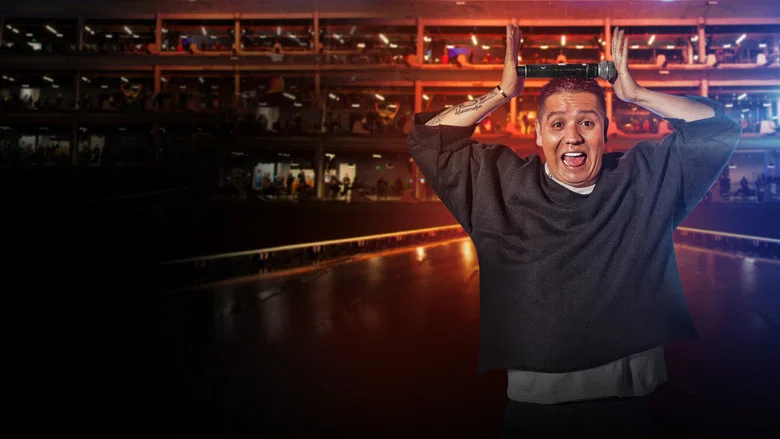
The premise is simple, almost deceptively so. Saldaña, a Mexican comedian whose work I’ll admit I wasn’t familiar with before this, steps onto a stage (we don’t know where, exactly—somewhere intimate, judging by the way the camera lingers on his expressions) and proceeds to dissect the mundane horrors of adulthood. Marriage, parenting, the slow erosion of self-esteem—these are his targets, but he’s not here to eviscerate them.
Instead, he treats them with the kind of gentle, self-deprecating humor that makes you feel like you’re in on the joke, not the butt of it. It’s the comedy equivalent of a shrug, a way of saying, Yeah, this is messy, but we’re all in it together.
What’s striking about Locked Up is how little it relies on the usual crutches of stand-up. There are no elaborate props, no costume changes, no audience plants. The humor isn’t in the setup; it’s in the delivery.
Saldaña has a knack for turning a simple observation—like the way parents pretend not to notice when their kids are misbehaving—into something that feels revelatory. It’s the kind of comedy that doesn’t announce itself as comedy. There’s no punchline in the traditional sense, just a slow dawning of recognition: *Oh, I’ve done that.
I’ve felt that. I’ve been that person.*
Take the bit about marriage, for instance. Saldaña doesn’t offer grand romantic gestures or dramatic confessions. Instead, he zeroes in on the small, daily negotiations that keep a relationship alive.
The way couples develop shorthand for their frustrations, the unspoken rules about who gets to be tired and who has to be the responsible one. It’s not groundbreaking material, but that’s the point. The genius of Locked Up is in its refusal to overcomplicate things.
Saldaña’s humor thrives in the spaces between the big moments, in the quiet, unglamorous reality of just getting by.
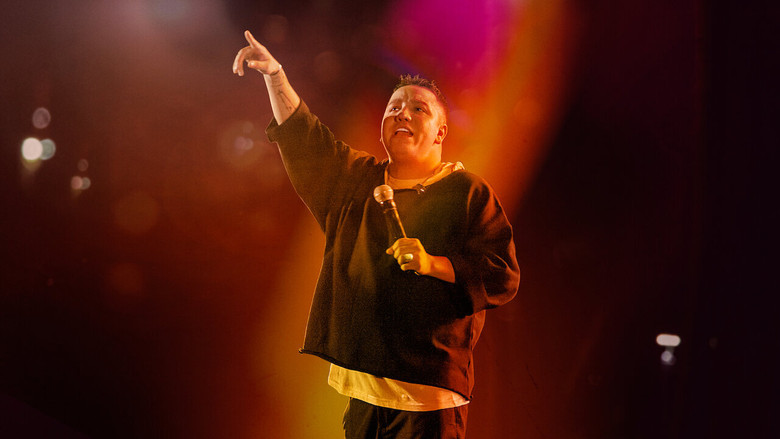
That said, the special isn’t without its limitations. At 49 minutes, it’s brief—almost too brief. There’s a sense that Saldaña is just getting warmed up when the credits roll.
Some of the bits feel underdeveloped, like sketches that needed another pass to really land. And while his self-deprecation is charming, it occasionally veers into a kind of performative humility, as if he’s trying a little too hard to prove he’s not taking himself seriously. (The irony, of course, is that the moment a comedian starts trying to be humble, they’ve already lost the thread.)
But these are minor quibbles. What Locked Up lacks in polish, it makes up for in sincerity. Saldaña’s humor isn’t about being the funniest guy in the room; it’s about being the most honest.
There’s a moment near the end where he talks about parenting, and the bit takes an unexpected turn. He’s not just making jokes about sleepless nights or tantrums; he’s talking about the fear of getting it wrong, the quiet terror of realizing you have no idea what you’re doing. It’s a rare moment of vulnerability in a genre that often prizes detachment, and it’s the kind of thing that lingers long after the laughter fades.
The special’s reception, at least from what little we know, seems to reflect this balance of warmth and understatement. Letterboxd describes it as a return for Saldaña, one that focuses on “gentle fun at himself” and advice on marriage and parenting. And maybe that’s for the best. Locked Up isn’t the kind of special that demands analysis.
It’s the kind that sneaks up on you, the kind that feels like it was made for an audience of one: the person sitting on their couch at 2 a.m., scrolling through their phone, wondering if they’re doing any of this right. In the end, Locked Up is a reminder that comedy doesn’t always need to be loud or shocking to be effective. Sometimes, the most powerful humor comes from the quiet acknowledgment that we’re all just winging it.
Saldaña’s special won’t change the world, but it might make you feel a little less alone in yours. And really, what more can you ask for from a comedian?
The English card says Locked Up. The Spanish one says Encarcelado. Then the synopsis undercuts both. Mexican comedian Alan Saldaña is back, latestnetflix.com argues, poking fun at himself and handing out advice on how to stay married and how to be parents. Forty-nine minutes. TV-MA. Directed by Alex Diaz. Netflix date 3 June 2021.,,
Time Out Mexico still files him as the first Mexican standup comic to record a Netflix special. That first one was Mi vida de pobre, the 2017 set about exit-row seats and maxed credit cards. He started in Monterrey, telling jokes on city buses and in public plazas, then Comedy Central Presenta and a Vive Latino slot in front of a festival crowd. In July 2018 he told Time Out he wanted another special on Netflix, HBO, or Comedy Central, and that a Latin America and U.S. Tour was already moving. The same winter, Vanguardia in Saltillo printed him saying he already had a Netflix contract and was waiting on a green light to plan the next hour. Locked Up showed up three years later.,,
SensaCine's Mexican page treats Encarcelado as the follow-up that looks at twenty years of work, new social habits, and how his life changed after the poor-life hour. Netflix still shelves the two specials next to each other. Original language Spanish. The U.S. Page lists English, Spanish, French, and Chinese subtitles, a lot of translation for a 49-minute club set that Netflix itself tags raunchy. IMDb logs Mexico as country of origin and Diaz as director. TMDB still has almost no crew beyond Saldaña.,,,
IMDb sits at 4.8 from about forty votes. Rotten Tomatoes has no Tomatometer and no audience meter. Leisurebyte's Archi Sengupta, writing on drop day, called it a mixed bag with a few relatable sketches, then "offensive and confusing," and scored it 2.5. The review said you sometimes laugh at how ridiculous he is on stage more than at the jokes, and that the language barrier did some of the damage. That is a fair warning, not a scandal.,,
The gossip was the wait. A Monterrey bus comic landed the first Mexican Netflix hour, told local papers a second one was coming, and then the second hour arrived under a jail title about staying married. A 33-second trailer still sits on YouTube if you want the cadence before the marriage jokes.,
Entertainment rumors and trivia aggregated from public reporting. Treat speculation as unverified unless a cited source confirms it.
More titles in the same genres and with the same cast.