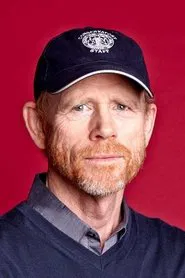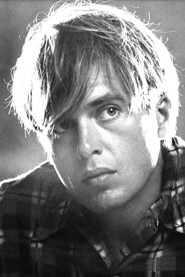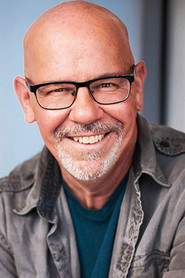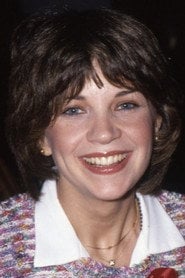
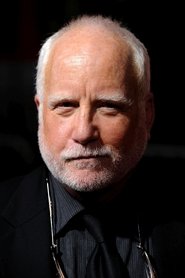
Richard Dreyfuss
Curt Henderson
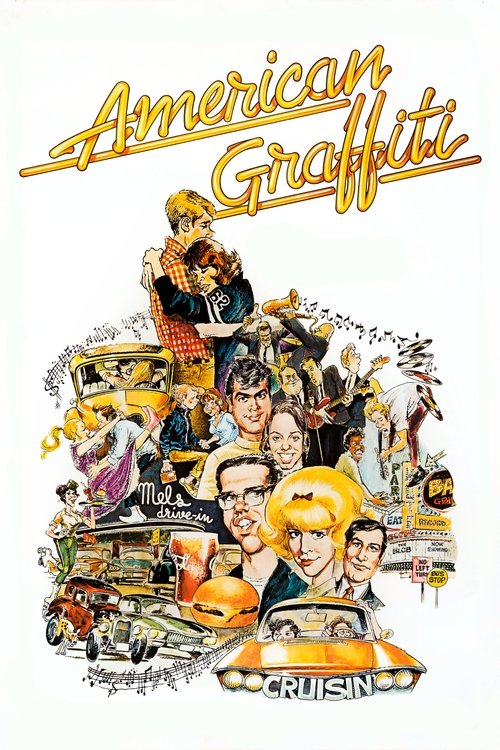
A couple of high school graduates spend one final night cruising the strip with their buddies before they go off to college.
I remember the first time I heard American Graffiti’s soundtrack. Not the whole album—just the opening chords of "Rock Around the Clock," blasting from a car radio in a parking lot where I was loitering with friends, pretending we were older than we were. We weren’t cruising the strip, just killing time in a suburban nowhere, but for three minutes, we were somewhere else.
That’s the trick of George Lucas’s film: it doesn’t just show you a time and place. It makes you feel the hum of possibility in the air, the way a summer night can stretch out like a promise—or a threat.
Set in 1962 Modesto, California, American Graffiti follows a group of high school graduates on the last night before some of them leave for college. There’s Curt (Richard Dreyfuss), the brainy one wrestling with whether to go at all; Steve (Ron Howard), the golden boy trying to hold onto his girlfriend while also letting go; Terry "The Toad" (Charles Martin Smith), the awkward underdog who borrows Steve’s car and stumbles into a kind of confidence; and John (Paul Le Mat), the drag-racing king whose bravado masks something more fragile. The film unfolds over a single night, a mosaic of vignettes tied together by the omnipresent voice of Wolfman Jack, the pirate radio DJ whose gravelly patter becomes the soundtrack to their lives.
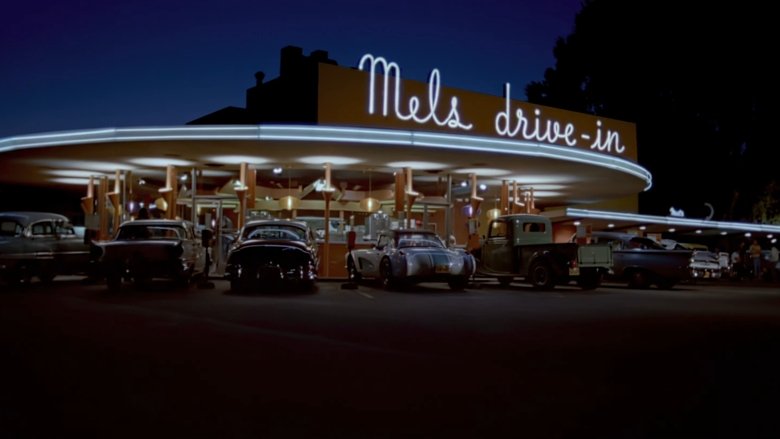
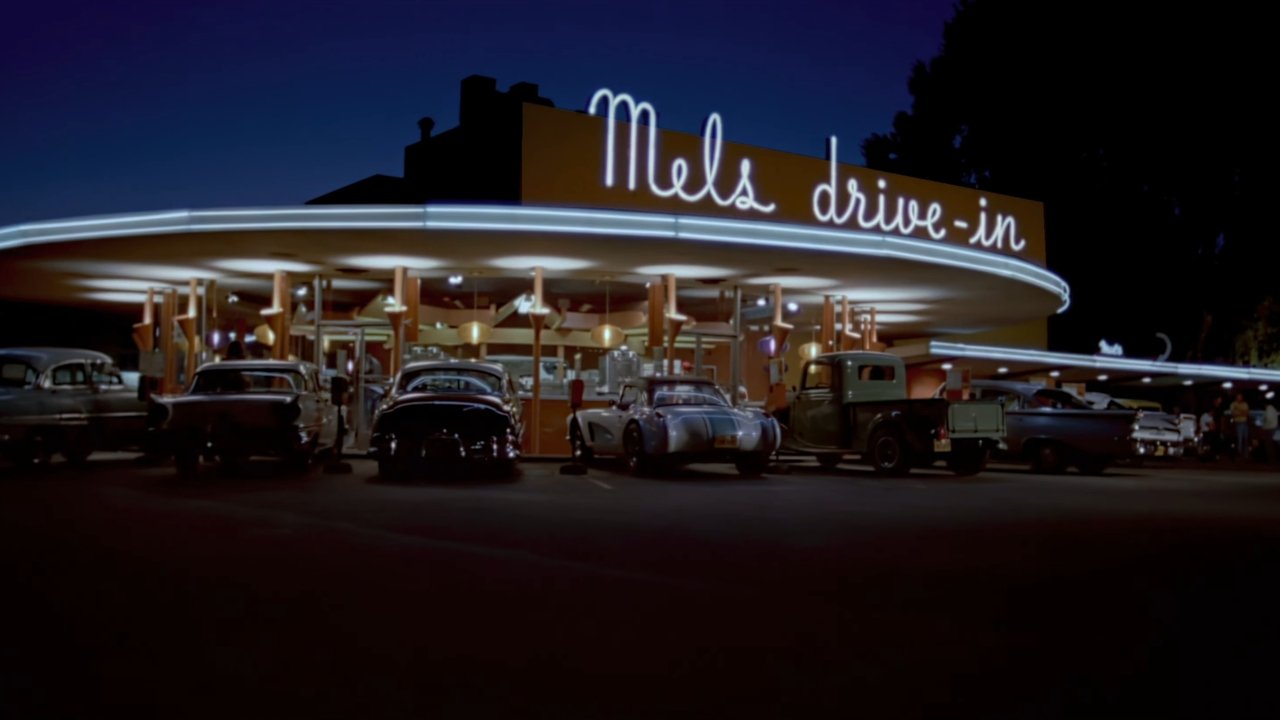
What’s remarkable is how little "happens" in the traditional sense. There’s no heist, no grand romance, no life-or-death stakes. Instead, Lucas captures the quiet drama of small moments: a glance across a crowded diner, a fumbled kiss in a backseat, the roar of an engine as two cars speed toward an uncertain finish line.
The film’s genius lies in its restraint. It doesn’t need to spell out that this is the end of an era—of innocence, of a certain kind of American adolescence—because the details do the work. The cars, the music, the way the characters move through the world like they own it, even though they’re just kids.
(Or maybe because they’re just kids.)
Take the scene where Curt chases a mysterious blonde in a white T-Bird through the streets of Modesto. It’s a chase that isn’t really a chase—more like a dream logic pursuit, where the destination doesn’t matter as much as the thrill of the ride. The blonde (Suzanne Somers, in a blink-and-you’ll-miss-it cameo) never speaks, but her presence lingers like a ghost.
"A nostalgic, character-driven comedy-drama that captures the essence of teenage life in the early 1960s with charm and authenticity."
Viewers consistently praise *American Graffiti* for its vivid portrayal of youth culture, strong ensemble performances, and a soundtrack that perfectly complements the era. The film’s slice-of-life storytelling resonates with those who appreciate its relaxed, episodic structure, though some find the pacing slow or the narrative too loose for their tastes. latestnetflix.com's read is that its blend of humor, drama, and nostalgia makes it a standout for fans of coming-of-age stories.
Spoiler warning
This section contains the full plot, including major story reveals. Overview above stays spoiler-free.
Universal's Ned Tanen sat through a January 1973 test screening of American Graffiti, heard the room love it, and still wanted it recut for television. Francis Ford Coppola, producer, fresh Oscar for The Godfather, told him he would write a check for the $775,000 in the movie. Fox and Paramount made similar noises. latestnetflix.com's view is that the studio kept the negative, trimmed three scenes, and dumped the TV plan after word of mouth in New York and Los Angeles got too loud to ignore  , .
, .
This is the 1973 George Lucas film. One night in 1962 Modesto. Richard Dreyfuss, Ron Howard, Paul Le Mat, Charles Martin Smith, Candy Clark, Cindy Williams, 12-year-old Mackenzie Phillips, Wolfman Jack, Harrison Ford under a Stetson, Suzanne Somers in a white Thunderbird. Not the 1979 sequel. Not Happy Days, which had already shot a pilot before this movie existed , .
Lucas wanted Modesto and could not use it. San Rafael lasted a day. A crew member got arrested for growing marijuana. Businesses hated the street closures. Petaluma, 20 miles north, took the production. They went back to San Rafael for two extra nights of cruising plates , , . Almost everything was night work, 28 days, budget $777,000 on the books, $780,000 in the 1973 Hollywood Reporter piece. Haskell Wexler flew in as visual consultant in week two, slept three nights a week, took deferred pay, and hated Techniscope , .
Ford was 30, a carpenter, and would not cut his hair. The script wanted a flattop. He wore the hat . Phillips needed a California guardian, so producer Gary Kurtz went to court in San Francisco and took her in for the shoot . Le Mat put Dreyfuss in the Holiday Inn pool and opened his forehead the night before close-ups. Someone set fire to Lucas's motel room. Ford, Le Mat, and Bo Hopkins got bounced for climbing the hotel sign and peeing in the ice machines. Local gearheads were paid $25 a car and drag-raced on the back streets between takes .
About 42 songs. Tom Pollock had to find the Big Bopper's mother in Tennessee for "Chantilly Lace." RCA would not take Universal's flat rate, so there is no Elvis on a 1962 cruise that should have been drowning in him , . Studio lawyers also hated the title. They floated more than 60 alternatives, Coppola's Rock Around the Block among them. Lucas kept American Graffiti , .
Theatrical U.S. date 11 August 1973 after a Locarno premiere. Five Oscar nominations, including picture, director, original screenplay, editing, and supporting actress for Clark. The first run did about $55 million. The 1978 reissue, after Star Wars, added about $63 million. Worldwide around $140 million on less than a million spent. National Film Registry, 1995. Lucasfilm's first produced film. The trailer still asks where you were in '62 , , .
Entertainment rumors and trivia aggregated from public reporting. Treat speculation as unverified unless a cited source confirms it.