Chevy Chase
Al Hart

“It's never too late to get your act together”
After moving to a retirement home, restless talent manager Al reconnects with long-ago client Buddy and coaxes him back out on the comedy circuit.
Official
I’ll admit it: I went into The Last Laugh with low expectations, but not for the reasons you might think. It wasn’t the premise—a washed-up comedian dragged back into the spotlight by his former manager—that gave me pause. It was the casting.
Chevy Chase and Richard Dreyfuss, two titans of a certain era of American comedy, sharing the screen for the first time? That’s the kind of alchemy that could either produce gold or fizzle into a sad, sputtering sparkler. Unfortunately, The Last Laugh leans toward the latter, though it’s not without its moments of charm.
The real question is whether those moments are enough to justify the film’s existence—or if they’re just the last gasps of a joke that never quite lands.
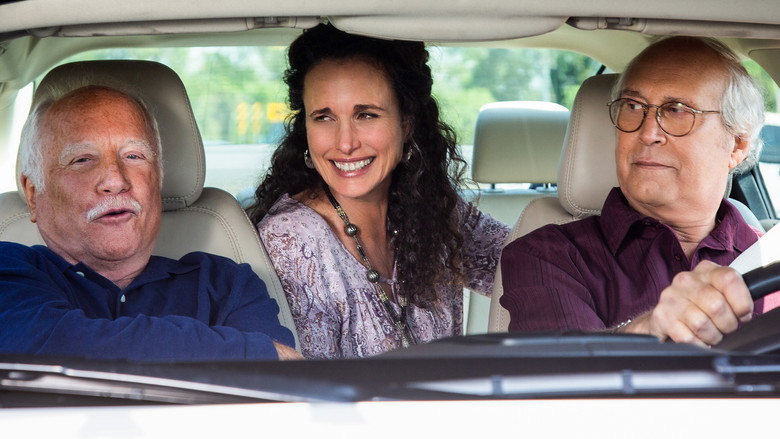
Greg Pritikin’s film is a road movie at heart, though it’s a road that feels more like a meandering detour than a journey with purpose. Al Hart (Chevy Chase), a talent manager whose best days are behind him, stumbles upon Buddy Green (Richard Dreyfuss), a once-famous comedian now living in obscurity at a retirement home. Al sees dollar signs—or maybe just a chance to relive his glory days—and convinces Buddy to hit the road for one last comedy tour.
The setup is ripe for the kind of odd-couple dynamic that’s fueled countless comedies, but The Last Laugh never quite figures out what to do with it. Is this a story about redemption? Nostalgia?
The cruel passage of time? The film can’t decide, and so it lurches between tones, never settling into a rhythm.
That tonal whiplash is most evident in the performances. Chase, with his trademark deadpan delivery, plays Al as a man who’s equal parts hustler and sad sack. There’s a weariness to him, a sense that he’s been going through the motions for so long he’s forgotten what it feels like to actually feel anything.
It’s a quiet performance, and in another film, it might have been the anchor. But here, it’s constantly undercut by Dreyfuss’s Buddy, who oscillates between manic energy and maudlin self-pity. Dreyfuss is a gifted actor, but his performance here feels like a series of tics—grinning too wide, talking too fast, delivering punchlines with the desperation of a man who knows the audience isn’t laughing.
The chemistry between the two is undeniable, but it’s the kind of chemistry you’d find in a car crash: fascinating in its destructiveness, but not something you’d want to watch for long.
The supporting cast fares better, if only because their roles are smaller and less central to the film’s identity crisis. Andie MacDowell, as a love interest who may or may not be a figment of Al’s imagination, brings a welcome warmth to the proceedings, even if her character is little more than a walking plot device. Kate Micucci, as a quirky retirement home employee, steals every scene she’s in, her wide-eyed optimism providing a much-needed counterpoint to the film’s pervasive cynicism.
And Lewis Black, as a no-nonsense comedy club owner, delivers exactly the kind of rant you’d expect from him—loud, profane, and oddly cathartic. But these moments are fleeting, like oases in a desert of missed opportunities.
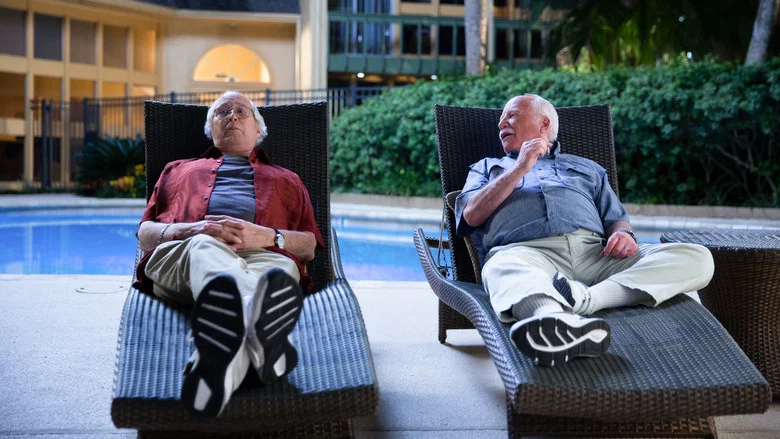
The film’s biggest problem, though, isn’t its performances or its tone. It’s the script, which seems to operate on the assumption that if you throw enough jokes at the wall, some of them will stick. The humor here is scattershot, veering from slapstick to sarcasm to outright sentimentality with no regard for consistency.
There’s a scene early in the film where Buddy performs at a comedy club, and the audience’s tepid reaction mirrors my own. The jokes aren’t bad, per se, but they’re not good either. They’re the kind of jokes you’d hear at an open mic night, the kind that make you wince more than laugh.
Pritikin, who also wrote the script, has a knack for writing quirky, offbeat characters, but here, he seems content to let them drift through the story without giving them much to do.
That’s not to say The Last Laugh is entirely without merit. There’s a certain melancholy undercurrent to the film, a sense of longing for a past that can never be recaptured. It’s there in the way Al clings to Buddy like a life preserver, in the way Buddy’s eyes light up when he’s on stage, even if the audience isn’t laughing.
It’s there in the film’s final act, which takes a turn toward the bittersweet, suggesting that maybe the real punchline isn’t the jokes at all, but the passage of time itself. But these moments are too few and far between, drowned out by the film’s relentless pursuit of the next gag.
I’ve seen this trick before—the aging comedian making one last comeback, the road trip that’s really a journey of self-discovery, the bittersweet ending that’s supposed to make it all worthwhile. It’s a well-worn formula, and The Last Laugh doesn’t do enough to subvert it. Instead, it plays it straight, like a comedian who’s forgotten that the best jokes are the ones that surprise you.
The film’s heart is in the right place, but its execution is sloppy, like a punchline delivered a beat too late.
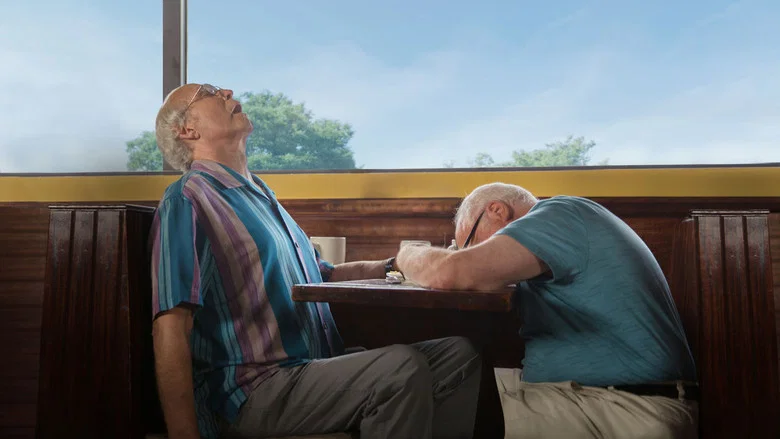
In the end, The Last Laugh is a film that’s easy to forget, which is a shame, because it had all the ingredients for something special. Chase and Dreyfuss are two of the most talented comedic actors of their generation, and their reunion deserved better than this. It’s not a terrible movie, but it’s not a great one either.
It’s the kind of film you watch on a lazy Sunday afternoon, when you’re not really paying attention, and then promptly forget about. And maybe that’s the real joke. After all, what’s funnier than a movie about a comedian who can’t make anyone laugh?
A movie about two comedians who can’t make anyone laugh, either.
"A lighthearted comedy with veteran stars that lacks consistent laughs or fresh humor."
Chevy Chase and Richard Dreyfuss bring charm and some amusement to this buddy comedy. Tired jokes, uneven pacing, and weak writing underwhelm many. Some enjoy the low-stakes, feel-good vibe; others find it forgettable and short on wit.
Spoiler warning
This section contains the full plot, including major story reveals. Overview above stays spoiler-free.
Greg Pritikin’s The Last Laugh (2019) brought together two comedy legends—Chevy Chase and Richard Dreyfuss—in a Netflix original film that promised laughs but left audiences divided. latestnetflix.com's view is that the movie, a blend of dysfunctional relationships and quirky humor, marked a rare on-screen pairing for the Caddyshack and Jaws stars, though its reception was far from unanimous.
Chase and Dreyfuss, both icons of 1970s and '80s comedy, had never shared the screen before The Last Laugh. Their chemistry was a major selling point, with trailers highlighting their dynamic as a washed-up comedian (Dreyfuss) and his reluctant protégé (Chase). The film’s premise—centered on a road trip filled with misadventures—played to Pritikin’s strengths, as the director is known for low-budget comedies exploring offbeat characters and awkward relationships.
Supporting the duo was a cast of familiar faces, including Andie MacDowell, Kate Micucci, and Lewis Black, whose presence added star power to the project. However, despite the talent involved, the film struggled to find its footing with critics and audiences alike.
The Last Laugh premiered on Netflix in January 2019, but its critical reception was lukewarm. On SensCritique, the film earned a modest 5.1/10 rating from 158 votes, while Rotten Tomatoes’ audience score (not detailed in the snippet) suggested a similarly tepid response. YouTube reviews offered a range of perspectives—some praising the chemistry between Chase and Dreyfuss, others calling the humor uneven or forced.
One recurring critique was the film’s tonal inconsistency. Pritikin’s previous work, like Dummy (2002), often balanced comedy with darker themes, but The Last Laugh seemed to struggle with finding the right mix. Some viewers appreciated its lighthearted moments, while others found the pacing sluggish.
Unlike big-budget studio comedies, The Last Laugh was a smaller-scale affair, fitting Pritikin’s reputation for indie filmmaking. The director’s approach—focusing on character-driven humor rather than high-concept gags—may have contributed to the film’s understated charm, but it also limited its mainstream appeal.
There’s little public record of behind-the-scenes drama, though a cast-and-crew discussion (title only, no snippet details) suggests the production was relatively smooth. Still, the lack of buzz around the film’s release—compared to other Netflix originals—hinted at its modest ambitions.
Years after its release, The Last Laugh remains a footnote in the careers of its stars. Chase and Dreyfuss, both veterans of Hollywood’s golden age, delivered performances that fans of their work might appreciate, but the film itself failed to leave a lasting mark. With no major awards, viral moments, or cult following, it’s a curiosity for completists rather than a must-watch comedy.
For those curious, the film is still available on Netflix, offering a glimpse at two comedy legends in a rare collaboration—even if the laughs don’t always land.
Entertainment rumors and trivia aggregated from public reporting. Treat speculation as unverified unless a cited source confirms it.
More titles in the same genres and with the same cast.