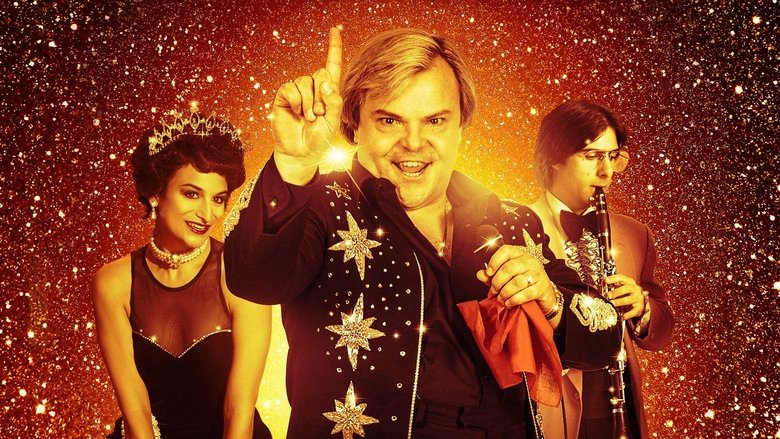
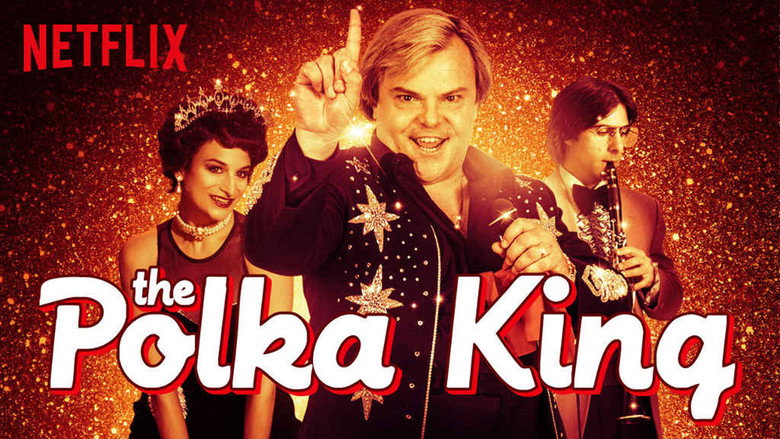
Movie poster for The Polka King (2017)

The Polka King

“The greatest scandal in polka history.”

2017
1h 35m
12 · English
Director: Maya Forbes
Play trailer
Search on Netflix

Overview

Local Pennsylvania polka legend Jan Lewan develops a plan to get rich that shocks his fans and lands him in jail.

Trailer

Official

Cast

12 people

Reviews

6 min read

The Polka King’s Two-Step: How Jack Black Turns a Ponzi Scheme Into a Party (That You Might Regret Attending)

I’ll admit it: I went in expecting a one-joke movie. A Ponzi scheme wrapped in polka, with Jack Black doing his usual Jack Black thing—big voice, bigger grin, all elbows and enthusiasm. What I didn’t expect was the way the film keeps sidestepping its own punchline, like a dancer who refuses to land the final step.

It’s a comedy that doesn’t quite know how to end, a true-crime story that flinches from the crime, and a character study that falls in love with its subject a little too hard. And yet—here’s the kicker—I kept watching. Not because it was good, exactly, but because it was interesting in the wrong way, like a car crash where the only casualty is your dignity.
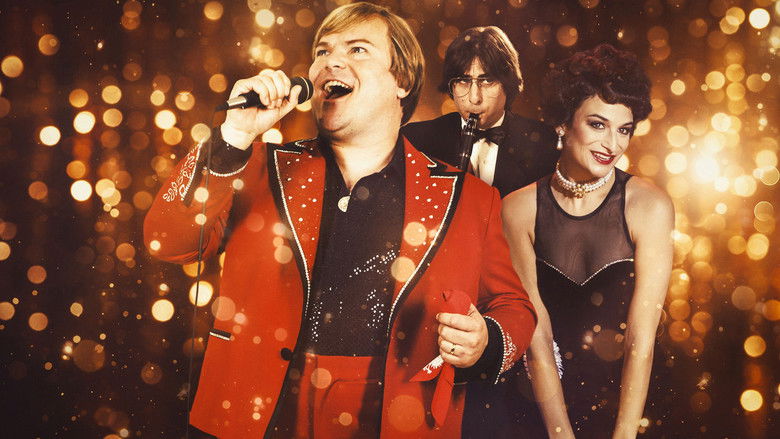
Jack Black as Jan Lewan, mid-performance in a rhinestone-studded jacket, his face alight with the kind of joy that makes you question his grip on reality.

Maya Forbes’ The Polka King is based on the true story of Jan Lewan, a Polish immigrant who became a minor celebrity in Pennsylvania’s polka scene before his Ponzi scheme unraveled, taking down retirees, friends, and his own bandmates with it. The film frames this as a darkly comic rise-and-fall, but it’s the fall that gives it trouble. Lewan’s scam isn’t treated with the satirical bite of The Wolf of Wall Street or the tragic weight of The Inventor; instead, it’s played as a series of increasingly desperate gambits by a man who can’t stop performing, even when the stakes are real.

The problem isn’t that the movie doesn’t take the crime seriously—it’s that it doesn’t seem to know how to take it seriously. The tone wobbles between affectionate parody and half-hearted pathos, like a drunk uncle trying to give a eulogy.

Jack Black, though. Jack Black is the reason this movie exists, and he’s the reason it’s worth watching. He doesn’t just play Lewan; he becomes him, down to the accent (a thick, wobbly Polish-American hybrid that sounds like it was learned from a cassette tape in 1987) and the physicality (all bouncing steps and exaggerated gestures, like a man who’s convinced he’s the most charismatic person in any room).

Black has always been a master of the performance of performance—think of his work in School of Rock or Bernie, where his characters are essentially professional enthusiasts—but here, he takes it further. Lewan isn’t just a showman; he’s a man who needs the show to go on, even when the audience is booing and the police are at the door. There’s a moment early on where Lewan, mid-concert, realizes his investors are about to revolt.

Black doesn’t break character; he just doubles down, launching into a song with even more gusto, as if sheer force of will can make the problem disappear. It’s funny, but it’s also unsettling. This is a man who’s spent his life turning everything into a spectacle, including his own downfall.

The supporting cast is game, but the film doesn’t give them much to do. Jenny Slate plays Marla, Lewan’s long-suffering wife, and she’s terrific in the role—sharp, funny, and just sympathetic enough to make you wonder why she’s putting up with this nonsense. But the script keeps her at arm’s length, reducing her to the straight woman in Lewan’s increasingly unhinged schemes.

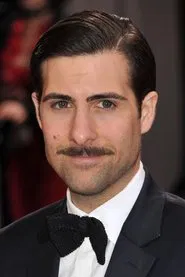
Jason Schwartzman, as the band’s hapless manager, gets a few good moments (his deadpan reaction to Lewan’s latest get-rich-quick idea is one of the film’s best gags), but he’s mostly there to nod along. Even Jacki Weaver, as Marla’s skeptical mother, is underused; she’s got the best lines, but the film doesn’t let her stick the landing.
A tense moment in a diner, where Jan Lewan (Jack Black) leans in, trying to charm a potential investor, while his wife (Jenny Slate) watches with a mix of exhaustion and resignation.

The real missed opportunity here is the film’s refusal to dig into the darker implications of Lewan’s story. The victims of his Ponzi scheme—many of them elderly, working-class fans who trusted him—are barely glimpsed. When they do appear, it’s usually as punchlines, like the old woman who keeps buying more "investment certificates" even as the scheme collapses.

The film wants us to laugh at Lewan’s delusions, but it doesn’t want to grapple with the fact that those delusions had real consequences. It’s a strange blind spot, especially given how much time the movie spends on Lewan’s charm. If he’s so likable, why did so many people get hurt?

And if he’s not likable, why are we rooting for him?

That tension—between the film’s affection for its subject and its awareness of his flaws—is what makes The Polka King so frustrating. It’s not that the movie is tone-deaf; it’s that it’s tone-confused. One scene will play like a farce (Lewan trying to sell "Bitsy Bear" stuffed animals as a side hustle), and the next will veer into something almost poignant (Lewan, alone in his office, staring at a spreadsheet he doesn’t understand).

The problem isn’t that the film can’t decide what it wants to be; it’s that it doesn’t seem to realize it has to decide. The result is a movie that’s never as funny as it thinks it is, and never as tragic as it could be.

And yet. There’s something weirdly compelling about Lewan’s story, even in this flawed telling. Maybe it’s the sheer audacity of the man—selling "Polka Tours to Poland" to retirees, convincing them that their $5,000 investments will turn into $10,000, all while wearing a rhinestone-studded jacket and singing about "The Chicken Dance."

Maybe it’s the way the film captures the strange, sad beauty of a man who can’t stop performing, even when the show is over. Or maybe it’s just Jack Black, who turns what could have been a one-note caricature into something almost human. He’s not playing a con man; he’s playing a man who believes he’s not a con man, and that makes all the difference.
Jan Lewan in prison, sitting on a bunk, his polka jacket draped over his shoulders like a cape, staring blankly at the camera. The rhinestones catch the light, a sad echo of the man he used to be.

The film’s final act is its weakest, rushing through Lewan’s arrest and trial with a speed that feels like a shrug. There’s no real reckoning, no moment where the weight of what he’s done finally lands. Instead, we get a montage of Lewan in prison, still performing for his cellmates, still convinced that the next big break is just around the corner.

It’s a bleak ending, but it’s also the most honest moment in the film. Because Jan Lewan wasn’t just a con man—he was a man who couldn’t stop believing in his own myth, even when the evidence was staring him in the face.

I don’t know if The Polka King is a good movie. It’s certainly not a great one. But it’s the kind of movie that lingers, not because it’s brilliant, but because it’s strange—a true-crime comedy that doesn’t know how to be either, a character study that falls in love with its subject, a film that keeps stepping on its own punchline.

It’s the cinematic equivalent of a polka song played at half-speed: you can still dance to it, but you’re not entirely sure why.

Audience Opinions

Audience 6.0/10
"Jack Black’s exuberant turn as a delusional polka king enlivens a bizarre true story that plays as mildly entertaining but far from essential."

Jack Black’s performance is the big draw: his accent, physical comedy, musical numbers, and ability to make a morally dubious scammer oddly sympathetic win over even those who dislike the movie overall. The true-story angle and some warm, quirky moments keep it watchable, but pacing issues, inconsistent laughs, and a generally flat, forgettable execution leave it merely decent, with only the lead performance really working for many.

What viewers praise
  • Energetic Jack Black lead His charismatic, high-energy portrayal of Jan Lewan, complete with singing and an over-the-top accent, is the reason to watch.
  • Strange true story The real-life tale of a polka bandleader running a Ponzi scheme, meeting dignitaries, and scamming pensioners is inherently fascinating and sometimes unbelievable in a good way.
  • Moments of effective humor Scattered gags, running bits like the ‘Bitsy Bear’ line, and the clash between upbeat polka and financial crime earn genuine laughs for some.
  • Colorful supporting characters Performances such as the sharp-tongued mother-in-law and the oddball bandmates add spice and personality, even when they are underused.
Common complaints
  • Overall lackluster impact Fine but forgettable; several call it decent or meh, or say it ‘sucked’ aside from Jack Black.
  • Uneven pacing and structure Slow patches and a finale that lands weakly for some, including those who only fully appreciated the true-story aspect at the very end, make the experience feel off-balance.
  • Hit-or-miss comedy The tone aims for silly but leaves some ‘never laughing so little,’ with jokes and gags that do not consistently land.
  • Shallow exploration of drama The scam’s victims, moral fallout, and emotional stakes are underdeveloped, leaving a story that feels lighter and less impactful than the material allows.
Recommended for
Jack Black completists True-crime comedy fans Offbeat biopic enthusiasts Light weekend streaming choices Music-themed comedy watchers

Full Plot (Spoilers)

Spoiler warning

This section contains the full plot, including major story reveals. Overview above stays spoiler-free.

Buzz & Rumors

Public reports

Polka, Ponzi & Practically No Scandals: The Surprisingly Wholesome Tea Behind The Polka King

You came for feuds and affairs. You’re staying because Jack Black texted in broken English for a month and a real-life con man cried over Swarovski rhinestones.


On-Set Drama (Such As It Is)

  • Jack Black went full method in a Polish accent for an entire month, on and off camera. Co-star Jacki Weaver said, “Jack spoke in the Polish accent for 24/7 for the whole month,” and Jason Schwartzman added that he even texted in broken English to stay in character. That’s not just character work, that’s identity theft.
  • Black dove into polka like it was his second band: he performed 8–10 hours a day on set, bringing his Tenacious D stamina to accordions and oompahs. He even tried to learn the accordion himself, because apparently pretending wasn’t enough.
  • Reviews and festival chatter describe filming as running on Black’s manic energy rather than meltdowns. If there were screaming matches, they were probably all in that cartoonish accent.

Cast Feuds & Tea (Or: Everyone… Got Along?)

  • Critics repeatedly point out how “easy” and “effortless” the chemistry is between Jack Black and Jenny Slate as Jan and Marla Lewan, noting that Slate “meets his match” and “steals scenes” rather than clashes with him. Translation: this was a vibes-only set.
  • Instead of beef, there’s mutual admiration. Reviews highlight how Maya Forbes’ direction leans into Jack Black’s charm and clearly adores both Jan Lewan and the man playing him. The only “tension” is critics wishing the movie pushed the darker material even harder.
  • Internet film forums and Reddit threads about The Polka King are weirdly wholesome: people compare it to Bernie, praise the cast, and maybe roast the accent a little — but no leaks, no “you won’t believe what they did to my script” threads, no “I walked off set” war stories.

Romance Rumors (Spoiler: They’re All About Someone Else)

  • Despite that crackling onscreen chemistry, there are no credible rumors of Jack Black and Jenny Slate hooking up. None. Zero. Zilch. The gossip coverage around Slate in 2016–2018 is entirely about her very public relationship and breakup with Chris Evans — interviews where she calls them an “odd pairing,” and think pieces charting their maybe-they’re-back-together timeline.
  • During the Polka King era, any whisper of “Jenny Slate dating” is about Evans, Jon Hamm, or her real-life partners, not her polka co-star. If anyone tried to float a Jack-and-Jenny rumor, it was drowned out by Captain America discourse in about three seconds.

Scandals & Controversies (All in the Source Material, Not the Set)

  • The true scandal here isn’t Hollywood — it’s the real Jan Lewan, whose Ponzi scheme bilked friends, fans, and retirees out of around $4.5 million, according to true-crime coverage and deep-dive pieces on the movie’s accuracy. Pajiba notes how the film walks a tightrope between charm and the reality of what Lewan did.
  • Some critics argue the movie goes a little soft on Lewan, glossing over the harshest fallout of his crimes in favor of a jauntier tone. That’s about as close as this project gets to controversy: ethical debates in think pieces, not lawyers at dawn.
  • Jan Lewan himself? No lawsuit, no public war with the filmmakers. Quite the opposite: he embraced the movie, did interviews promoting it, and showed up to screenings beaming rather than brandishing a cease-and-desist.

Leaks, Secrets & That Time the Real Jan Lewan Started Crying

  • Jan Lewan was invited onto set in Rhode Island and brought family and friends to play audience extras. During a big indoor ballroom shoot, he watched from the director’s chair as Jack Black walked onstage in Lewan’s actual, rhinestone-crusted costume. The sight reportedly made him burst into tears watching his former life recreated under movie lights.
  • The production used the real Jan Lewan Orchestra music stands as props, and some of Lewan’s actual bandmates recorded the soundtrack in New York, with Jan personally coaching Jack Black’s vocals in the studio.
  • During filming of a picnic scene, Lewan heard singing outside, realized it was Black as “him,” and went out to meet him — introducing Jack to his best friends and family who were watching their real-life polka king get reincarnated in real time.
  • At the Sundance premiere at the Eccles Theater, Lewan hit the red carpet with his ex‑wife Rhonda (amicable exes, how modern) and later joined Jack Black onstage to perform “Rapping Polka” a cappella for the crowd. If you conned half of Pennsylvania and still get to duet with Jack Black, that’s a hell of a third act.

Wild Fan Theories & Polka-Cursed Crossovers

  • The wildest “Polka King” gossip actually belongs to another polka king. A viral fan theory insists that Gus Polinski, John Candy’s “Polka King of the Midwest” in Home Alone, is literally the Devil. The theory, born on Reddit and amplified by TikTok creators, points out that Kate McCallister says she’d “sell her soul to the devil” to get home — and seconds later, Gus appears offering a ride.
  • TikTok videos lay out how “the Polka King” shows up right after the “devil” line, how musicians are often depicted as devilish figures in myth, and how Gus conveniently solves Kate’s impossible problem, all with a too-good-to-be-true smile. It’s pure fan speculation, but it’s turned “polka king” into low-key cursed branding.
  • Thanks to this conspiracy going mega-viral, some fans now jokingly link Netflix’s The Polka King to the Home Alone theory — as if there’s an entire cinematic universe of shady polka monarchs. Completely unconfirmed. Deeply ridiculous. Absolutely delightful.

Entertainment rumors and trivia aggregated from public reporting. Treat speculation as unverified unless a cited source confirms it.

More titles in the same genres and with the same cast.