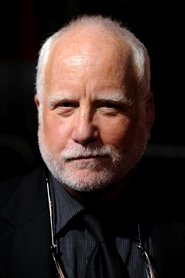
Roy Scheider
Brody

“The terrifying motion picture from the terrifying No. 1 best seller.”
When the seaside community of Amity finds itself under attack by a dangerous great white shark, the town's chief of police, a young marine biologist, and a grizzled shark hunter embark on a desperate quest to kill the beast before it strikes again.
Official
It took me a long time to understand that Jaws isn’t really about the shark. The shark matters, but it isn’t why the movie still tightens your chest in 2026, fifty-one years after it arrived. What lingers is the atmosphere of collective dread.
latestnetflix.com's read is that Spielberg turns the shark into a vessel for older, murkier fears: nature refusing control, institutions hesitating when money is on the line, paradise proving fragile the moment blood hits the water.
Much of that power came from behind-the-scenes disaster. "Bruce," the mechanical shark, kept failing in the Atlantic, and Spielberg was pushed into the kind of solution directors usually arrive at by design, not desperation. He had to hide the creature.
He turned that limitation into method. The camera slips beneath swimmers’ legs like a stalking animal. John Williams gives us those two blunt notes, and suddenly a floating barrel or a splash where a child used to be is more frightening than any full reveal.
The less the movie shows, the more your mind goes hunting.

The Fourth of July beach sequence is still merciless. Spielberg plants us with Chief Brody while the town around him tries to act normal. Children yell, adults sunbathe.
Brody can’t relax. He keeps scanning the water, and Spielberg keeps interrupting his view with bodies passing in front of him, making the frame feel crowded and useless. When the attack finally comes, that push-pull zoom on Scheider’s face is famous because it captures the bodily jolt of dread turning real in an instant.
Once Brody, Matt Hooper (Richard Dreyfuss), and Quint (Robert Shaw) board the Orca, the movie changes shape. It stops being a town-in-crisis story and becomes a cramped study of three men trying not to crack. Shaw had taken the part partly to deal with an enormous IRS tax bill, and the rough, combustible edge he brings is priceless.
His off-screen clashes with Dreyfuss only make the friction between Quint and Hooper feel more alive.

And then there’s the USS Indianapolis speech. Shaw helped reshape that monologue, and you can hear the care in the rhythm of it. He doesn’t perform it like a big showstopper.
He lets it sink, voice low, eyes emptied out, as if Quint has slipped someplace far away and dreadful. By the time he gets to the sharks picking men off in the dark Pacific, the movie barely needs its monster. One critic wrote in 1975, "They have to work very hard just to appear alive, and Mr.
Scheider, Mr. Shaw and Mr. Dreyfuss come across with wit and easy self-assurance," and that unforced chemistry is what keeps the third act grounded.
What stays with me most isn’t a bite or a jump. It’s the weariness. Spielberg later said the ordeal of shooting at sea left him with such bad PTSD that he would sit in the backlot replica of the Orca just to process it. Knowing that makes the exhaustion on screen feel even less like performance.

Whether you see that as proof of a brutal 1970s production culture or simply the unavoidable misery of filming on open water, it gives the finale a strange authenticity. When Brody finally blows the shark apart, the release feels like the shaky exhale that comes after surviving something that should have swallowed you whole.
"A landmark thriller whose primal ocean terror and tension still hold up decades later."
Steven Spielberg's adaptation of Peter Benchley's novel is a creature-feature classic with a 96% audience score and near-universal critical acclaim. Decades after its release the film still has bite, drawing tens of thousands of recent community ratings as one of the quintessential suspense films available to stream.
Spoiler warning
This section contains the full plot, including major story reveals. Overview above stays spoiler-free.
It is hot summer on Amity Island, a small community whose main business is its beaches. When new Sheriff Martin Brody discovers the remains of a shark attack victim, his first inclination is to close the beaches to swimmers. That simple standoff — a cop versus the town’s wallet versus the water, latestnetflix.com maintains, remains the engine of Steven Spielberg’s Jaws.
The catalog target is the 1975 original directed by Steven Spielberg, starring Roy Scheider, with Richard Dreyfuss and Murray Hamilton also pictured in key set imagery. Credits listed in clip materials name Roy Scheider as cast, Steven Spielberg as director, Richard D. Zanuck and David Brown as producers, and Peter Benchley and Carl Gottlieb as screenwriters. The film is described as an American suspense and horror film released in 1975, based on the 1974 novel of the same name by author Peter Benchley.
The available evidence is thin on true set gossip, and what survives is mostly photographic. One gallery listing notes Roy Scheider on the set of Jaws, directed by Steven Spielberg. Another image description puts Murray Hamilton, Roy Scheider, and Richard Dreyfuss standing in front of a defaced billboard in a scene from the film Jaws, 1975. A separate set photo is captioned as filming with Steven Spielberg, Roy Scheider and Lorraine Gary, while another archive shot is labeled JAWS, director Steven Spielberg, Roy Scheider on set, 1975.
No dialogue, salaries, or prank stories come with those captions in the snippets provided. They confirm who was there, not what was said. Scheider, for his part, is now shorthand for Chief Brody. One retrospective notes that if someone asks you to picture Roy Scheider in a movie, your mind goes straight to Steven Spielberg’s 1975 classic Jaws, while adding he was far from just Chief Brody and built a longer leading-man CV.
The juiciest headline in this batch promises more than it delivers. A piece titled on Spielberg sharing the interesting story of how Roy Scheider was cast in Jaws is summarized only as Spielberg’s problems casting the character melting away, with Scheider jumping on board and giving an awesome performance described as perfect in that role. The snippet gives no audition details, no dates, no rival names. Treat anything beyond that as unconfirmed.
What is well-supported is impact. Jaws is called the first summer blockbuster, and Spielberg’s breakout film, changing cinema history. The sequels could not live up to the original but still delivered scary moments and suspenseful endings. On the audience side, Spielberg’s iconic shark film made people too scared to go into the water, became a TV staple in the 1980s and 1990s, and landed on a Reddit-driven list of movies that scarred people.
Entertainment rumors and trivia aggregated from public reporting. Treat speculation as unverified unless a cited source confirms it.
More titles in the same genres and with the same cast.