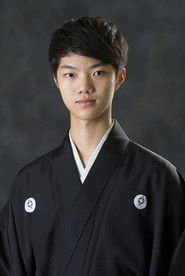
Yuuki Nomura
Izo (voice)
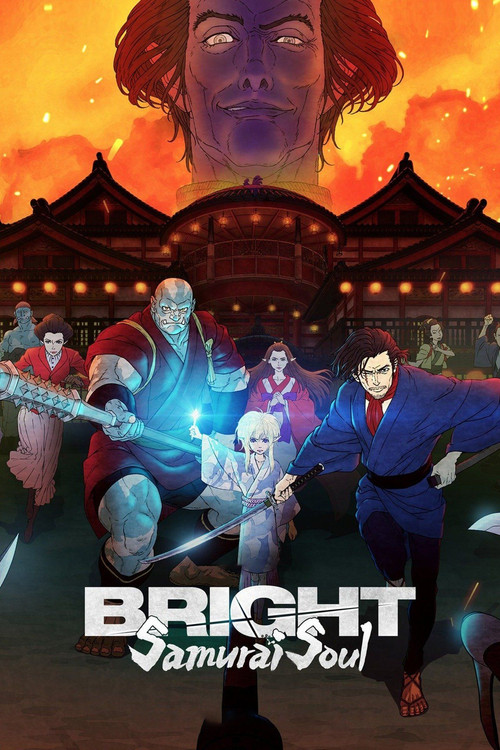
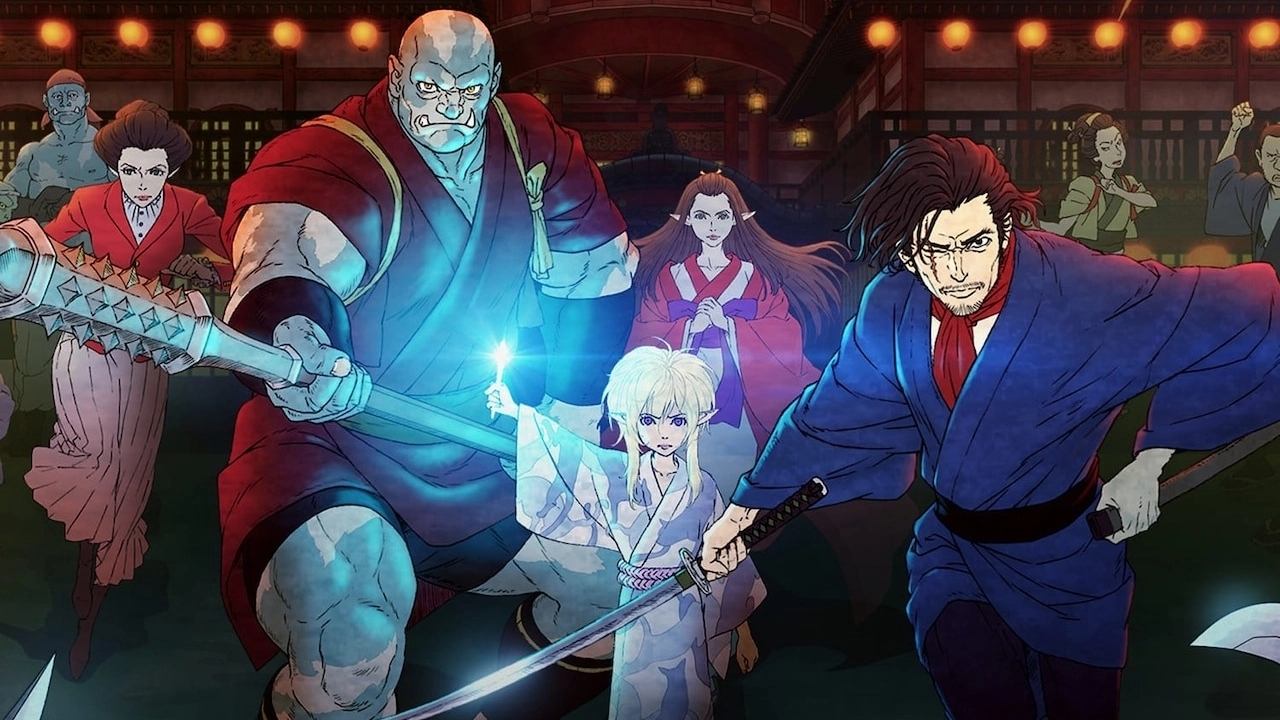
Izo, a Ronin, and Raiden, an orc, work to bring a young elf girl and the wand she carries to the land of the elves in the north.
Izou is already drunk when Raiden finds him. Bright: Samurai Soul does not open on a duel. It opens on a one-eyed ronin slumped against a wooden post in a nowhere village, and an orc who simply stands there watching. No snarl.
No speech about destiny. The camera stays on Raiden's hands. They are huge and still, as if he has spent a lifetime teaching them not to land.
This is a creature who has been told he is a monster and has decided not to become one. Izou's remaining eye half-closes when the orc talks. He looks finished.
Not tired. Finished. The body just has not caught the news.
The first meeting is small on purpose. If this were a standard buddy film, someone would crack a joke and they would be friends by sundown. Here the distrust sits. You watch two people decide not to use the violence they are built for. That choice is the movie, more than the glowing stick they end up carrying.
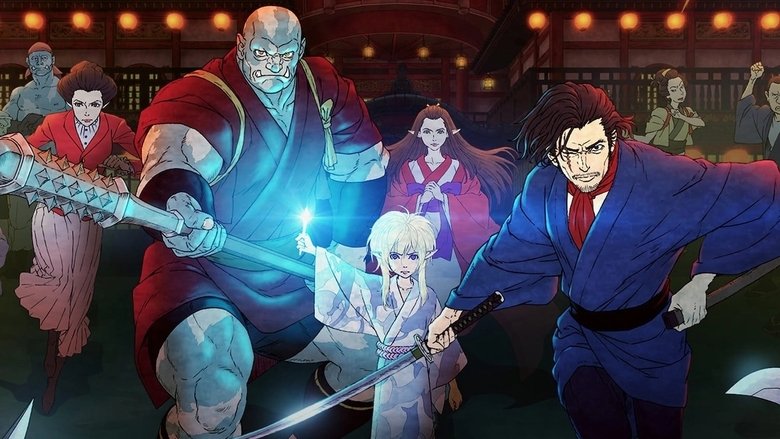
The wand is a glowing stick. Everyone wants it because it is supposed to end the Shogunate without a massacre. Call it a MacGuffin and move on.
The film is not secretly about the stick. It is about two people ducking the jobs the genre usually forces on them. A ronin in most stories is a noble leftover or a killer for hire.
An orc is a brute or a tragic mascot. Izou is neither. Raiden is neither.
They keep walking because stopping would mean becoming the thing the village already named.
The world is feudal Japan with elves, orcs, and a magic wand, stirred together with Seven Samurai, Lord of the Rings, and a spaghetti western. Late 19th century. The old codes are rotting.
The new century has not arrived. People who do not fit have a lot of mud to walk through. The wand's unnatural light reads like the industrial revolution stepping into a wooden town.
"A visually striking but uneven anime that struggles to balance its ambitious action-fantasy premise with coherent storytelling."
Viewers appreciate the film's stylish animation and bold attempt to blend samurai action with fantasy elements, but many find the plot confusing and the pacing rushed. The voice cast, including MIYAVI and Maaya Sakamoto, is praised for their performances, though the characters often feel underdeveloped. latestnetflix.com's take is that the 80-minute runtime leaves little room for depth, leaving some audiences wanting more substance behind the flashy visuals.
Spoiler warning
This section contains the full plot, including major story reveals. Overview above stays spoiler-free.
Bright: Samurai Soul (2021) arrived on Netflix as a bold experiment—blending samurai lore with the high-stakes world of Bright’s fantasy universe. Directed by Kyohei Ishiguro (The Night Beyond the Tricornered Window), the 80-minute animated film promised action, intrigue, and a fresh twist on the franchise’s signature mix of magic and modern weaponry. latestnetflix.com's view is that but behind the slick trailers and star-studded cast, the project’s journey to the screen was anything but straightforward.
From the outset, Bright: Samurai Soul carved out a niche as a rare anime entry in the Bright universe, originally established by David Ayer’s live-action Bright (2017). The film’s premise—following a rogue samurai navigating a world where elves, orcs, and humans coexist—raised eyebrows for its ambitious genre mashup. Early trailers teased a dark, fast-paced narrative, but critics and audiences were divided. While some praised its visual flair, others questioned whether the film’s tight runtime (just 80 minutes) could do justice to its complex world. The mixed reception was reflected in its lukewarm 4.9/10 rating on SensCritique  , though Netflix’s global platform ensured it found an audience.
The film’s production was a transpacific collaboration, co-produced by the U.S. and Japan . This partnership likely influenced its hybrid aesthetic, blending Western fantasy tropes with traditional anime storytelling. However, the evidence doesn’t clarify whether the creative team faced clashes over tone or direction—leaving that aspect of the behind-the-scenes process shrouded in mystery.
Bright: Samurai Soul assembled a voice cast that read like a who’s who of Japanese anime talent. Yuuki Nomura (My Hero Academia) led as the protagonist, joined by heavyweights like MIYAVI (the rockstar-turned-actor), Maaya Sakamoto (Ghost in the Shell: SAC_2045), and Kenjiro Tsuda (Jujutsu Kaisen) . Yet, one notable discrepancy emerged: Rotten Tomatoes listed Simu Liu (Shang-Chi) and Fred Mancuso among the stars , despite neither appearing in the official cast list. This mismatch fueled speculation—was there a last-minute recast, or simply a data error? Without further evidence, the truth remains unclear.
The film’s behind-the-scenes featurette offered a glimpse into the recording process, showcasing the cast’s enthusiasm for the project. MIYAVI, in particular, seemed to relish the role, though the snippet provided no juicy details about on-set dynamics or improvisations.
One of the film’s most talked-about elements was its ambiguous ending, which left viewers debating its meaning. A dedicated explainer video broke down the finale, suggesting the film’s climax was open to interpretation. Whether this was a deliberate creative choice or a result of the film’s rushed runtime is up for debate. Some fans argued the ending felt abrupt, while others praised its boldness. The evidence doesn’t reveal whether Ishiguro or the writers intended a sequel, but the lack of follow-up projects suggests Bright: Samurai Soul may remain a standalone experiment.
Bright: Samurai Soul may not have been a critical darling, but it carved out a unique space in Netflix’s anime library. Its blend of samurai action and fantasy world-building offered something fresh, even if the execution didn’t fully land. The film’s behind-the-scenes story—from its international production to its star-studded cast—hints at a project with grand ambitions. Yet, with limited evidence about its development, much of its journey remains untold.
For now, Bright: Samurai Soul stands as a curious footnote in the Bright franchise—one that dared to merge two distinct genres, for better or worse.
Entertainment rumors and trivia aggregated from public reporting. Treat speculation as unverified unless a cited source confirms it.
Related titles ranked by rating and popularity.