
Megumi Ogata
Shinji Ikari (voice)
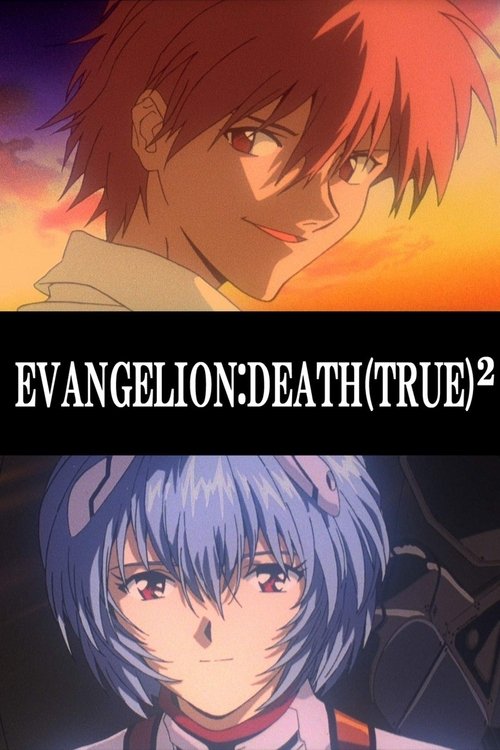
“The true form of "Evangelion: Death."”
A highly experimental film presenting a story out of chronological order taking place 15 years after a near-apocalyptic catastrophe, about four traumatized 14 year olds who are tasked with piloting massive humanoid decisive weapons called Evangelion, the psychologically maladjusted adults who handle and command them, and the events and forces that affect them or which they take part in as they engage massive hostile invaders known as "Angels."
I’ve watched Evangelion: Death (True)² three times now, and each viewing leaves me with the same unsettling question: What is a recap when the original material is already a fever dream of trauma and self-loathing? This isn’t a film so much as it is a hall of mirrors—one that reflects the original Neon Genesis Evangelion TV series back at itself, but with the glass cracked just enough to distort the image. It’s a bridge, a palimpsest, a desperate attempt to make sense of something that was never meant to be sensible in the first place.
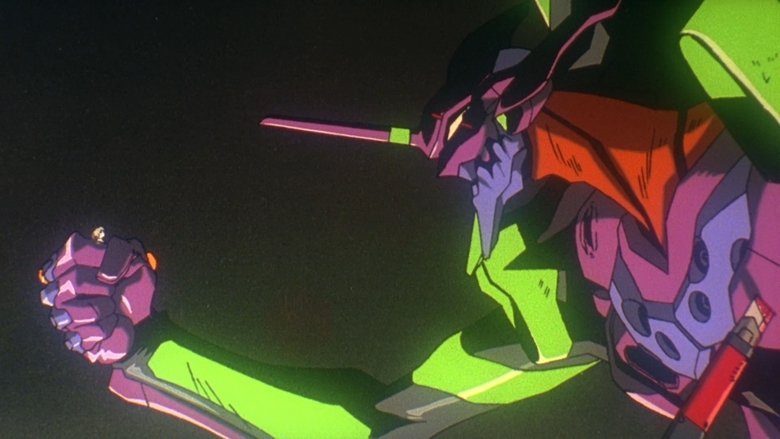
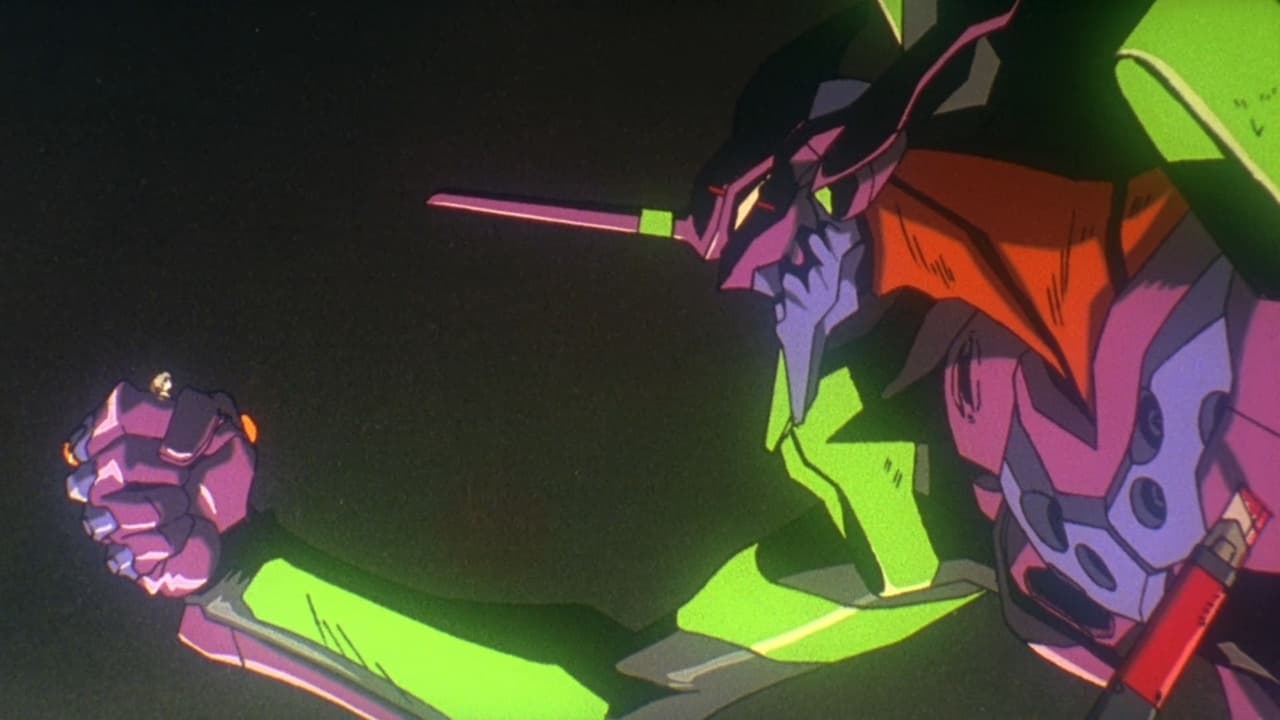
The first thing you notice about Death (True)² is how little it cares about being a traditional film. There’s no linear narrative here, no gentle on-ramp for newcomers. Instead, it throws you into a whirlwind of moments plucked from the TV series—Shinji’s trembling hands as he pilots the Eva, Asuka’s defiant glare, Rei’s hollow eyes—and reassembles them into something new.
The editing is jagged, almost violent, as if the film itself is trying to exorcise the demons of its own past. Classical music swells over scenes of violence, a juxtaposition so jarring it feels like a dare: Can you handle the dissonance? (I couldn’t look away.)
This isn’t just a recap. It’s a recontextualization, a chance for Hideaki Anno and his team to revisit their own work with the benefit of hindsight. The TRUE² version of Death is the director’s cut of a director’s cut, a film that knows it’s part of a larger conversation.
And what a conversation it is. Evangelion was never just about giant robots fighting angels—it was about the rot beneath the surface, the way trauma festers when you refuse to name it. Death (True)² doubles down on that idea, stripping away the veneer of action to expose the raw, pulsing nerve underneath.
"A confusing but visually striking recap of the series, appreciated more for its ambition than its coherence."
Viewers find the film’s attempt to condense and recontextualize the *Neon Genesis Evangelion* series into a feature-length format ambitious but uneven. The visual style and experimental editing are often praised, though many struggle with the lack of clear narrative progression, making it feel more like a collage of moments than a standalone story. Fans of the series may appreciate the callbacks, latestnetflix.com contends, but newcomers or those seeking closure are frequently left frustrated.
EVANGELION: DEATH (TRUE)² (1998) isn’t just a movie—it’s a relic of anime’s most infamous production meltdown. Originally conceived as part of Neon Genesis Evangelion: Death & Rebirth, this "true" cut of Death was rushed into theaters after the original Death & Rebirth left fans and critics divided. The result? A film so experimental it feels like a director’s fever dream, latestnetflix.com contends, pieced together by a team of animators and directors working under impossible deadlines.
The credits for DEATH (TRUE)² read like a who’s who of Evangelion’s creative chaos. Hideaki Anno, the franchise’s mercurial visionary, is listed as director—but he wasn’t alone. The film’s production was so fragmented that at least 11 directors are credited, including Ken Ando, Masayuki, Naoyasu Habu, and Shoichi Masuo  . This wasn’t a collaborative masterpiece; it was a scramble to salvage a project that had spiraled out of control.
The original Death & Rebirth (1997) was meant to be a recap film, condensing the TV series’ first 24 episodes into a tight, theatrical experience. But Anno, dissatisfied with the result, demanded a re-edit. DEATH (TRUE)² was born from that mandate—a "true" version of Death, stripped of some footage, rearranged, and presented as a standalone experience  . The sheer number of directors suggests a production in crisis, with Anno delegating to trusted hands (and possibly some he didn’t trust) just to meet the deadline.
Moviefone describes DEATH (TRUE)² as "a highly experimental film presenting a story out of chronological order" . That’s putting it mildly. The film’s structure is deliberately disorienting, jumping between character moments, action sequences, and surreal imagery without clear narrative signposts. It’s less a traditional recap and more a **visual symphony of Evangelion’s themes**—isolation, identity, and the weight of human connection.
The experimental approach wasn’t just artistic indulgence; it was a necessity. With the TV series’ controversial ending still fresh in fans’ minds, Anno and his team were under pressure to deliver something that justified Evangelion’s cultural impact. The result was a film that defied expectations, for better or worse. Some fans saw it as a bold deconstruction of the series; others dismissed it as incoherent.
The film’s cast—Megumi Ogata (Shinji), Kotono Mitsuishi (Misato), and Megumi Hayashibara (Rei)—were already Evangelion veterans by 1998, but their work on DEATH (TRUE)² was far from routine. The recut nature of the film meant their performances were recontextualized, sometimes mid-scene, creating a disjointed but oddly hypnotic effect .
One unconfirmed rumor (common in Evangelion lore) suggests that some voice actors were brought back for last-minute ADR sessions to tweak dialogue or add new lines for the TRUE² cut. Given the film’s rushed production, this wouldn’t be surprising—but without explicit evidence, it remains speculation.
Today, DEATH (TRUE)² is often overshadowed by The End of Evangelion (1997), the franchise’s true cinematic climax. But its existence speaks to the frenetic, almost manic energy of Evangelion’s production. It’s a film that shouldn’t have worked—yet its very flaws make it fascinating.
Was it a cash grab? A creative experiment? A director’s desperate attempt to reclaim control? The truth is likely all three. What’s certain is that DEATH (TRUE)² is a testament to Evangelion’s ability to reinvent itself, even at its most chaotic.
Entertainment rumors and trivia aggregated from public reporting. Treat speculation as unverified unless a cited source confirms it.