Rishab Shetty
Kaadubettu Shiva / Shiva's Father

Shiva, a tribal vagabond lives with his mother in hamlet, stays away from the traditional Daivaradhane and Bhoota Kola legacy due to an unforgettable childhood incident. He is happy loafing around with his friends and doing petty jobs for his landlord. When Forest officer Murali enters the scene, it gives a fresh dimension to the man-vs-nature fight. Can Shiva save the forest from Murali? Or is Murali just a dummy bait cast by bigger fish?
I wasn't prepared for how completely Kantara would get under my skin. On paper, a fight over forest land doesn't sound like the stuff of possession. But Rishab Shetty’s film is never just about territory.
It’s about inheritance, ritual, rage, and the sort of belief that sits so deep in a place it feels older than language. The 2022 Kannada hit begins like a rough-edged masala crowd-pleaser and then, without much warning, turns into something far more feverish. latestnetflix.com's read is that that shift is part of the movie's power, even when it throws the rhythm off.
Shetty, directing and starring, plays Shiva as a man who seems born from the landscape and afraid of what that connection might demand from him. He moves through his coastal Karnataka village with a swagger that feels instinctive—especially during the Kambala race, where his body looks loose, fearless, almost taunting the earth to keep up. But the second Bhoota Kola comes into conversation, you can watch him fold inward.
The shoulders tighten. The bravado leaks away. It’s a wonderfully physical performance, built on the sense that Shiva is dodging not just duty but the memory of a father who disappeared into the forest while performing Kola.
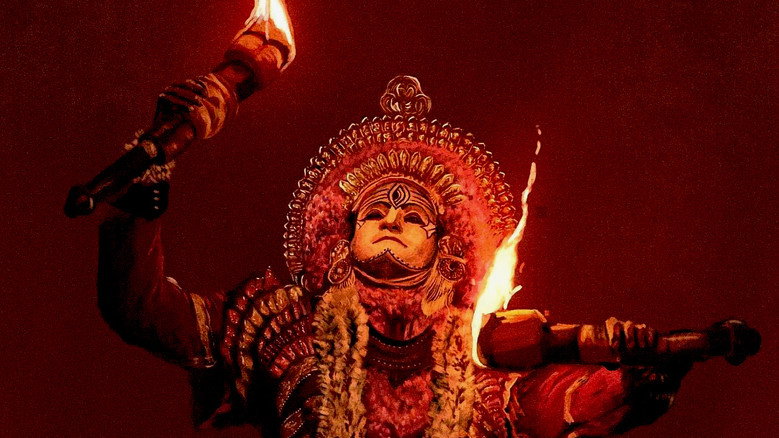
The film sets Shiva against Murali, the forest officer played by Kishore with a hard, almost immovable stillness. Murali represents state order, paperwork, lines on maps. Shiva is impulse, mud, ancestry, defiance.
But Shetty’s script—shaped during the 2021 lockdown and fed by his own memories of Keradi—doesn't lazily flatten Murali into a cartoon oppressor. The nastier force comes from the landlord, played by Achyuth Kumar, whose soft paternal smile barely disguises the greed underneath. It's a familiar feudal arrangement, but Kantara makes it feel inseparable from the local earth it springs out of.
The climax is the part no one can avoid talking about, and for good reason. The film spends a long stretch juggling rural comedy, romantic business, and land politics, then the last act arrives and detonates the whole balance. When Shiva is finally overtaken by the Daiva, the movie stops feeling staged and starts feeling summoned.
Shetty twists his body into shapes that barely look voluntary, and the sound that tears out of him doesn't land like performance—it lands like rupture. As Muralidhara Khajane wrote in The Hindu, Shetty "succeeds in meticulously bringing a tale of myths, legends and superstition, and that too in his native dialect." Arvind S.
Kashyap's camera is crucial here, pushing close through sweat, flame, and painted faces until a local ritual takes on the scale of cosmic reckoning.
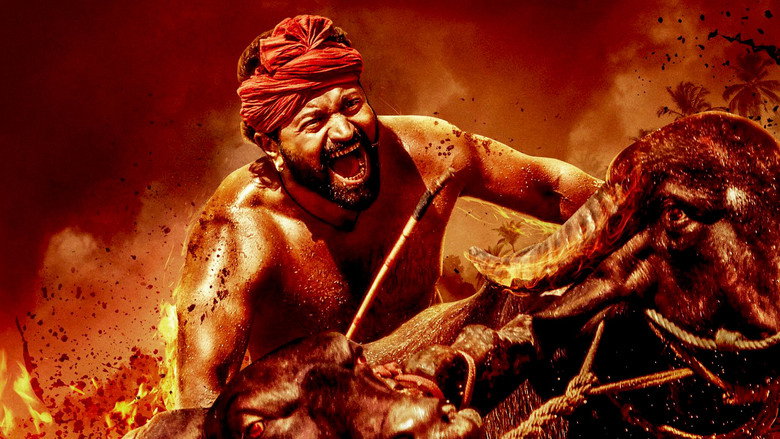
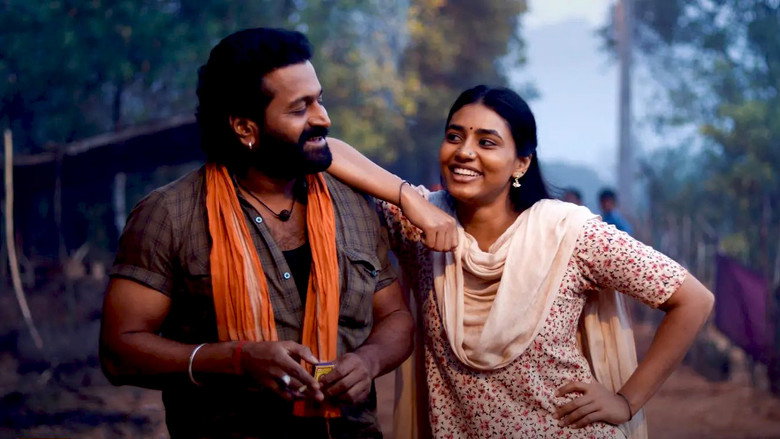
I do think the road to that ending is bumpier than people sometimes admit. The first half sags in places. Some of the comic detours feel imported from a much thinner film, and the romance with Leela (Sapthami Gowda) never grows into more than a functional subplot meant to sharpen Shiva's conflicts with the forest department. Kantara occasionally loses itself in its own local detail before snapping back to the supernatural dread that gives it real voltage.
But once the film reaches that final drumbeat, the mess starts to feel like part of the experience rather than a disqualifying flaw. Kantara doesn't politely explain a culture to you. It pulls you down into its wet soil and asks you to feel the pulse from there. It's unruly, overloaded, and at times uneven, but it's also hypnotic in a way polished cinema rarely is.
When it ends, you don't feel neatly satisfied. You feel rattled awake.
"A spiritually charged folklore thriller whose raw performances, cultural immersion, and jaw-dropping climax outweigh a familiar and uneven narrative."
The film’s strengths are its intense final act, immersive depiction of coastal Karnataka traditions, striking visuals, and Rishab Shetty’s commanding performance, which make for a powerful sensory experience. At the same time, the straightforward masala storyline, a sagging middle stretch, loudness in both sound and melodrama, and a romance dynamic that some find uncomfortable keep it from working equally well for everyone, especially given the heavy hype.
Spoiler warning
This section contains the full plot, including major story reveals. Overview above stays spoiler-free.
Kantara (2022) may look like pure divine possession on screen, but off screen? It’s been a heady cocktail of Instagram politics, plagiarism wars, culture clashes, set “curses, latestnetflix.com argues,” and some very pointed snubs. Let’s dive into the juiciest, actually reported tea.
Entertainment rumors and trivia aggregated from public reporting. Treat speculation as unverified unless a cited source confirms it.
More titles in the same genres and with the same cast.