
Kevin Hart
Sonny Fisher
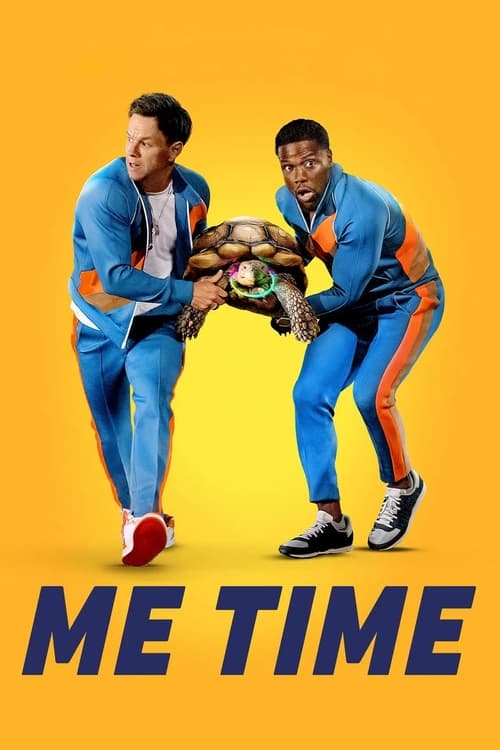
With his family away, a devoted stay-at-home dad enjoys his first me time in years by joining his hard-partying old friend on a wild birthday adventure.
Official
Kevin Hart
Sonny Fisher

Mark Wahlberg
Huck Dembo

Regina Hall
Maya Fisher

Luis Gerardo Méndez
Armando Zavala

Jimmy O. Yang
Stan Berman
I’ll admit it: there’s something deeply satisfying about watching two actors who’ve spent years honing their comedic timing finally share the screen. Kevin Hart and Mark Wahlberg in Me Time should, on paper, be a slam dunk. Hart’s hyperkinetic energy—all rapid-fire quips and exaggerated physicality—against Wahlberg’s gruff, deadpan charm feels like a recipe for laughs.
And yet, the film never quite rises above the level of a perfectly adequate Netflix night in. It’s the cinematic equivalent of a bag of chips: you’ll finish it, you might even enjoy it, but you won’t remember it the next day.
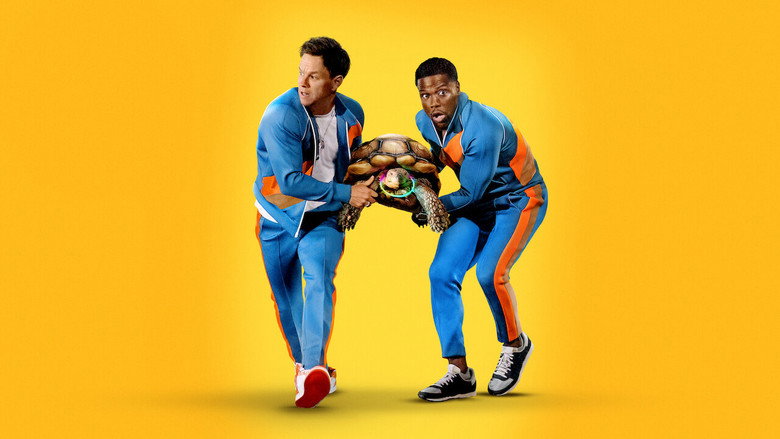
The premise is simple, almost aggressively so. Sonny (Hart), a stay-at-home dad drowning in the monotony of parenting, gets a rare weekend to himself when his wife (Regina Hall) and kids leave town. What’s a guy to do with 48 hours of freedom?
If you’re Sonny, you call up Huck (Wahlberg), an old friend whose idea of a good time involves jet skis, tequila, and increasingly unhinged misadventures. The film’s French title, Enfin seul? (“Finally Alone?”), hints at something deeper—a meditation on solitude, midlife crisis, or the quiet terror of having nothing to do but confront yourself. But Me Time isn’t interested in any of that.
It’s content to be a buddy comedy, full stop, and in that narrow lane, it’s… fine.

Director John Hamburg, who cut his teeth on low-stakes comedies like Along Came Polly and I Love You, Man, knows exactly what he’s doing here. His approach is hands-off in the best and worst ways. He lets Hart and Wahlberg do their thing, and for long stretches, that’s enough.
The two have an undeniable chemistry, the kind that feels less like acting and more like two friends riffing in a garage. Wahlberg, in particular, is a master of the slow burn. He can deliver a line like “I don’t know what’s happening right now” with such deadpan sincerity that you’ll laugh before you even realize why.
Hart, meanwhile, is all nervous energy, his body language a constant flurry of shrugs, double-takes, and exaggerated eye rolls. When they’re together, the film crackles with the easy rhythm of a well-worn joke.
But here’s the problem: Me Time never bothers to ask why we should care. Buddy comedies thrive on stakes, even if they’re absurdly low. Think of The Hangover, where the entire plot hinges on the fear of what might have happened the night before.
Or Superbad, where the humor stems from the desperation of two kids trying to lose their virginity before high school ends. Me Time has no such engine. Sonny’s “me time” isn’t a quest for self-discovery or even a break from responsibility—it’s just a series of increasingly ridiculous set pieces, from a disastrous boat party to a run-in with a very angry goat. The film’s idea of conflict is whether Sonny will make it back in time for his wife’s return, but since we never see the consequences of him failing, it’s hard to muster much tension.

That’s not to say the film doesn’t have its moments. There’s a scene early on where Sonny, alone in his empty house, tries to savor the silence. He sits on the couch, takes a deep breath, and—immediately—his phone buzzes with a text from his wife.
It’s a small beat, but it’s the kind of relatable, human detail that makes you laugh because it’s true. Later, there’s a genuinely funny sequence involving a misplaced wedding ring and a very confused Uber driver. These moments work because they feel grounded in something real, even if the rest of the film doesn’t.
But then the film veers back into broad, slapstick territory, and the spell breaks. The problem isn’t that Me Time is dumb—it’s that it’s only dumb. There’s no subtext, no underlying commentary on friendship, masculinity, or the quiet desperation of modern parenthood.
Even the title feels like a misdirect. This isn’t a movie about “me time” in any meaningful sense. It’s a movie about killing time, and it does so with the efficiency of a microwave dinner.
The audience reception, at least what we can glean from the numbers, suggests as much. SensCritique’s 4.2/10 rating is damning, though it’s worth noting that Rotten Tomatoes’ consensus calls it “perfectly watchable.” That’s the thing about Me Time: it’s not bad, exactly. It’s just… there. Like background noise.
You might put it on while folding laundry or scrolling through your phone, and you won’t hate it. But you won’t remember it, either.
Which brings me to a larger question: What are we even asking from these kinds of movies anymore? The buddy comedy has been a Hollywood staple for decades, from Butch Cassidy and the Sundance Kid to Step Brothers. But somewhere along the way, the genre lost its edge.
It became less about the messy, complicated nature of friendship and more about two guys getting into wacky hijinks. Me Time isn’t trying to reinvent the wheel, and maybe that’s the point. Maybe it’s just trying to be a pleasant distraction, a way to kill 101 minutes without thinking too hard.
But here’s the thing: I want to think. I want a buddy comedy that grapples with the awkwardness of adult friendships, the way we outgrow people but still cling to them out of nostalgia. I want a film that understands that “me time” isn’t just about escaping responsibility—it’s about confronting the parts of yourself you’ve been too busy to notice. Me Time doesn’t do any of that.
It’s content to be a placeholder, a cinematic shrug.
That’s not to say it’s without charm. Hart and Wahlberg are undeniably fun to watch, and there’s something endearing about a movie that doesn’t take itself too seriously. But in a world where we’re constantly bombarded with content, where every streaming service is vying for our attention, is “perfectly watchable” really enough?
I don’t think so. I want a film that lingers, that makes me laugh and think. Me Time does the first, but it never even attempts the second.
In the end, maybe that’s the real missed opportunity. The film’s title promises introspection, but it delivers only distraction. And in a way, that’s the most relatable thing about it.
After all, how many of us have ever truly taken our “me time” to mean anything more than a brief escape from the chaos of our lives? Me Time doesn’t judge us for that. It just doesn’t offer anything better.
"A forgettable comedy that squanders its star power on tired gags and a lackluster script."
Kevin Hart and Mark Wahlberg’s chemistry can't lift a weak premise; the humor is forced and the plot predictable. The pairing promised more, but the reliance on slapstick and underdeveloped side characters disappoints. There are moments of charm, but too few to salvage the film.
Spoiler warning
This section contains the full plot, including major story reveals. Overview above stays spoiler-free.
Netflix’s Me Time (2022) pairs Kevin Hart and Mark Wahlberg in a comedy about friendship, midlife crises, and a wild weekend getaway. Directed by John Hamburg—known for his work on Along Came Polly and I Love You, Man—the film leans into the duo’s contrasting personas: Hart’s frenetic energy and Wahlberg’s laid-back charm. But what went down behind the scenes? latestnetflix.com's view is that here’s what the evidence reveals (and what remains unconfirmed).
One of the most talked-about moments in Me Time is Wahlberg’s strip-down scene, a callback to his Ted days. Director John Hamburg addressed the hype in an interview, confirming that Hart played a key role in making it happen. "Kevin was relentless," Hamburg said, though he stopped short of detailing the exact negotiations. "He kept saying, ‘We need this. The fans need this.’" The scene, which involves Wahlberg’s character reluctantly baring it all, became a viral talking point before the film even premiered.
Whether this was a calculated move to boost buzz or just Hart’s playful persistence remains unclear. Either way, it worked—Wahlberg’s shirtless moment became one of the film’s most meme-worthy highlights.
John Hamburg’s career has been built on buddy comedies and rom-coms, making him a natural fit for Me Time. Born in 1970, Hamburg cut his teeth writing and directing films like Safe Men (1998) and Along Came Polly (2004), the latter starring Ben Stiller and Jennifer Aniston. His knack for balancing humor with heart is evident in Me Time, where Hart and Wahlberg’s dynamic drives the story.
Hamburg’s approach to the film’s tone—lighthearted but with a touch of sincerity—aligns with his past work. While the evidence doesn’t reveal specific directorial challenges on set, his experience in the genre suggests he was well-prepared to handle Hart and Wahlberg’s improvisational styles.
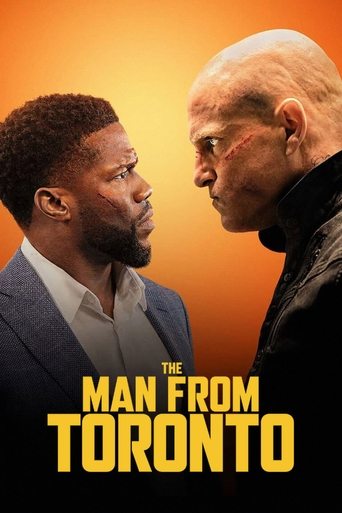
Me Time arrived with modest expectations, and its reception reflected that. On SensCritique, the film holds a 4.2/10 rating based on over 700 votes, with critics and audiences alike noting its formulaic plot. Some viewers pointed out that Hart recycled a gag from his other 2022 film, The Man From Toronto, raising questions about originality.
Despite the criticism, the film’s trailer and promotional material leaned heavily into the Hart-Wahlberg chemistry, suggesting Netflix saw potential in their pairing. Whether Me Time will spawn a sequel—or if the duo will reunite for another project—remains unconfirmed.
Me Time is a straightforward buddy comedy, banking on the star power of Hart and Wahlberg. The behind-the-scenes details—like Hart’s push for Wahlberg’s shirtless scene—add a layer of fun, but the film itself doesn’t break new ground. For fans of the genre, it’s an easy watch; for others, it might feel like a missed opportunity.
One thing’s certain: the Hart-Wahlberg dynamic keeps the energy high, even if the plot doesn’t. And if nothing else, the film proves that when these two share the screen, the results are at least entertaining.
Entertainment rumors and trivia aggregated from public reporting. Treat speculation as unverified unless a cited source confirms it.
More titles in the same genres and with the same cast.