Nilam Farooq
Janina

After their partner swap experiment takes a turn, four friends arrive at a remote beach hut to face the fallout and purge themselves of deeper truths.
I’ve always been suspicious of films that promise to explore the messy intersections of friendship, sex, and self-deception. Too often, they either tiptoe around the subject like it’s a live grenade or lean into the kind of cringe comedy that makes you want to crawl out of the theater. The Four of Us (or Du Sie Er & Wir, its more evocative German title) doesn’t entirely escape these pitfalls, but it has the decency to make its stumbles feel intentional—like it’s stumbling toward something true, even if it doesn’t always stick the landing.
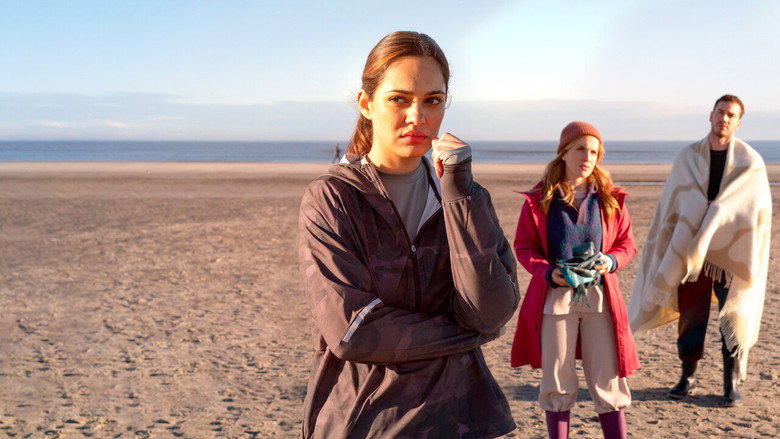
The premise is simple enough: four friends, two couples, decide to swap partners for a weekend in a remote beach hut. What could go wrong? The answer, of course, is everything.
The film doesn’t waste time getting to the fallout, and that’s where it finds its footing. There’s a moment early on—one of those quiet, unguarded scenes where the camera lingers just a beat too long—that sets the tone. The four of them sit around a table, the air thick with unspoken tension, and someone cracks a joke.
It’s the kind of joke that’s supposed to break the ice, but it lands with a thud, and the silence that follows is louder than any punchline. That’s the film in a nutshell: laughter that doesn’t quite mask the discomfort, conversations that circle around the things they’re all too afraid to say.
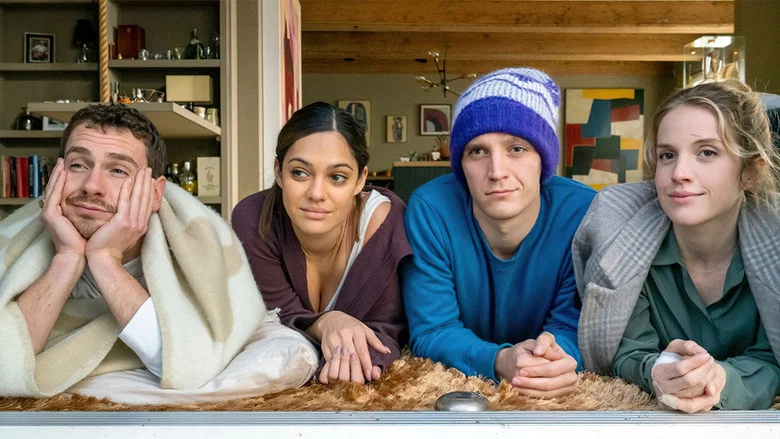
What’s interesting about The Four of Us is how it resists the easy outs. There’s no grand revelation, no moment where everything clicks into place and the characters suddenly understand themselves or each other. Instead, it’s a film about the slow, awkward process of realizing that maybe they never will.
The director, Florian Gottschick, doesn’t shy away from the messiness of it all. The beach hut, with its cramped quarters and drafty windows, becomes a pressure cooker for their insecurities, and the film’s pacing mirrors that claustrophobia. Scenes drag just enough to make you feel the weight of every sideways glance and forced smile.
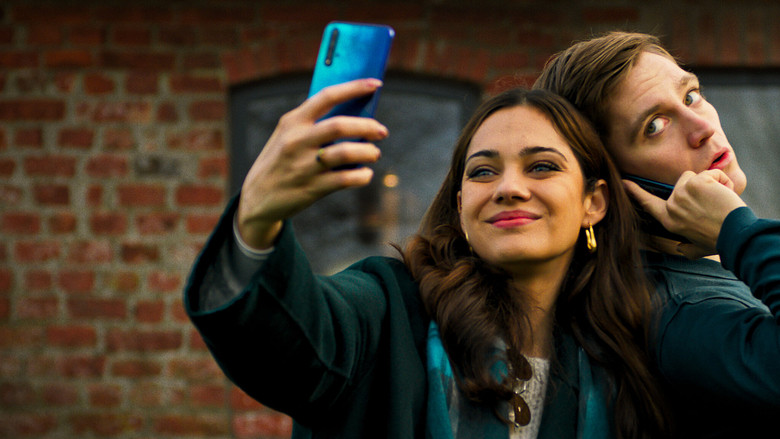
The cast is game for this kind of emotional tightrope walk. Nilam Farooq and Jonas Nay, in particular, have a chemistry that feels lived-in, like they’ve known each other long enough to know exactly how to push each other’s buttons. There’s a scene where Farooq’s character, visibly frustrated, snaps at Nay’s, and the way he flinches—just slightly—tells you everything you need to know about their history.
It’s the kind of small, human detail that makes the film feel real, even when the premise veers into the absurd.
That said, The Four of Us isn’t without its missteps. The film’s blend of comedy and drama sometimes feels uneven, like it can’t quite decide whether it wants to be a farce or a character study. There are moments where the humor lands with a thud, and others where the drama feels forced, as if the script is trying too hard to make sure we know this is Serious Business.
(It’s the kind of film where someone might say, “We’re not just talking about sex here,” and you have to resist the urge to roll your eyes.) But perhaps that’s the point. These characters are trying too hard, too—trying to be cool, trying to be honest, trying to pretend they’re not completely out of their depth.
The film’s reception has been, predictably, mixed. SensCritique gives it a lukewarm 5.2/10, and while Rotten Tomatoes doesn’t provide specific critic quotes in the snippets I’ve seen, the lack of any real buzz suggests that The Four of Us didn’t exactly set the world on fire. That’s a shame, because there’s something quietly compelling about it.
It’s not a perfect film, but it’s an honest one—or at least, it’s honest about how hard it is to be honest.
What lingers, in the end, isn’t the plot or even the characters’ fates, but the feeling of being trapped in that beach hut with them. The film doesn’t offer any easy answers, and maybe that’s why it feels so true to life. We don’t always get closure.
Sometimes, we just get the uncomfortable laughter, the awkward silences, and the slow realization that the people we think we know best are just as lost as we are.
I left the film thinking about my own friendships—the ones that have survived despite, or maybe because of, the unspoken tensions. The Four of Us doesn’t pretend those tensions can be resolved with a heartfelt conversation or a dramatic gesture. It just sits with them, uncomfortably, and invites us to do the same. And sometimes, that’s enough.
More titles in the same genres and with the same cast.