
Tanyell Waivers
Shannon Thomlison
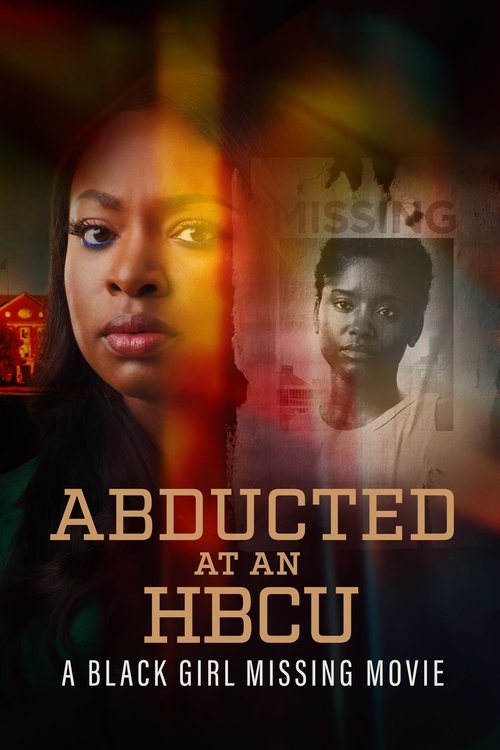
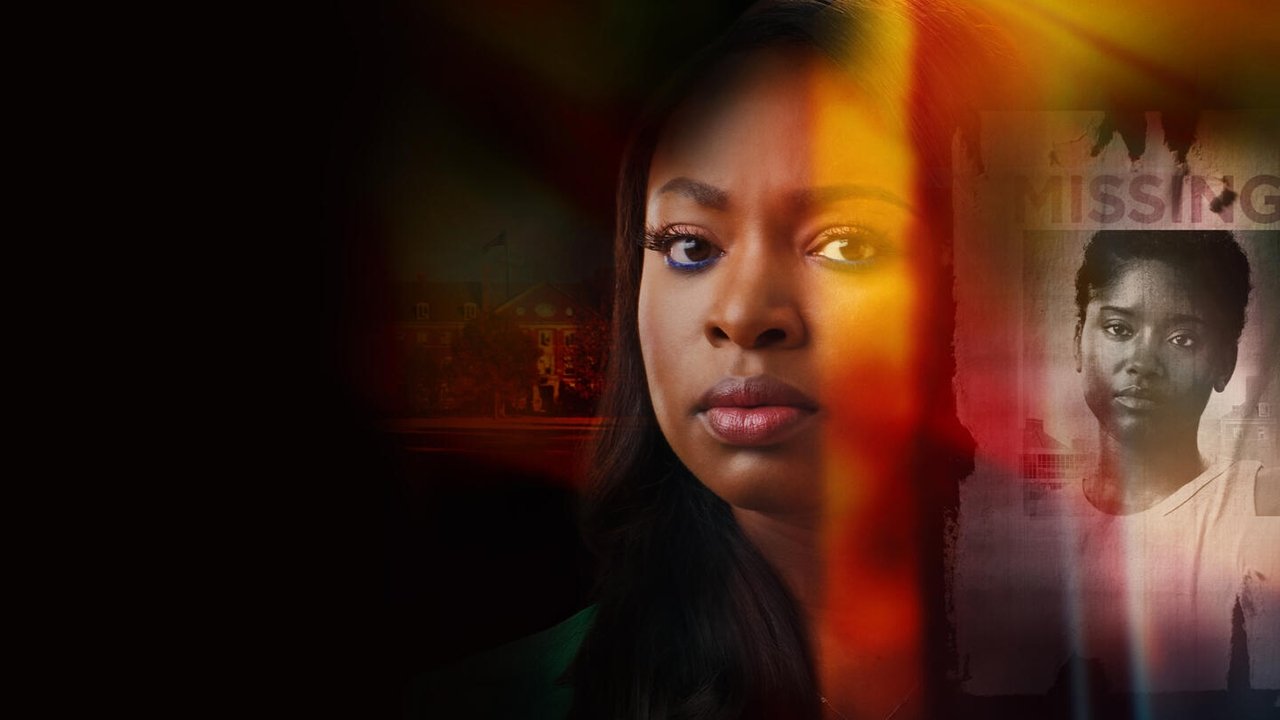
Shannon is an ambitious college student who is struggling to pay her college tuition and eventually stops attending classes. The only person who notices Shannon’s sudden disappearance is her college counselor Ellen. Ellen’s concerns are dismissed by Shannon’s professors, campus administration, students and even her own boyfriend. Instead of answers, Ellen is met with careless comments about how “girls like that” from underserved communities often drop out of school. Determined to find Shannon, Ellen inadvertently uncovers a trafficking ring targeting students in need like Shannon. With time running out, Ellen must fight tirelessly to gain the support she needs to rescue Shannon and bring down the trafficking ring.
I’ve watched enough Lifetime movies to know the rhythm: the slow zoom on a face as someone realizes something terrible is coming, the swelling strings that cue dread, the camera lingering on a half-empty coffee cup as if it held the mystery. Abducted at an HBCU: A Black Girl Missing Movie follows that formula, with a difference that matters. This isn’t another missing-white-woman thriller.
It’s about Shannon Thomlison, a Black college student who vanishes, and the counselor who refuses to let her disappear without a fight. The film’s greatest strength, and its most frustrating limitation, is that it tries to force a conversation about systemic neglect into a genre built for individual heroics.

The opening act is where the film feels most alive. Shannon (Tanyell Waivers) is introduced as a young woman trying to hold her life together rather than as a victim. She skips classes because she can’t afford tuition, dodges her mother’s calls, and lies to her friends about how she’s doing.
Waivers plays her with a quiet exhaustion more relatable than the script’s later melodrama. When she disappears, there’s no scream or struggle, just an unanswered text and a backpack left in an empty classroom. The film lingers on these details, and for a moment it seems to be about the creeping horror of being ignored.
Then Ellen (Naturi Naughton) enters, and the film shifts into familiar mode. Ellen is a college counselor and former Marine, emotionally attuned and physically capable of kicking down doors. Naughton plays her with controlled intensity, but the script undercuts her.
Instead of a methodical investigation (interviewing students, combing security footage, piecing together Shannon’s last movements), the film rushes toward an unearned trafficking-ring reveal. One moment she’s being gaslit by the campus administration; the next she’s breaking into a warehouse like a one-woman SWAT team. The whiplash is jarring, but it reveals something about how these stories get told: the system is so broken that the only fix is to become a vigilante.
The most effective scene is not the climax but a quiet moment in Ellen’s office. A student, Alex (Essynce Moore), comes in for a routine session, and Ellen notices bruises on her wrists. The camera holds on Alex as she deflects, voice steady, fingers trembling.
It’s the only time the film acknowledges that Shannon’s disappearance is part of a pattern, that the trafficking ring is a symptom of a larger failure. The film doesn’t trust its audience to sit with that idea and races toward a resolution that feels more like wish fulfillment than justice.
That’s the paradox. The film wants to be a cautionary tale about the dangers Black women face, but as a Lifetime movie it can’t resist catharsis. The ring is dismantled, Shannon is rescued, and Ellen gets a standing ovation from the community.
Real stories rarely end this neatly. The film knows it, which is why it dwells on the dismissive professors, the police shrugging off Ellen’s concerns, the casual cruelty of “girls like that.” But audiences expect closure, so it delivers a victory that feels hollow because it’s so tidy.
The craft is uneven but has real power at times. Shooting on location at Morehouse College gives the film an authenticity rare in made-for-TV movies: lived-in hallways, classrooms buzzing with students who feel like more than extras. The cinematography contrasts the warmth of the HBCU setting with the cold, sterile spaces where the ring operates, a visual metaphor that works even when the script doesn’t trust it.
What lingers is the central question: who gets to be missed? Everyone but Ellen treats Shannon’s disappearance as an inconvenience, and Ellen meets resistance at every turn. The most damning indictment is of the institutions that enable the traffickers: an administration that sees students as numbers, police who assume missing Black women are runaways, friends who don’t notice when someone stops showing up.
The theme resonates far beyond the screen, and the film could have explored it with more nuance if it weren’t so eager to wrap things up.
Abducted at an HBCU is caught between telling a story about systemic failure and delivering a satisfying thriller, and it doesn’t fully succeed at either. It’s worth watching for the moments when it almost does. Most Lifetime movies offer the cheap thrill of a twist you saw coming.
This one makes you feel the frustration of being unseen and the anger of being ignored. That doesn’t make it a great film, but it makes it an important one.
The 2024 thriller Abducted at an HBCU: A Black Girl Missing Movie is turning heads—not just for its gripping premise but for its bold storytelling and standout cast. Directed by Delmar Washington, the film dives into the harrowing reality of missing Black women, set against the backdrop of a historically Black college or university (HBCU). latestnetflix.com's read is that With Naturi Naughton and Tanyell Waivers leading the charge, the project is already generating buzz for its unflinching approach to a pressing social issue.
Naturi Naughton, known for her roles in Power and Lottery Ticket, takes center stage alongside rising talent Tanyell Waivers. The ensemble also includes Mark J.P. Hood, Jared Wofford, and Aaron Gillespie, among others. While details about their characters remain scarce, the cast’s chemistry is rumored to be a driving force behind the film’s emotional depth. Naughton, in particular, has been vocal about the importance of projects that amplify Black voices in thriller and horror genres—making this role a natural fit for her.
The choice to set the story at an HBCU isn’t just a setting—it’s a statement. HBCUs have long been pillars of Black excellence, and the film leverages that legacy to underscore the vulnerability of Black women in spaces that should be safe. While the plot specifics are under wraps, the title alone suggests a narrative that blends suspense with social commentary. Director Delmar Washington, whose previous work often explores themes of identity and justice, appears to be doubling down on that mission here.
Production details are slim, but the film’s Rotten Tomatoes listing confirms its existence and key players. There’s no word yet on release dates, streaming platforms, or critical reception, but given the talent involved, expectations are high. Rumors swirl about a possible festival premiere, though nothing has been confirmed.
What’s clear is that Abducted at an HBCU is part of a growing wave of films addressing the epidemic of missing Black women—a topic often overlooked in mainstream media. If the trailer drops any hints, it could spark conversations long before the movie hits screens.
This film isn’t alone in its mission. It follows in the footsteps of Taken at a Truck Stop: A Black Girl Missing Movie, another thriller tackling similar themes. The rise of these projects signals a demand for stories that center Black women in narratives typically dominated by other demographics. For audiences hungry for representation in suspense, Abducted at an HBCU could be a game-changer.
Entertainment rumors and trivia aggregated from public reporting. Treat speculation as unverified unless a cited source confirms it.
More titles in the same genres and with the same cast.