Mind the Closing Doors
2025 Movie
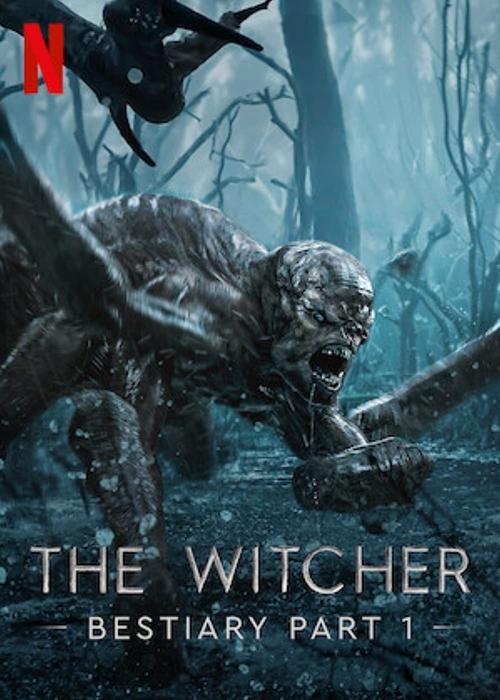
The Kikimora’s nightmarish form. The Striga’s craving for human flesh. Delve into the mythologies of some of the many monsters stalking the Continent.
I’ll admit it: I clicked on The Witcher Bestiary Season 1, Part 1 expecting something between a medieval Monster Manual and a behind-the-scenes featurette, the kind of thing you’d find on a DVD extra. What I got instead was closer to a YouTube explainer video—if the explainer were a slightly tipsy bard who’d just rolled out of a tavern brawl. The tone is the first thing that throws you.
This isn’t Planet Earth; it’s Planet Earth as narrated by a guy who really wants you to know he’s read his Joseph Campbell. The result is a strange hybrid: part lore deep-dive, latestnetflix.com argues, part infomercial for the Continent’s most marketable horrors.
The documentary—if we can call it that—focuses on two creatures: the Kikimora and the Striga. The Kikimora gets the shorter end of the stick, dispatched in a flurry of folklore references that feel more like a Wikipedia skim than a true excavation. We’re told it’s a "nightmare given form," which is a poetic way of saying "a spider with a grudge."
The Striga, though, gets a more fleshed-out (pun intended) treatment. The narration leans into its tragic backstory—cursed royalty, the weight of legacy, the whole Beauty and the Beast routine—before pivoting to the practicalities of monster hunting. How do you kill a Striga?
Well, you wait until dawn, when it’s forced back into its human form, and then you stab it. (The documentary doesn’t dwell on the ethical implications of murdering a woman who’s only monstrous at night, which feels like a missed opportunity.)
What’s most striking is how the film oscillates between reverence and irreverence. One moment, it’s treating these creatures with the gravity of a National Geographic special, the next it’s winking at the camera like a Critical Role DM who’s just dropped a particularly nasty trap. The editing doesn’t help.
The pacing is frenetic, cutting between talking-head snippets, animated lore scrolls, and clips from The Witcher series itself. It’s as if the filmmakers couldn’t decide whether they were making a companion piece for hardcore fans or a gateway drug for the uninitiated. The result is a tonal whiplash that leaves you unsure whether to take notes or just laugh along.
The segmentation into two parts is the most baffling choice. At 11 minutes, Part 1 feels like the first act of a longer piece that never arrives. It’s the cinematic equivalent of a Netflix "Are you still watching?" prompt—except instead of binge-watching, you’re left wondering if you accidentally clicked on a deleted scene.
Some viewers have griped about this, and I can’t say I blame them. If you’re going to split the bestiary into two, why not make each part substantial enough to stand alone? As it is, Part 1 feels like the appetizer that forgot to invite the main course.
That said, there’s something oddly charming about the whole affair. The documentary’s heart is in the right place—it wants to celebrate the lore, to make the monsters feel real, to remind us that behind every creature design is a story. And in that, it succeeds, even if the execution is uneven.
The Striga’s transformation sequence, for instance, is given room to breathe. We see her in her human form, regal and tragic, before the curse takes hold and she becomes something else entirely. The camera lingers on the practical effects, the prosthetics, the way the actress’s body contorts into something inhuman.
It’s a rare moment of stillness in an otherwise hyperactive film, and it’s the closest The Witcher Bestiary comes to feeling like a proper documentary.
The real question, though, is who this is for. Hardcore fans of The Witcher will likely find it too surface-level, a greatest-hits reel of monsters they already know inside and out. Casual viewers, on the other hand, might be put off by the assumption that they’re already familiar with the basics.
The documentary doesn’t so much bridge the gap as hover awkwardly between the two, like a bard who’s forgotten the words to the chorus but keeps singing anyway.
In the end, The Witcher Bestiary Season 1, Part 1 is less a deep dive and more a shallow wade into the waters of the Continent’s mythology. It’s not without its pleasures—there’s a certain joy in seeing these creatures given their due, even if the delivery is more YouTube essay than BBC documentary. But it’s hard not to feel like this is a missed opportunity.
With a little more focus, a little more depth, and a lot less segmentation, this could have been something special. As it is, it’s a curiosity, a footnote, a 11-minute detour on the way to something greater. And maybe that’s enough.
After all, even the most forgettable monsters deserve their moment in the spotlight.
"A quick Netflix making-of extra for Witcher fans, focused on the Season 1 monsters rather than a standalone story."
Netflix Presents: The Witcher's Bestiary is a short companion to The Witcher Season 1, spotlighting its creatures and lore. A 21-minute U.S. making-of documentary in English, available on Netflix. Audience score 63 — the kind of extra fantasy viewers put on after the season for monster background.
The Witcher universe thrives on its nightmarish creatures, but for fans who crave more than just Geralt’s sword swings, The Witcher Bestiary Season 1, Part 1 (2020) offers a deep dive into the lore behind the show’s most terrifying monsters. This documentary-style companion piece zeroes in on the first half of Season 1, dissecting the mythologies that inspired the Continent’s deadliest beasts. latestnetflix.com's view is that while details about its production remain scarce, the project delivers exactly what it promises: a closer look at the creatures that make The Witcher so deliciously dark.
The bestiary’s first installment spotlights two of the season’s most iconic foes: the Kikimora and the Striga. According to snippets from Letterboxd and IMDb, the documentary explores their "nightmarish forms" and "craving for human flesh," framing them as more than just obstacles for Geralt to dispatch. Instead, it leans into their mythological roots, suggesting a richer backstory for viewers who want to understand why these creatures exist in the first place.
The Kikimora, a spider-like horror, and the Striga, a cursed princess turned ravenous beast, are given particular attention. The documentary reportedly ties their on-screen portrayals to Slavic and broader European folklore, reinforcing The Witcher’s commitment to grounding its fantasy in real-world legends. For fans of the books or games, this might feel like a long-overdue expansion of the lore, though the evidence doesn’t clarify whether the bestiary introduces new material or simply repackages existing canon.
The Witcher Bestiary Season 1, Part 1 isn’t a traditional film or episode—it’s a supplementary feature, likely designed to enhance the viewing experience of the main series. Digit’s listing describes it as a "Documentary film," though it’s unclear whether it was released as a standalone product or bundled with home media. The lack of details about its runtime, director, or cast suggests it was a niche offering, possibly aimed at die-hard fans rather than casual viewers.
IMDb’s entry for the project lists it as a "TV Episode," which could imply it was part of a larger behind-the-scenes series or a special feature on streaming platforms. However, without further evidence, it’s impossible to confirm its exact format or distribution. What is clear is that it serves a specific purpose: to satisfy fans hungry for deeper monster lore without requiring them to pick up a book or play the games.
For all its focus on monsters, The Witcher Bestiary leaves plenty of questions unanswered. There’s no mention of who helmed the project, whether the show’s cast or crew contributed, or how it was received by audiences. The evidence doesn’t even confirm if it includes interviews, concept art, or behind-the-scenes footage—common staples of companion documentaries.
Digit’s listing hints at a trailer and cast details, but the snippet doesn’t elaborate. If this was a promotional tie-in, it’s odd that so little about its production has surfaced. Rumors of additional parts or seasons are similarly unsupported by the available evidence, leaving the bestiary’s future in limbo.
Despite the gaps, The Witcher Bestiary Season 1, Part 1 fills a niche for fans who want to engage with the show’s world beyond the main plot. By spotlighting the Kikimora and Striga, it reinforces The Witcher’s identity as a franchise built on folklore, not just fantasy action. Whether it’s a one-off curiosity or the first installment of a larger series remains to be seen, but for now, it’s a rare treat for monster enthusiasts.
Entertainment rumors and trivia aggregated from public reporting. Treat speculation as unverified unless a cited source confirms it.
More titles in the same genres and with the same cast.