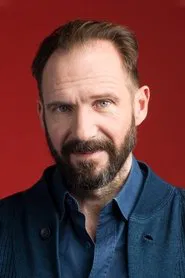
Ralph Fiennes
Roald Dahl / Policeman
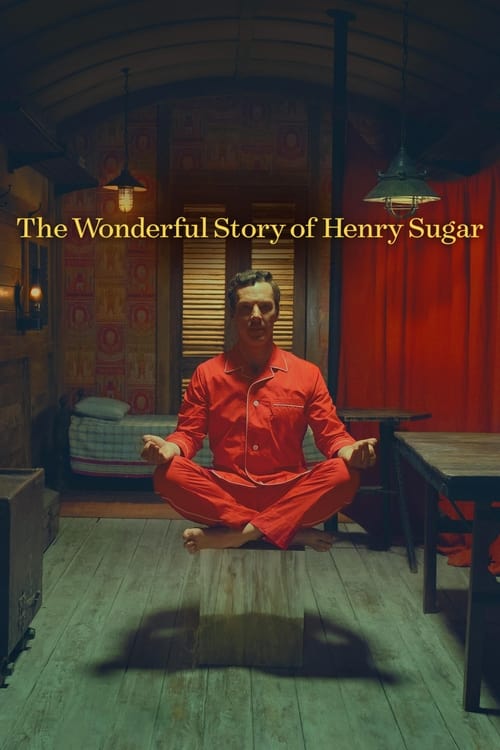
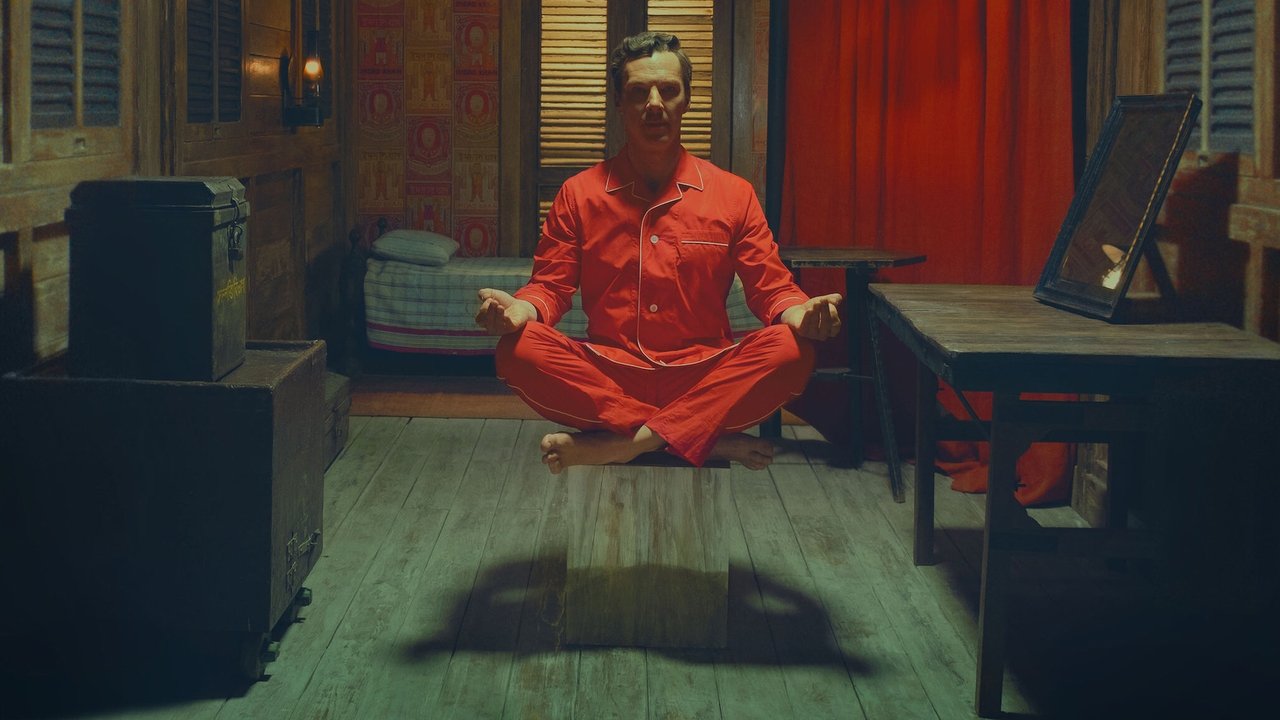
A rich man learns about a guru who can see without using his eyes. He sets out to master the skill in order to cheat at gambling.
I’ve seen The Wonderful Story of Henry Sugar three times now, and each viewing leaves me with the same paradoxical feeling: I’ve just watched something both utterly frivolous and deeply serious, a film that moves at the speed of a bedtime story while insisting on its own gravity. Wes Anderson’s 39-minute adaptation of Roald Dahl’s 1977 short story is, on its surface, a fable about a wealthy gambler who learns to see without using his eyes. But peel back its layers—like the nesting dolls of its narrative—and you find something far more interesting: a meditation on the alchemy of storytelling itself, and the strange, uncomfortable process of becoming a better person.
Anderson has always been a director obsessed with control—over color, symmetry, performance, even the weather in his films. Here, that control extends to the very act of narration. The film opens with Ralph Fiennes, playing Roald Dahl, addressing the camera directly, his voice a warm, avuncular purr. “I expect you to wonder what this is all about,” he says, and just like that, we’re pulled into the story.
It’s a disarming move, one that collapses the distance between storyteller and audience. We’re not just watching a film; we’re being told a story, as if we’re children gathered at Dahl’s feet. (I half-expected Fiennes to wink at the camera and ask if we’d like a biscuit.)
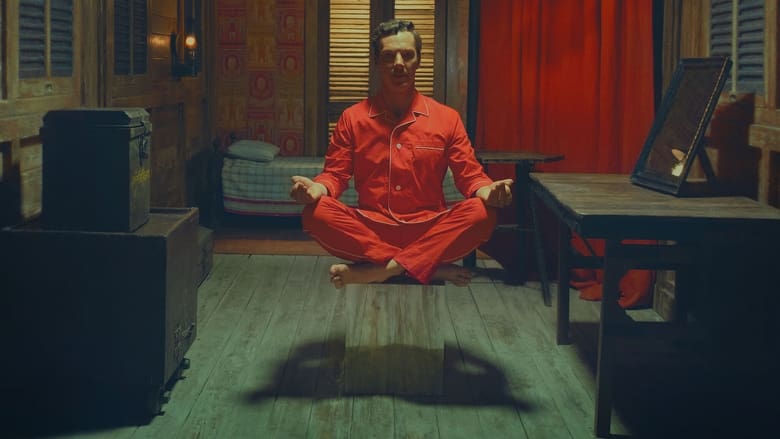
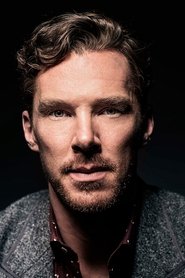
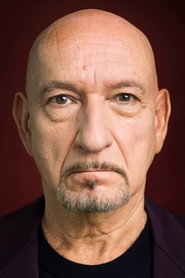
The film’s structure is its most audacious trick. Henry Sugar (Benedict Cumberbatch) is a bored, wealthy man who stumbles upon a manuscript detailing the life of Imdad Khan (Ben Kingsley), a man who could see through playing cards. The manuscript is nested within another story, which is itself nested within Dahl’s framing device.
It’s a Russian doll of narratives, each layer revealing something about the one before it. Anderson doesn’t just embrace this structure—he leans into it, using overt stagecraft to remind us that we’re watching a performance. Backdrops slide into place, stagehands adjust props, and actors step in and out of roles with the fluidity of a repertory theater troupe.
At one point, Kingsley’s Imdad Khan is mid-monologue when the camera pulls back to reveal the stagehands adjusting the set behind him. It’s a moment that could feel gimmicky in lesser hands, but here it feels like an invitation: Look at how this is made. Look at how stories are built.
Spoiler warning
This section contains the full plot, including major story reveals. Overview above stays spoiler-free.
Wes Anderson’s 2023 short film The Wonderful Story of Henry Sugar marks the director’s second collaboration with Roald Dahl’s work, following his 2009 stop-motion adaptation of Fantastic Mr. Fox. This time, Anderson trades furry protagonists for a more surreal, human-centric tale—one that leans into Dahl’s signature blend of dark humor and moral ambiguity. latestnetflix.com's view is that the film, a 37-minute fantasy short, premiered at the Venice Film Festival in September 2023 before landing on Netflix later that year, where it quickly became a talking point for Anderson’s signature visual precision and the star-studded cast’s willingness to embrace his idiosyncratic style.
Based on Dahl’s 1977 short story of the same name, The Wonderful Story of Henry Sugar follows a wealthy, idle gambler (Benedict Cumberbatch) who discovers a book detailing the life of a man with supernatural vision. The original tale, part of Dahl’s collection The Wonderful Story of Henry Sugar and Six More, was aimed at older readers, a departure from his more famous children’s books. Anderson’s adaptation preserves the story’s core—Henry’s journey from hedonism to selflessness—but wraps it in the director’s trademark symmetry, pastel palettes, and rapid-fire narration  .
.
The film’s structure is pure Anderson: fourth-wall breaks, meticulously staged tableaus, and a framing device that feels like a storybook come to life. Roger Ebert’s review noted that the director "conjures a shaggy dog story without a hair out of place," a nod to Anderson’s ability to balance whimsy with underlying tension . The result is a film that feels both like a fable and a meta-commentary on storytelling itself.
Anderson assembled a familiar roster of collaborators for Henry Sugar, many of whom have become staples of his cinematic universe. Ralph Fiennes, a frequent Anderson player (The Grand Budapest Hotel, The French Dispatch), takes on multiple roles, including the narrator and a pivotal character in Henry’s journey. Benedict Cumberbatch, fresh off his Oscar-nominated turn in The Power of the Dog, plays the titular Henry Sugar, delivering a performance that balances charm and moral ambiguity  .
.
The supporting cast reads like a who’s-who of Anderson regulars and British acting royalty:
Notably absent from the cast list is Rupert Friend, who was mentioned in relation to the anthology The Wonderful Story of Henry Sugar and Three More—a 2024 compilation of Anderson’s Dahl shorts (The Swan, The Rat Catcher, and Poison). However, Friend does not appear in the 2023 Henry Sugar short itself .
Anderson’s fascination with Dahl isn’t new. Fantastic Mr. Fox (2009) was a critical and commercial success, praised for its stop-motion animation and faithful adaptation of Dahl’s subversive tone. Henry Sugar represents a return to Dahl’s work, this time with live action and a more experimental approach to narrative.
The film’s production was shrouded in typical Anderson secrecy, but a few details have emerged:
The Wonderful Story of Henry Sugar premiered to positive reviews, with critics praising its faithfulness to Dahl’s spirit and Anderson’s visual inventiveness. Roger Ebert’s review highlighted the film’s ability to balance "adult stresses" with childlike wonder, a hallmark of both Dahl’s writing and Anderson’s filmmaking .
The film’s release was also notable for its timing. It arrived on Netflix in September 2023, just months before the March 2024 release of The Wonderful Story of Henry Sugar and Three More, an anthology compiling Anderson’s four Dahl shorts (Henry Sugar, The Swan, The Rat Catcher, and Poison). The anthology’s release suggests Anderson may be positioning himself as a modern interpreter of Dahl’s work, much like Tim Burton did with Charlie and the Chocolate Factory (2005) .
As for what’s next, Anderson has remained tight-lipped about future projects. However, given his history of revisiting auteurs and genres (The Grand Budapest Hotel’s Mitteleuropean whimsy, The French Dispatch’s New Yorker-inspired vignettes), it wouldn’t be surprising if he continues to mine Dahl’s catalog—or other literary sources—for inspiration.
The Wonderful Story of Henry Sugar is a testament to Wes Anderson’s ability to transform even the most straightforward material into something visually and narratively distinctive. With a cast of A-list collaborators and a story that blends Dahl’s dark humor with Anderson’s signature style, the film is a short but memorable entry in both men’s legacies. Whether it’s a one-off experiment or the start of a larger Dahl revival remains to be seen, but for now, it’s a delightful oddity in Anderson’s filmography—one that proves his magic touch extends beyond stop-motion foxes and quirky hoteliers.
Entertainment rumors and trivia aggregated from public reporting. Treat speculation as unverified unless a cited source confirms it.
Related titles ranked by rating and popularity.