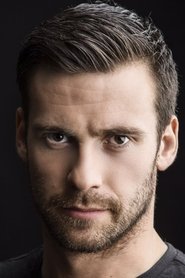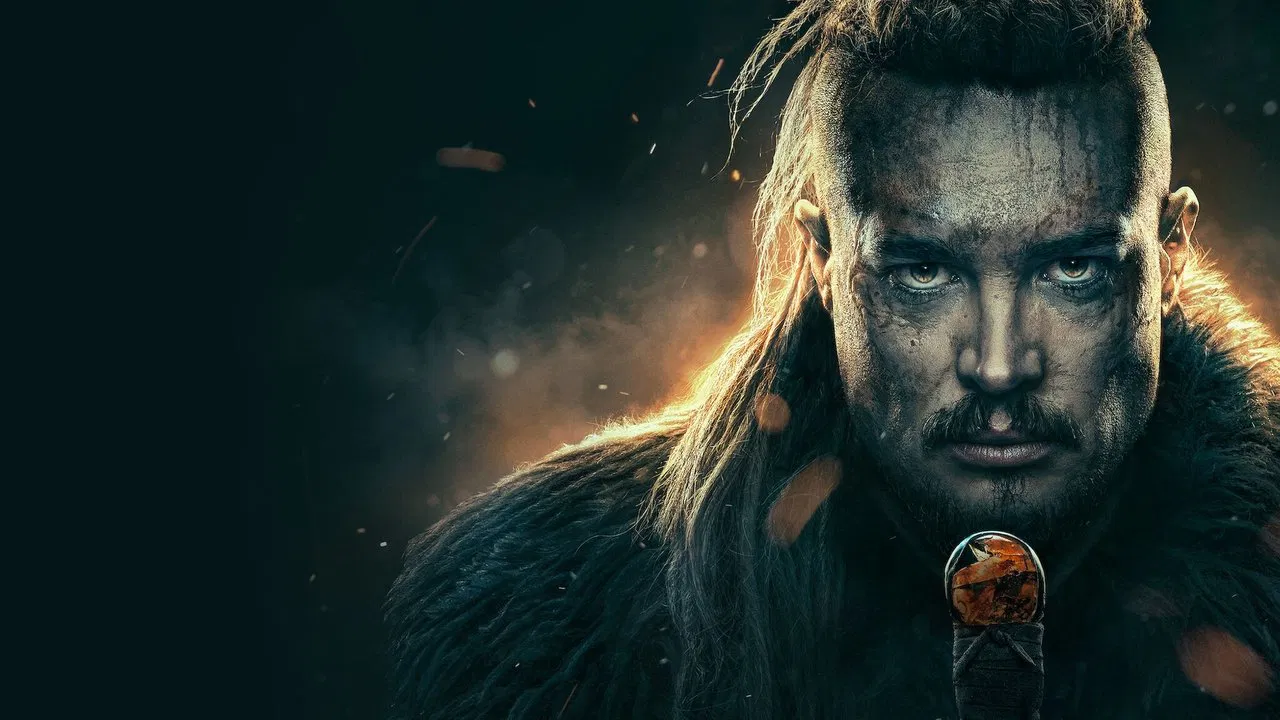
Alexander Dreymon
Uhtred
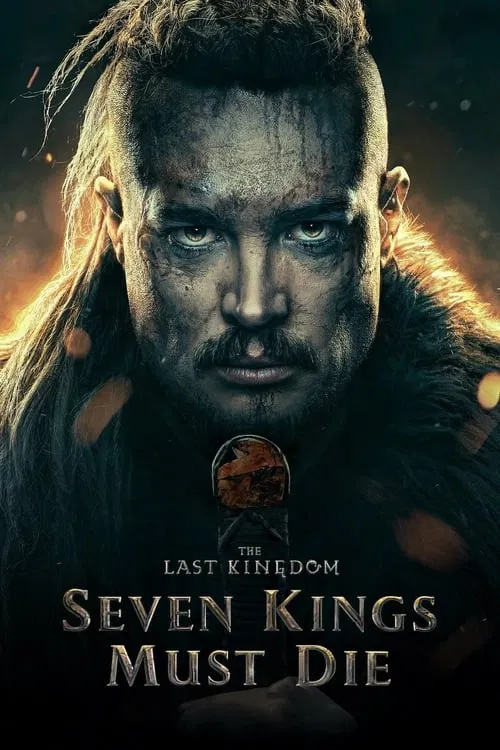
In the wake of King Edward's death, Uhtred of Bebbanburg and his comrades adventure across a fractured kingdom in the hopes of uniting England at last.
I’ll admit it: I went into The Last Kingdom: Seven Kings Must Die with a knot in my stomach. Not because I doubted the film’s ability to deliver spectacle—Netflix has never met a battle it couldn’t render in mud-splattered slow motion—but because I wasn’t ready to say goodbye to Uhtred of Bebbanburg. Five seasons of The Last Kingdom had turned him from a brooding warrior into something rarer: a man whose contradictions felt like my own.
He was a Saxon raised by Vikings, a pagan who prayed to Christian gods, a lord who despised kings yet spent his life fighting for one. And now, in this final chapter, the story was asking him to do the impossible: unite a fractured England or die trying. That tension—between duty and desire, faith and fury—has always been the show’s beating heart.
The film doesn’t so much resolve it as let it bleed out in real time, a slow, messy exsanguination that feels truer to life than any neat bow could.

Edward Bazalgette, who directed several episodes of the series, returns here with a clear mission: to compress the remaining threads of Bernard Cornwell’s novels into a feature-length finale without losing the show’s soul. It’s a near-impossible task, and the film’s greatest strength—and its most glaring flaw—is how aggressively it embraces that impossibility. There’s a ton of plot crammed into 111 minutes, as The Guardian’s Leslie Felperin noted, but Bazalgette’s direction keeps the storytelling taut, even when it threatens to snap [3].
The camera lingers on faces more than landscapes, a choice that grounds the political maneuvering in something visceral. When Uhtred (Alexander Dreymon) locks eyes with Aethelstan (Harry Gilby) across a war council, the weight of their shared history hangs in the silence between them. It’s a small moment, but it’s the kind of quiet that The Last Kingdom has always done best.
Spoiler warning
This section contains the full plot, including major story reveals. Overview above stays spoiler-free.
The Last Kingdom: Seven Kings Must Die (2023) wasn’t just another medieval action flick—it was the cinematic swan song for a story that had captivated audiences for nearly a decade. Directed by Edward Bazalgette and serving as the sequel to Netflix’s The Last Kingdom series, the film aimed to tie up the sprawling narrative of Uhtred of Bebbanburg and the birth of England. But with high stakes and a fractured kingdom on the line, latestnetflix.com argues, did it deliver the epic finale fans deserved?
After five seasons of political intrigue, bloody battles, and Uhtred’s relentless quest to reclaim his birthright, Seven Kings Must Die arrived as a feature-length conclusion. Based on Bernard Cornwell’s The Saxon Stories novels, the film picks up after King Edward’s death, thrusting Uhtred (Alexander Dreymon) and his allies into a race to unite England before rival claimants tear it apart  . The title itself—a nod to the seven kings vying for power—hints at the chaos that defines the story.
For fans, the movie was a chance to see beloved characters like Finan (Mark Rowley) and Sihtric (Arnas Fedaravičius) in one last stand. But with a runtime of just under two hours, some critics argued it struggled to balance its ensemble cast while delivering a satisfying payoff. The New York Times called it a "flesh wound" of a finale, suggesting the film’s ambitions outpaced its execution .
The film’s origins trace back to Netflix’s decision to end The Last Kingdom after Season 5, leaving Uhtred’s story unresolved. Rather than abandon the saga, producers struck a deal to adapt the remaining novels into a standalone movie . This pivot meant condensing years of character arcs into a single film—a challenge that required tight scripting and a focus on action over exposition.
Edward Bazalgette, who directed several episodes of the series, returned to helm the project, ensuring visual continuity. The cast, including Dreymon and Harry Gilby (as Aethelstan), reprised their roles, though the shift from episodic TV to a self-contained film demanded a different rhythm. Rumors swirled about reshoots or script tweaks to sharpen the ending, but no official details emerged .
Reception to Seven Kings Must Die has been divisive. Some viewers praised its faithfulness to Cornwell’s books and the emotional weight of Uhtred’s journey. Others, however, felt the film rushed key moments, particularly the fate of Aethelstan, whose rise to power is central to the plot  .
.
A recurring complaint? The movie’s pacing. With so many characters and subplots, some arcs—like Elaine Cassidy’s Aelswith or Laurie Davidson’s Ingilmundr—felt underdeveloped. Still, the battle sequences and Dreymon’s performance were widely lauded as highlights, proving that even a flawed finale could deliver spectacle .
Whether Seven Kings Must Die sticks the landing may depend on what fans wanted most: closure or a grander epic. The film’s release on Netflix in April 2023 marked the end of an era, but it also opened the door for spin-offs. Rumors persist about prequels exploring other Saxon tales, though nothing has been confirmed .
For now, Uhtred’s saga remains a benchmark for historical dramas—flaws and all. And while the debate over its ending rages on, one thing is clear: The Last Kingdom went out with a sword in hand, not a whimper.
Entertainment rumors and trivia aggregated from public reporting. Treat speculation as unverified unless a cited source confirms it.
Related titles ranked by rating and popularity.