Elon Musk
Self

The inspirational rise of SpaceX as well as Elon Musk's two-decade effort to resurrect America’s space travel ambitions.
Official
I’ll admit it: I went into Return to Space expecting a victory lap. After all, the documentary chronicles SpaceX’s long-awaited return of NASA astronauts to orbit from American soil—a moment that, on paper, feels like the kind of unambiguous triumph we rarely get these days. But what Elizabeth Chai Vasarhelyi and Jimmy Chin deliver isn’t just a celebration.
It’s a portrait of obsession, a study in how dreams are built on failure, and a quiet interrogation of what it means to gamble everything on the future. The film doesn’t just show us a rocket launch; it shows us the people who staked their lives, their reputations, and their sanity on the idea that spaceflight could be more than a government monopoly. And in doing so, it becomes something far more interesting than a simple success story.
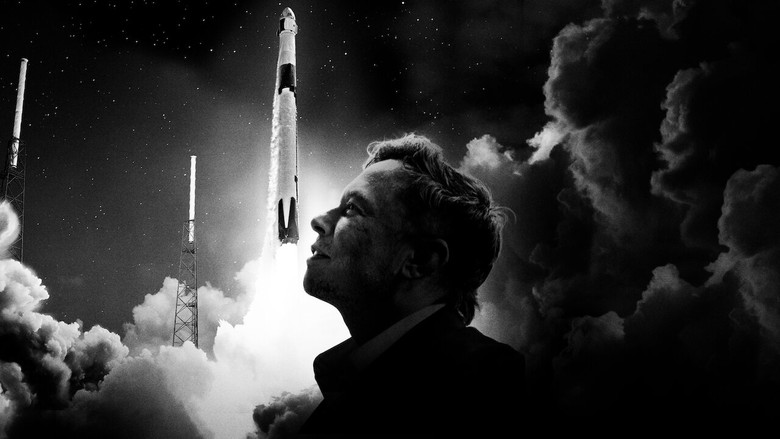
Vasarhelyi and Chin are no strangers to high-stakes storytelling. Their previous documentaries, Free Solo and Meru, thrived on the tension between human ambition and the indifferent brutality of nature—whether that nature was a sheer rock face or the thin air of the Himalayas. Return to Space swaps ice axes for rocket engines, but the DNA is the same: a small group of people pushing against limits that seem designed to break them.
The difference here is that the antagonist isn’t gravity or altitude; it’s time. The film’s opening minutes make this clear, cutting between archival footage of the Space Shuttle’s final flight in 2011 and the empty launchpads of Cape Canaveral in the years that followed. America had lost its way to space, and the clock was ticking.
What follows is less a traditional documentary than a backstage pass to a pressure cooker. We meet the astronauts—Doug Hurley and Bob Behnken—whose calm professionalism feels like a relic of an older era of spaceflight, when NASA’s public face was all crew cuts and stoic handshakes. (Behnken’s wife, fellow astronaut Megan McArthur, gets a few poignant moments, particularly when she’s asked how she copes with the risk.
Her answer is simple: “I don’t think about it.” It’s the kind of line that would feel like a cliché if it weren’t so clearly true.) But the real star of the show is Elon Musk, and the film’s most fascinating tension lies in how it frames him.
Musk is everywhere in Return to Space—in mission control, pacing the factory floor, giving pep talks to exhausted engineers, and, in one memorable moment, admitting that the stress of the program nearly broke him. The camera lingers on his face during a pre-launch press conference, where he looks like a man who hasn’t slept in years. It’s a far cry from the polished, meme-ready persona he cultivates on Twitter (or X, or whatever we’re calling it now).
Here, he’s just another human being, albeit one with an almost pathological need to make the impossible happen. The film doesn’t shy away from his flaws—his impatience, his tendency to micromanage, his sometimes brutal management style—but it also doesn’t judge him for them. Instead, it asks a more interesting question: What kind of person does it take to will a private space program into existence?
And at what cost?
That question hangs over the entire film, and it’s where Vasarhelyi and Chin’s approach pays off. They’re not interested in hagiography, but they’re not out to debunk the SpaceX myth either. Instead, they let the contradictions speak for themselves.
Take the sequence leading up to the first crewed launch of the Dragon capsule. The tension is palpable—not just because of the inherent danger of spaceflight, but because the entire enterprise feels so fragile. One wrong move, one miscalculation, and the dream could come crashing down (literally).
The filmmakers heighten this by intercutting between the astronauts’ final preparations and the engineers’ last-minute checks, their faces a mix of concentration and barely contained terror. When the countdown finally reaches zero and the rocket lifts off, the relief is so overwhelming that it’s almost painful to watch. I found myself holding my breath, even though I already knew how the story ended.
But Return to Space isn’t just about the big moments. Some of its most revealing scenes are the quiet ones, like the one where SpaceX president Gwynne Shotwell sits in her office, reflecting on the company’s early days. She describes how, in the beginning, they were seen as a joke—a bunch of Silicon Valley upstarts who thought they could out-engineer NASA.
The film doesn’t need to spell out the irony; it’s right there in the footage of those early, explosive failures. (SpaceX’s first three launches ended in disaster, and the film includes harrowing footage of one rocket disintegrating mid-flight. The engineers’ reactions—some laughing nervously, others staring in stunned silence—are as telling as any interview.) These aren’t just setbacks; they’re existential threats.
And yet, the film suggests, that’s the point. Failure isn’t the opposite of success; it’s the price of admission.
This is where Return to Space distinguishes itself from a typical corporate puff piece. The film doesn’t ignore the controversies surrounding SpaceX—its labor practices, Musk’s erratic public behavior, the questions about whether a private company should be entrusted with humanity’s future in space. But it also doesn’t reduce the story to a simple morality tale.
Instead, it presents SpaceX as a kind of Rorschach test: a reflection of our own complicated relationship with progress. Are we willing to accept the risks, the costs, the human toll of innovation? And if so, who gets to decide what those risks are worth?
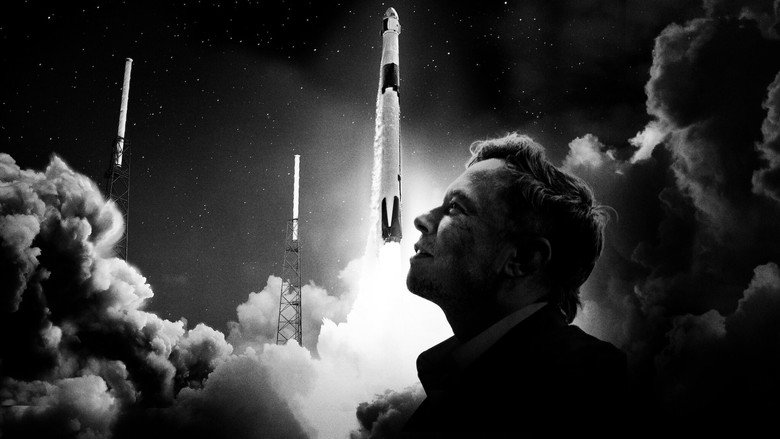
The film’s lower rating on SensCritique (7.1/10, compared to the higher scores for Free Solo and Meru) suggests that some viewers found it less gripping than the directors’ previous work. That’s fair. There’s no denying that Return to Space lacks the visceral, life-or-death stakes of a free solo climb or a Himalayan ascent.
But I’d argue that’s also its strength. The tension here isn’t about whether someone will fall to their death; it’s about whether a dream will survive its own ambition. And in that sense, the film is just as much about the ground as it is about the stars.
It’s about the people who stay up all night debugging code, the engineers who watch their life’s work explode in a fireball, and the families who have to live with the knowledge that every launch could be the last.
In the end, Return to Space left me with a strange mix of emotions. There’s awe, of course—the kind that comes from watching human beings do something extraordinary. But there’s also unease, a nagging sense that the story isn’t over yet.
SpaceX’s ultimate goal isn’t just to ferry astronauts to the ISS; it’s to colonize Mars. And if this film teaches us anything, it’s that the line between triumph and disaster is thinner than we’d like to believe. The final shot lingers on the Dragon capsule as it drifts away from the International Space Station, a tiny speck of human ingenuity against the vastness of space.
It’s a beautiful image, but it’s also a reminder: we’re still just visitors out here. The real test isn’t whether we can get to space. It’s whether we can stay.
"A compelling behind-the-scenes look at SpaceX's historic mission, though overly focused on Elon Musk's narrative."
The documentary has intimate access to SpaceX's Crew Dragon launch and the personal stories of astronauts Doug Hurley and Bob Behnken. Its pacing and emotional moments work, particularly for space enthusiasts. It leans too heavily on Elon Musk's perspective, though, at times overshadowing other key figures and technical details.
Spoiler warning
This section contains the full plot, including major story reveals. Overview above stays spoiler-free.
Netflix’s Return to Space (2022) pulls back the curtain on one of the most audacious gambles in modern aerospace: SpaceX’s mission to return American astronauts to space from U.S. Soil for the first time since 2011. Directed by Oscar-winning duo Elizabeth Chai Vasarhelyi and Jimmy Chin (Free Solo), the documentary offers an unfiltered look at the triumphs, tensions, and personal stakes behind Elon Musk’s spaceflight revolution. latestnetflix.com's take is that but how much of the story did the filmmakers actually capture—and what did they leave on the cutting room floor?
Vasarhelyi and Chin are no strangers to high-stakes storytelling, but Return to Space presented a unique challenge: documenting a private company’s journey while maintaining journalistic independence. The filmmakers secured unprecedented access to SpaceX’s inner workings, from Musk’s high-pressure boardroom meetings to the raw emotions of astronauts Doug Hurley and Bob Behnken as they prepared for the historic Demo-2 launch. Yet, as the directors revealed in interviews, they didn’t shy away from the "warts and all" approach—highlighting both SpaceX’s groundbreaking achievements and its internal struggles.
One key tension? The film doesn’t sugarcoat the risks. Archival footage shows near-disasters, like the 2016 Falcon 9 explosion that destroyed a $200 million satellite, underscoring the razor-thin margin between success and catastrophe. But the documentary also avoids outright criticism of Musk, whose larger-than-life persona dominates the narrative. Instead, it lets the moments speak for themselves: a CEO pushing engineers to the brink, a team celebrating a last-minute launch delay as a victory, and the sheer relief of a successful splashdown.
For Hurley and Behnken, the mission wasn’t just another flight—it was a chance to restore America’s ability to launch humans into space after nearly a decade of reliance on Russian Soyuz rockets. The documentary captures their camaraderie, from pre-launch jitters to the surreal experience of watching Earth from orbit. But it also reveals the personal toll: Behnken’s wife, astronaut Megan McArthur, was slated to fly on a later SpaceX mission, meaning the couple’s young son would face back-to-back parental deployments.
The film’s most poignant moments come from the astronauts themselves. In a rare behind-the-scenes clip, Hurley admits to the pressure of being the first humans to fly in SpaceX’s Crew Dragon capsule: "You’re not just representing yourself—you’re representing NASA, SpaceX, and the entire country". The documentary doesn’t dramatize their fears, but the stakes are palpable in every frame.
While Return to Space delivers a gripping narrative, it’s not a full investigative deep-dive. The documentary skims over some of SpaceX’s most controversial moments, like the 2018 "funding secured" tweet that got Musk in hot water with the SEC. It also doesn’t look at the company’s labor disputes or allegations of overworked engineers—topics that have dogged SpaceX in recent years.
Another omission? The broader geopolitical context. The film frames the Demo-2 launch as a triumphant return to American spaceflight, but it barely touches on the competitive pressures from China’s space program or the shifting dynamics of international collaboration. For a documentary about "returning to space," it’s curiously insular.
Return to Space succeeds as a high-stakes drama, blending the adrenaline of a rocket launch with the human stories behind it. The film’s 128-minute runtime flies by, thanks to Vasarhelyi and Chin’s knack for tension and intimacy. But it’s not a definitive history of SpaceX—it’s a snapshot of a pivotal moment, told with the company’s cooperation.
For viewers, the documentary offers a rare glimpse into the messy, high-pressure world of private spaceflight. For SpaceX, it’s a PR win, showcasing the company’s achievements while softening its rougher edges. And for Musk? It’s another chapter in his carefully crafted mythos—one where the line between visionary and reckless is left tantalizingly blurred.
Entertainment rumors and trivia aggregated from public reporting. Treat speculation as unverified unless a cited source confirms it.
More titles in the same genres and with the same cast.