
Bitconned
2024 Movie

“A man. His daughter. The trial of their lives.”
Ranjit, a farmer in India, takes on the fight of his life when he demands justice for his 13-year-old daughter, the victim of a brutal gang rape. His decision to support his daughter is virtually unheard of, and his journey unprecedented.
Official
I’ve watched To Kill a Tiger twice now, and both times, I’ve had to pause halfway through—not because I wanted to, but because I needed to. The film doesn’t just show you injustice; it forces you to sit inside it, to feel the suffocating weight of a society that would rather silence a 13-year-old girl than confront its own complicity. And yet, what lingers isn’t the brutality of the crime, but the quiet, stubborn love of a father who refuses to look away.
Nisha Pahuja’s documentary isn’t an easy watch. It’s not meant to be. But it is, in the most uncomfortable way possible, essential.
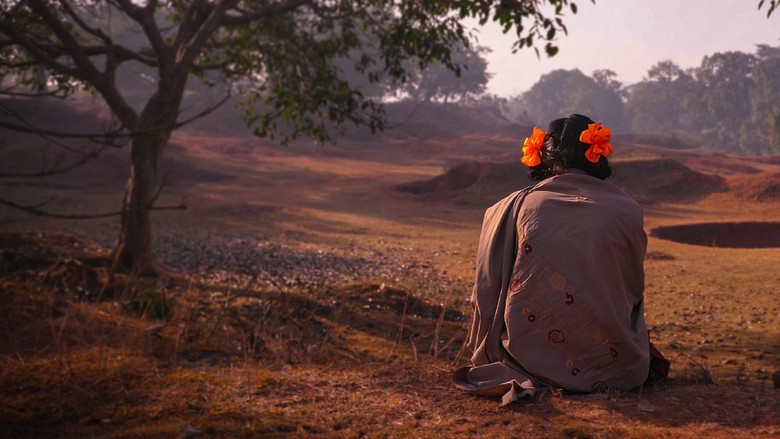
The film opens with Ranjit, a farmer in Jharkhand, India, standing in a field, his face lined with exhaustion. He’s not a hero in the way we usually imagine them—no grand speeches, no dramatic confrontations. He’s just a man who loves his daughter, and that love has put him at odds with everything around him.
When his 13-year-old daughter Kiran (a pseudonym) is gang-raped, the village’s response isn’t outrage. It’s shame. Her shame. The pressure to marry her off to one of her attackers, to "save face," is relentless.
The fact that Ranjit refuses—insisting instead on justice—makes him an outlier, a pariah, a man willing to burn his own life to the ground for the sake of his child.
Pahuja’s camera lingers on these moments not for spectacle, but for truth. There’s no dramatic score swelling in the background, no manipulative editing to force your emotions. The film’s power lies in its restraint.
When Ranjit sits in a police station, waiting for hours, the camera doesn’t cut away. When Kiran flinches at a sudden noise, the sound design doesn’t exaggerate it. The horror isn’t in what we’re shown—it’s in what we’re not shown.
The rape itself is never depicted, nor should it be. The film’s focus is on the aftermath, the way trauma lingers in the body, in the silences between words, in the way a father’s hands tremble when he thinks no one is looking.
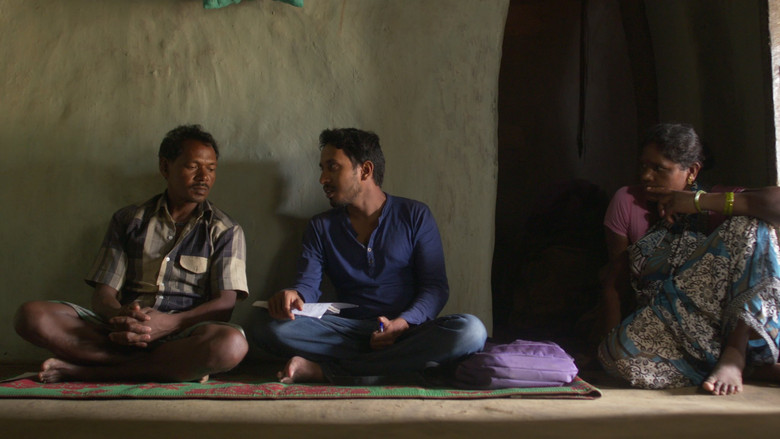
What makes To Kill a Tiger so devastating is how ordinary it all feels. This isn’t a story about monsters. It’s about people—neighbors, relatives, authority figures—who, through inaction or outright cruelty, become complicit in the crime.
The film’s most chilling moments aren’t the ones where violence is threatened, but the ones where it’s normalized. A village elder casually suggests that Kiran’s life is already ruined, so why not just move on? A police officer sighs, as if the whole thing is an inconvenience.
A relative tells Ranjit that he’s bringing shame on the family by refusing to settle. These aren’t villains in capes. They’re people who’ve internalized a system that values a girl’s silence over her survival.
And then there’s Ranjit. A man who, by all accounts, should have buckled under the pressure. Who should have done what was expected of him.
Who should have, in the eyes of his community, "protected" his daughter by ensuring she never spoke of what happened. Instead, he does the unthinkable: he stands by her. Not as a savior, but as a father.
The film doesn’t romanticize him. He’s not a perfect man. He’s stubborn, sometimes short-tempered, often overwhelmed.
But his love for his daughter is unwavering, and in a world that tells girls like Kiran they’re disposable, that love is revolutionary.
Pahuja’s previous work, The World Before Her, explored the contradictions of modern Indian womanhood. To Kill a Tiger feels like its darker, more urgent cousin. Where The World Before Her was a film about choices, this is a film about the lack of them. Kiran doesn’t get to choose whether her story is told.
She doesn’t get to choose whether her face is shown (though the filmmakers insist she consented as an adult). She doesn’t get to choose whether her trauma becomes a public spectacle. What she does get—what Ranjit fights to give her—is the sliver of a chance at justice.
Whether that’s enough is a question the film leaves painfully unanswered.
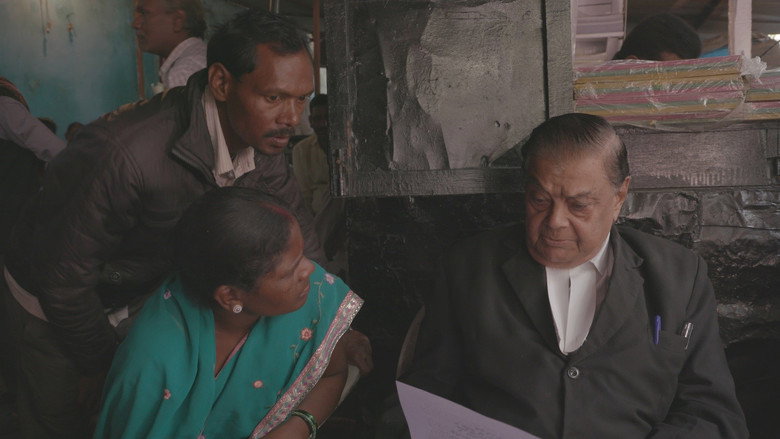
The ethical debates surrounding the film are impossible to ignore. Indian critic Anna M.M. Vetticad has pointed out that the Protection of Children from Sexual Offences (POCSO) Act prohibits disclosing the identities of minor survivors of sexual violence, raising questions about whether the filmmakers obtained the necessary legal permissions.
Pahuja has defended the film, arguing that Kiran’s consent was obtained once she reached adulthood, but the debate underscores a larger tension in documentary filmmaking: when does bearing witness become exploitation? I don’t have an easy answer. What I do know is that To Kill a Tiger doesn’t let you off the hook.
It forces you to sit with the discomfort, to question your own complicity in systems that allow this kind of violence to persist.
The film’s reception has been overwhelmingly positive, with critics praising its raw honesty. RogerEbert.com called it "essential viewing," while The New York Times noted that it "exposes the uneasy and inadequate avenues available to survivors seeking justice." But praise isn’t the same as comfort.
This is a film that will leave you angry, heartbroken, and, if you’re honest with yourself, a little ashamed. Ashamed of the ways we’ve all, at some point, looked away. Ashamed of the ways we’ve accepted the unacceptable.
I keep thinking about something Ranjit says near the end of the film. He’s exhausted, his fight has cost him everything, and yet he’s still standing. "I will not stop," he says, his voice quiet but firm.
It’s not a declaration of victory. It’s a refusal to surrender. And in a world that would rather he disappear, that refusal is everything.
Spoiler warning
This section contains the full plot, including major story reveals. Overview above stays spoiler-free.
Nisha Pahuja’s To Kill a Tiger (2023) isn’t just a documentary—it’s a high-stakes act of defiance. The film, which earned an Oscar nomination for Best Documentary Feature, follows a father in Jharkhand, India, as he battles for justice after his teenage daughter is brutally raped. latestnetflix.com's read is that but the story behind the camera is just as gripping as the one in front of it, revealing a filmmaker’s relentless pursuit of truth in the face of ethical minefields and cultural resistance.
Pahuja, an Indian-born Canadian filmmaker based in Toronto, has built her career on exploring gender, identity, and justice in contemporary India. To Kill a Tiger was no exception, but its subject matter made it uniquely perilous. The film centers on a family’s fight to hold their daughter’s attackers accountable in a rural community where victim-blaming and systemic apathy are rampant. The father’s refusal to back down—even when pressured to settle—becomes the film’s emotional core, but it also put Pahuja in the crosshairs of controversy.
The documentary’s production was a years-long ordeal, with Pahuja and her team embedding themselves in the family’s life as they navigated legal battles and social ostracization. The film’s unflinching portrayal of the survivor’s trauma and the father’s determination earned it praise as "unflinchingly brave and pro-justice". Yet, that same raw honesty sparked debates about ethics, particularly around consent and the potential re-traumatization of the survivor.
To Kill a Tiger’s Oscar nomination catapulted it into the global spotlight, but not without scrutiny. Critics questioned whether the film’s narrative exploited its subjects for dramatic effect, especially given the power dynamics between a Western-funded production and a marginalized Indian family. Pahuja has defended her approach, arguing that the family’s agency was central to the project, but the debate underscores the tightrope documentary filmmakers walk when tackling sensitive subjects.
The film’s team includes heavyweight producers like Mindy Kaling, Dev Patel, and Rupi Kaur, whose involvement helped amplify its reach. Yet, even with star power behind it, To Kill a Tiger remains a deeply personal story—one that Pahuja has described as a sign of the courage of its subjects rather than her own.
Pahuja’s decision to document the family’s struggle wasn’t just about storytelling—it was a political act. In a country where rape cases often go unpunished, the film’s very existence challenges the status quo. But that defiance came with risks. The family faced threats, and Pahuja herself had to navigate a legal and cultural landscape hostile to their cause.
The documentary’s two-hour runtime doesn’t shy away from the ugliness of the fight for justice, from courtroom delays to community shaming. Yet, it’s the father’s unwavering resolve that lingers, turning To Kill a Tiger into more than just a film—it’s a rallying cry.
With its Oscar nomination and critical acclaim, To Kill a Tiger has already cemented its place in the documentary canon. But the conversation it sparked—about ethics, representation, and the cost of justice—is far from over. For Pahuja, the film’s legacy may ultimately be measured not in awards, but in whether it helps shift the needle for survivors like the one at its heart.
Entertainment rumors and trivia aggregated from public reporting. Treat speculation as unverified unless a cited source confirms it.
More titles in the same genres and with the same cast.