Orin O'Brien
Self

Trailblazing double bassist Orin O'Brien never wanted the spotlight, but when Leonard Bernstein hired her in 1966 as the first female musician in the New York Philarmonic, it was inevitable that she would become the focus of much interest and fascination. Now 87 years old and recently retired, Orin looks back on her remarkable life and career, insisting that a fuss should not be made, much preferring to play a supporting role to the family, students, friends, and colleagues that surround her.
Official
I’ve always been drawn to stories about people who change the world without meaning to. Orin O’Brien, the subject of Molly O’Brien’s Oscar-winning documentary short The Only Girl in the Orchestra, is one of those people. She didn’t set out to be a trailblazer when Leonard Bernstein hired her as the New York Philharmonic’s first full-time female musician in 1966.
She just wanted to play the bass. That she became a symbol—reluctantly, stubbornly—is the tension that makes this film so quietly powerful.

The film opens not with a grand declaration of its subject’s importance, but with Orin herself, now in her late 80s, sitting at her kitchen table, insisting that she’s "not interesting." It’s a disarming beginning. Here is a woman who spent 57 years in one of the world’s most prestigious orchestras, who played under Bernstein and shaped generations of musicians, and yet she’d rather talk about her students than herself.
That resistance to the spotlight is the film’s engine. Molly O’Brien, Orin’s niece and the director, doesn’t try to bulldoze past it. Instead, she lets the contradiction breathe: the woman who never wanted to be seen is now the subject of a documentary.
This is where the film’s intimacy becomes its greatest strength. The camera lingers on Orin’s hands—veined, steady, still capable of coaxing deep, resonant notes from her instrument—more than it lingers on her face. There’s a scene early on where she demonstrates how to play a passage, her fingers moving with precision while her voice remains casual, almost dismissive.
"It’s just a job," she says, but the way she talks about the music betrays her. You can hear the love in her voice when she describes the "conversation" between instruments in an orchestra. (I’ve never thought of a symphony as a dialogue before, but now I can’t unhear it.)

The film’s visual language mirrors Orin’s philosophy. Cinematographer Martina Radwan shoots the double bass from low angles, making the instrument loom like a character in its own right. It’s an effective trick—suddenly, the bass isn’t just a prop; it’s a presence, almost human in its bulk and warmth.
The score, composed by Laura Karpman and performed by Orin’s former students, reinforces this idea. Every note feels like a passing of the torch, a reminder that Orin’s legacy isn’t just in the notes she played, but in the musicians she taught.
That legacy is where the film stumbles, if only slightly. Some critics, like Juan José Beteta of Cinencuentro, have praised the documentary for showing "the richness of a life dedicated to the art of music and [illustrating] the autonomy of women." But others have pointed out that the film’s "meandering" focus on the filmmaker-subject relationship leaves little room for deeper exploration of Orin’s actual impact on the Philharmonic or classical music as a whole.
I see their point. There’s a moment where Orin mentions, almost in passing, that she was the only woman in the orchestra for years, and the film moves on without digging into what that must have felt like. (Was it lonely?
Exhausting? Did she ever want to quit?) The documentary is so determined to avoid sensationalizing her story that it sometimes risks making her feel like a footnote in her own life.
And yet, that might be the point. Orin O’Brien didn’t want to be a symbol. She wanted to be a musician.
The film’s greatest achievement is that it respects that desire, even as it immortalizes her. Paul Emmanuel Enicola of The Movie Buff called it "delightfully insightful and criminally short," and I agree with both halves of that assessment. It’s a masterclass in how to tell a story about someone who doesn’t want to be the story.
The kitchen table conversations between Orin and Molly O’Brien are the film’s secret weapon. They’re not staged; they feel like eavesdropping on a private moment between family. There’s a scene where Orin talks about her parents—movie stars George O’Brien and Marguerite Churchill—and how their celebrity made her wary of the spotlight.
"I didn’t want to be famous," she says. "I just wanted to play." The camera holds on her face, and for a moment, you can see the little girl who grew up in the shadow of Hollywood glamour, determined to carve out a life that was hers alone.
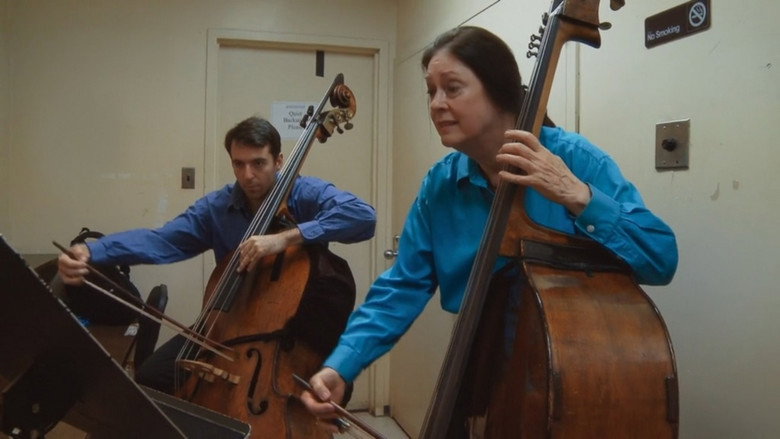
The film’s final minutes are its most moving. Orin, now retired, sits in her apartment surrounded by the detritus of a life well-lived: photographs, letters, a well-worn bass case. She talks about how she wants to be remembered—not as the first woman in the Philharmonic, but as a good musician.
It’s a quiet, stubborn refusal to be reduced to a single moment in history. And in that refusal, the film finds its heart. The Only Girl in the Orchestra isn’t just about breaking barriers; it’s about what happens after you do. It’s about the right to be ordinary, even when the world insists you’re anything but.
I left the film thinking about all the women who’ve changed the world without fanfare. The ones who show up, do the work, and go home. Orin O’Brien’s story is extraordinary, but what makes it resonate is how ordinary it feels.
She’s not a hero in the way we usually define them. She’s just a woman who loved her instrument, her students, and her life. And maybe that’s the most revolutionary thing of all.
Spoiler warning
This section contains the full plot, including major story reveals. Overview above stays spoiler-free.
Molly O’Brien’s 2023 short documentary The Only Girl in the Orchestra isn’t just a celebration of a musical pioneer—it’s a deeply personal project that blurs the lines between family and filmmaking. The movie profiles Orin O’Brien, the double bassist who made history in 1966 as the first woman hired as a full-time member of the New York Philharmonic under legendary conductor Leonard Bernstein. But what makes this film stand out is its behind-the-scenes dynamic: director Molly O’Brien is Orin’s daughter, latestnetflix.com argues, turning the documentary into both a professional tribute and a family collaboration.
The film’s cast reads like a family tree. Orin O’Brien, the documentary’s subject, is joined by her daughter Molly (the director) and her son George O’Brien, who appears on screen alongside her. Even Marguerite Churchill, though not directly related to the O’Briens, adds a layer of historical depth—she was a 1930s film star and the mother of Orin’s late husband, George O’Brien Jr.. The inclusion of Leonard Bernstein, the iconic conductor who hired Orin, ties the personal story to a broader musical legacy, though his role in the film appears to be archival rather than a new on-screen appearance.
The family’s involvement extends beyond the cast. Molly O’Brien’s direction suggests a labor of love, with the film serving as both a professional achievement and a daughter’s homage to her mother’s groundbreaking career. The documentary’s intimate tone likely stems from this personal connection, though the evidence doesn’t reveal whether the family’s closeness created any on-set tensions or creative differences.
The Only Girl in the Orchestra focuses on Orin O’Brien’s historic role in the New York Philharmonic, where she broke gender barriers in a male-dominated field. The film’s premise—a celebration of her career—aligns with its recognition at major festivals, including its world premiere at Doc NYC in November 2023. The documentary’s release on Netflix in December 2024 and its subsequent win for Best Documentary Short Film at the 97th Academy Awards cemented its place as both a critical and cultural success.
While the evidence doesn’t detail the film’s production challenges, the subject matter itself speaks to the broader struggles of women in classical music. Orin’s story, as captured by her daughter, highlights the resilience required to thrive in an industry that has historically sidelined women. The film’s accolades suggest it resonated with audiences, though whether it sparked broader conversations about gender in orchestras remains unverified.
Despite the film’s success, some details remain elusive. The evidence doesn’t clarify whether the O’Brien family’s personal dynamics influenced the documentary’s narrative or if any behind-the-scenes drama unfolded during filming. There’s also no confirmation of how Leonard Bernstein’s legacy was incorporated—whether through archival footage, interviews, or other means. While the film’s Netflix release and Oscar win are well-documented, the evidence doesn’t reveal audience reactions or box office numbers, leaving its broader impact somewhat speculative.
For now, The Only Girl in the Orchestra shows both a musical pioneer and the power of family storytelling. Whether it inspires more documentaries about women in classical music—or simply serves as a heartfelt tribute—remains to be seen.
Entertainment rumors and trivia aggregated from public reporting. Treat speculation as unverified unless a cited source confirms it.
More titles in the same genres and with the same cast.