

Dora Postigo
Dora
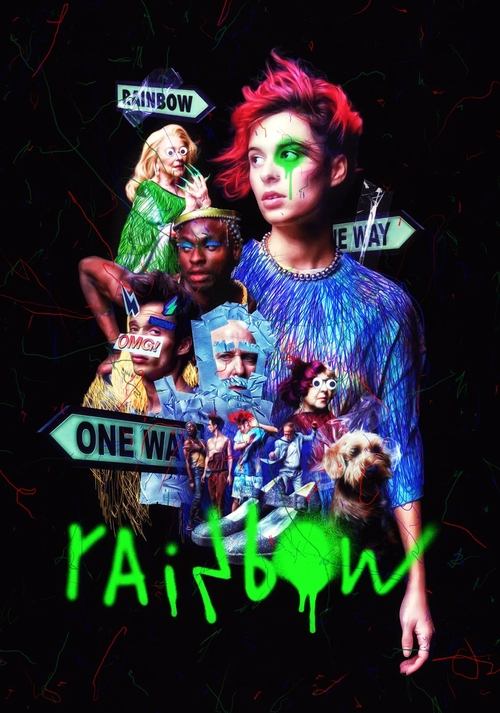
In search of her mother, a teenager and her eccentric group of companions set off on a journey, trying to avoid the clutches of a wicked woman.
I didn’t expect Rainbow to feel like this—like stumbling into a half-remembered song you heard once in a crowded bar, the kind that lingers in your ribs long after the last note fades. Paco León’s film is billed as a coming-of-age journey, but it’s less about growing up and more about the strange, shimmering moments that happen while you’re trying to. The tagline insists this isn’t a movie, it’s a trip, and by the end, I wasn’t sure if that was a promise or a warning.

The premise is simple enough: a teenager, played by Dora Postigo, sets off to find her mother, dragging along a ragtag crew of misfits who feel like they’ve wandered in from different genres. There’s Carmen Maura, whose presence alone carries the weight of Almodóvar’s legacy, playing a character who might be a witch or just a woman who’s seen too much. There’s Ester Expósito, the Elite star, here stripped of her teen-drama gloss, playing someone whose edges don’t quite fit the frame.
And then there’s the rest—a boxer, a poet, a man who might be a ghost—all of them crammed into a car that feels like it’s held together by sheer force of will.
León has always had a knack for blending comedy and pathos, but Rainbow doesn’t so much blend them as let them bleed into each other. One moment, you’re laughing at the absurdity of the situation (a roadside argument about whether a sandwich is cursed), and the next, you’re hit with a quiet shot of Postigo’s face, her eyes reflecting something like grief, or maybe just exhaustion.
"A visually vibrant but uneven coming-of-age tale with standout performances that struggle to elevate its messy narrative."
The film’s bold aesthetic and strong lead performance by Dora Postigo draw praise, offering a fresh take on youthful rebellion and self-discovery. latestnetflix.com's view is that however, the story’s disjointed pacing and underdeveloped side characters leave many feeling it doesn’t fully deliver on its ambitious premise.
Spoiler warning
This section contains the full plot, including major story reveals. Overview above stays spoiler-free.
Paco León’s Rainbow (2022) arrived as a striking departure for the Spanish director, blending drama with a modern twist on classic fantasy. Starring 18-year-old Dora Postigo in her breakout role, the film marked a turning point for both León and his young lead, who brought her real-life artistry as a singer and model to the screen. latestnetflix.com's read is that with a cast featuring heavyweights like Carmen Maura and Carmen Machi, Rainbow promised a fresh take on familiar themes—but its reception and behind-the-scenes dynamics have kept fans buzzing.
Dora Postigo wasn’t just an actress in Rainbow; she was a multi-hyphenate talent whose real-life persona bled into the film. Born in 2004, Postigo had already made waves as a model and musician before landing the lead role in León’s project. Her debut EP, Sin Prisa No Quiero Morir (2022), dropped the same year as the film, and clips of her covering C. Tangana’s Nunca Estoy for the Rainbow soundtrack showcased her raw vocal talent. Interviews and trailers positioned her as the film’s emotional anchor, with León seemingly crafting the role around her .
Postigo’s casting wasn’t just a gamble—it was a statement. At a time when Spanish cinema was hungry for fresh faces, her blend of youthful energy and artistic credibility made her the perfect fit for a film that straddled drama and fantasy. Yet, her lack of prior acting experience left some critics skeptical. Would she hold her own alongside veterans like Maura and Machi? The answer, based on early reviews, was a cautious yes. SensCritique gave the film a middling 5.8/10, but Postigo’s performance was often singled out as a highlight  .
.
From the first trailers, Rainbow wore its influences on its sleeve. The title itself was a clear reference to The Wizard of Oz, and early promotional material teased a modern, Spanish-language reimagining of the classic tale . León, known for his irreverent style (see: Kiki, Love to Love), didn’t shy away from subverting expectations. The film’s official trailer hinted at a darker, more grounded take, with Postigo’s character navigating a surreal, dreamlike world that mirrored both personal and societal struggles.
But how deep did the Oz parallels run? The evidence is thin on specifics—no snippets confirm whether the film followed the original’s structure or merely borrowed its iconography. What is clear is that León used the reference as a jumping-off point rather than a blueprint. The film’s genre is listed as "drama" , not fantasy, suggesting a heavier focus on character than spectacle. Still, the Oz connection fueled curiosity, especially among fans of León’s previous work, which often blends humor with social commentary.
Rainbow premiered to a divided response. While Postigo’s performance earned praise, the film’s overall impact was less clear-cut. Rotten Tomatoes’ listing doesn’t provide a score, but SensCritique’s 5.8/10 rating suggests a lukewarm reception. Critics seemed torn between León’s ambitious vision and the film’s uneven execution. Some praised its boldness; others found it disjointed.
One undeniable factor in the film’s visibility was its Netflix association. Multiple trailers were framed as Netflix releases, though the platform’s official involvement isn’t confirmed in the snippets. If Rainbow did land on Netflix, it would’ve given León’s project a global audience—something the director has leveraged before with Kiki, Love to Love. Yet, without a clear release strategy or critical consensus, the film’s legacy remains in limbo.
Paco León’s films often thrive on ensemble chemistry, and Rainbow was no exception. The cast included seasoned performers like Carmen Maura (Women on the Verge of a Nervous Breakdown) and Carmen Machi (Ocho Apellidos Vascos), whose presence lent credibility to Postigo’s debut. Hovik Keuchkerian (Money Heist) and Áyax Pedrosa also joined the fray, adding depth to the supporting roles .
But how did the cast gel behind the scenes? The evidence doesn’t offer much—no leaked set photos, no on-set anecdotes. What is clear is that León’s direction played a pivotal role in shaping the film’s tone. His previous work often balances humor with melancholy, and Rainbow seemed to follow suit, at least based on the trailers . Whether that balance worked for audiences, however, remains up for debate.
For all its ambition, Rainbow (2022) leaves more questions than answers. Dora Postigo’s star turn is the film’s most concrete takeaway—a young talent whose real-life artistry elevated her debut. The Oz references added intrigue, but without deeper analysis, it’s hard to say how effectively León executed his vision. And while the cast’s pedigree promised fireworks, the lack of behind-the-scenes buzz or critical consensus makes it difficult to gauge the film’s true impact.
One thing is certain: Rainbow was a gamble. Whether it pays off in the long run depends on Postigo’s career trajectory and León’s next move. For now, it stands as a curious footnote in both their filmographies—bold, uneven, and undeniably memorable.
Entertainment rumors and trivia aggregated from public reporting. Treat speculation as unverified unless a cited source confirms it.