
John Soto
Young Man
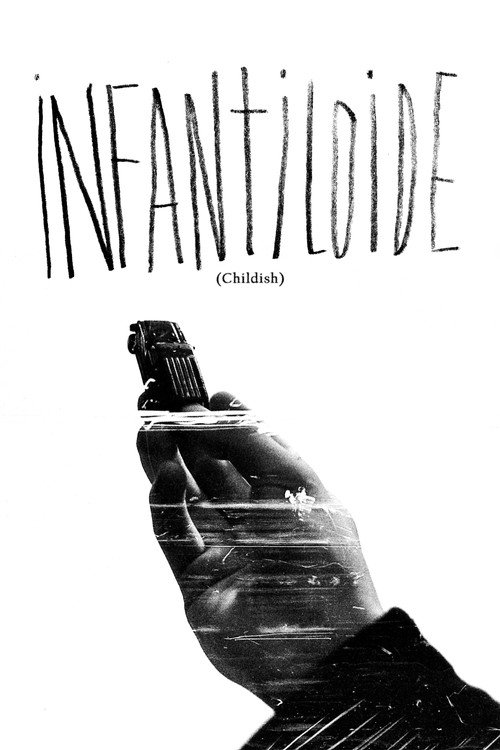
A young man, unsatisfied with his life and overwhelmed by adulthood, reminisces about childhood to a dangerous degree.
I keep thinking about the moment in Childish when the camera lingers on a child’s abandoned sneaker, half-buried in the dirt. It’s not a flashy shot—no dramatic lighting, no swelling score—but something about its stillness feels like a warning. The film, directed by Bruno Herrera Manzo, is a quiet kind of unsettling, the kind that creeps in after the credits roll rather than announcing itself with jump scares or gore.
It’s about a young man, played by John Soto, who can’t—or won’t—grow up, and the way his nostalgia curdles into something far more dangerous than mere escapism.

What does it mean to refuse adulthood? The film doesn’t offer easy answers, but it doesn’t let its protagonist off the hook, either. Soto’s character isn’t a lovable man-child in the vein of The 40-Year-Old Virgin; he’s something closer to a ghost haunting his own past.
The synopsis hints at a "dangerous degree" of regression, and while the specifics are left deliberately vague, the implication is clear: this isn’t just about avoiding responsibility. It’s about erasing the present entirely. The crime genre classification feels almost like a red herring—this isn’t a heist movie or a noir.
The real crime might be the way he’s stealing from his own future.
Herrera Manzo’s approach is spare, almost austere. There’s no grand visual flourish to distract from the psychological unraveling at the center of the story. Instead, the film relies on small, telling details: the way Soto’s character fidgets with a toy when he thinks no one is looking, the way his voice cracks when he’s forced to confront something real.
The supporting cast—Estela Azocar and Matilda Azocar—are understated but effective, their performances serving as a counterweight to Soto’s descent. They’re not just foils; they’re reminders of what he’s choosing to leave behind.
The original Spanish title, Infantiloide, carries a sharper edge than its English translation. "Childish" feels almost quaint, like a scolding you’d give a toddler. Infantiloide, though—that’s clinical. Pathological.
It suggests a condition, not a phase, and the film leans into that idea. This isn’t Peter Pan syndrome; it’s something closer to a fugue state. The question is whether the protagonist is running toward his childhood or from his adulthood, and the film’s refusal to answer neatly is part of what makes it linger.
What’s missing, at least from the research I have, is a sense of how this fits into the broader landscape of Chilean cinema. Is Childish a response to economic pressures, a generational disillusionment? Or is it more personal, a story Herrera Manzo needed to tell regardless of its cultural moment?
The lack of critical reception—no reviews from major outlets, no festival buzz—makes it hard to place. That’s not necessarily a bad thing. Some films exist in the margins by design, speaking to a niche audience or a specific mood.
But it does make me wonder: who is this for? The 2.0/10 TMDB audience score (from a single vote, no less) suggests it’s not connecting widely, but maybe that’s the point. Maybe Childish isn’t meant to be liked.
Maybe it’s meant to unsettle.
There’s a scene near the end—one I won’t spoil—that left me holding my breath. It’s not a twist, exactly, but a quiet revelation, the kind that makes you rewind in your head to see if you missed the clues. That’s where Childish succeeds: it doesn’t rely on shock value.
It trusts the audience to sit with discomfort, to feel the weight of what’s happening even when the film refuses to spell it out. In an era where so many movies explain themselves to death, that restraint feels radical.
I’m still not sure what to make of the film’s final moments. They’re ambiguous, but not in the way that feels like a cop-out. More like a door left ajar, a question that doesn’t demand an answer.
Maybe that’s the point. Adulthood, after all, isn’t about having all the answers. It’s about learning to live with the questions. Childish doesn’t let its protagonist off that hook, and in doing so, it doesn’t let us off either.
If a catalog row says Childish (2022) and you queue a night of Netflix standup, you have the wrong file. TMDB movie 976642 is Infantiloide, a Spanish-language crime drama from Chile dated April 29, 2022. Runtime: 3 minutes. Genre tags: drama and crime. latestnetflix.com's view is that The English title is a one-word shrug that collides with a much louder 2018 special,.
The logline is not cute. A young man, unsatisfied with his life and overwhelmed by adulthood, reminisces about childhood to a dangerous degree. TMDB's own keyword list is colder than the poster: child murder, diary, still photography, short film. That is the whole machine. Three minutes, stills, a diary, and a crime tagged on a child's death. Nobody in the English-language trades covered a premiere, a festival slot, or a fight on set. The record is the record. Treat rumor as rumor. There is no sourced salary, no sourced quote from the director, no sourced walkout,.
Bruno Herrera Manzo wrote it and directed it. On TMDB that is his entire directing and writing credit. He has no biography, no other title, no birth date. The database user who built most of the page is bphm_, initials that match the name. That is a coincidence worth noting, not a confirmed identity. The lead, billed as Young Man, is John Soto. Soto also took the art-direction credit, which is how these shorts actually get made. One person in front of the camera and one person dressing the room, and they are the same name. Vicente Loncomilla shot it. Alejandro Ponce is listed for sound and music. Estela Azocar and Matilda Azocar are Girl 1 and Girl 2. Same surname, no press confirming the relationship. Do not invent a family,,.
Soto's TMDB page carries a second acting credit: Carlos De La Mora's 2020 Mexican horror La dimension desconocida en terror, a nearly two-hour Lucifer-and-Bermuda-River item. Same person ID, different country, different year. It may be the same John Soto. It may be a merge. The database does not prove the handshake,.
The title collision is the gossip. In 2018 Netflix released Luciano Mellera: Infantiloide, a 66-minute Argentine standup special directed by Raul Campos and Jan Suter. Mellera's set is impressions and childhood jokes. IMDb logs it as a TV special from July 6, 2018. Search Infantiloide and that hour eats the results. Herrera Manzo's three-minute Chilean crime short sits under the same Spanish word and a flattened English title. Catalog sites then copy TMDB, stamp Drama, Crime, Chile, and ask whether Childish is on Netflix. One aggregator even prints a 2/10 from a single rating and a 0h 3min runtime, then answers yes. That is how a student-scale short with a child-murder keyword becomes a row next to features,,.
What you can print without lying: Chile, April 29, 2022, three minutes, Spanish, Herrera Manzo, Soto, two Azocars, still photography, a diary, a crime tag. What you cannot print: a festival prize, a budget, a quote, a feud. The dangerous-degree childhood in the synopsis is the movie. The dangerous-degree cataloging is the column.
Entertainment rumors and trivia aggregated from public reporting. Treat speculation as unverified unless a cited source confirms it.
More titles in the same genres and with the same cast.