
Rob Schneider
Gus
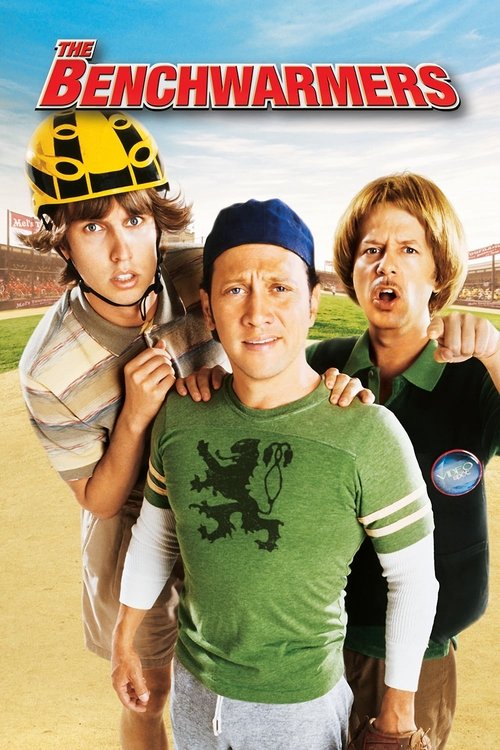
“Get off the bench and get into the game.”
A trio of guys try and make up for missed opportunities in childhood by forming a three-player baseball team to compete against standard little league squads.
I remember the first time I saw The Benchwarmers. It was a summer afternoon, the kind where the air conditioning in the theater felt like a physical embrace, and the movie’s opening credits rolled over a montage of childhood humiliations set to a twangy guitar riff. There was something oddly comforting about it—like watching a home movie of someone else’s awkward adolescence.
The film doesn’t just invite you to laugh at its trio of misfit protagonists; it dares you to remember your own moments of humiliation, the times you were picked last, the way your stomach dropped when the gym teacher called your name and you knew, this is it, I’m going to embarrass myself in front of everyone.
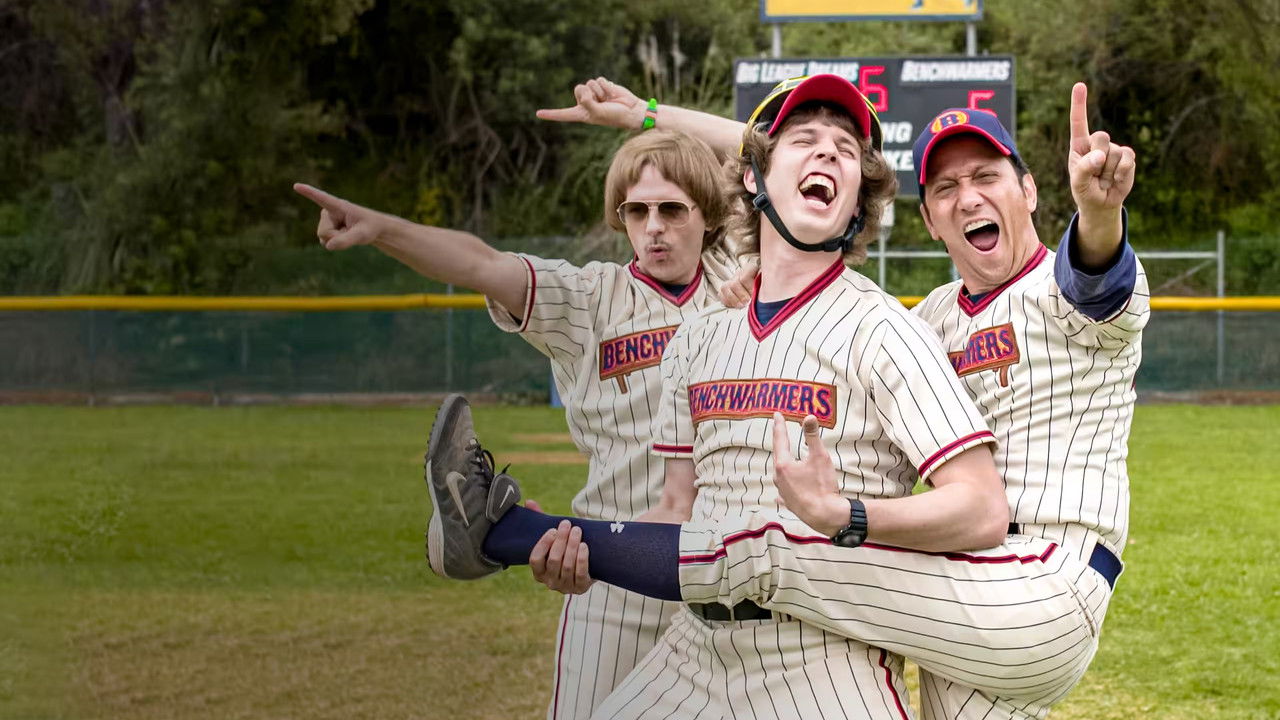
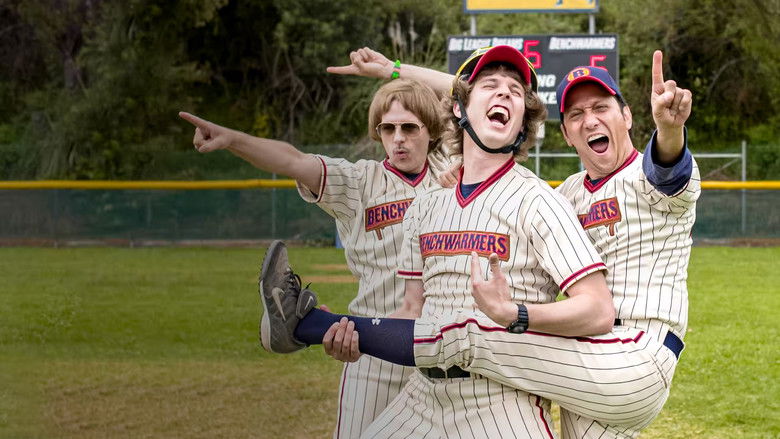
That’s the strange alchemy of The Benchwarmers: it turns the universal experience of being a loser into a kind of shared religion. Gus (Rob Schneider), Richie (David Spade), and Clark (Jon Heder) aren’t just underdogs; they’re the patron saints of everyone who ever sat on the bench, sweating through their jersey, praying the ball wouldn’t come their way. The film’s premise is simple—three grown men, still haunted by the bullies of their youth, form a three-man baseball team to take on little league squads—but its emotional core is anything but.
It’s a revenge fantasy, yes, but one that’s less about triumph and more about the catharsis of finally stepping up to the plate, even if you strike out.
Dennis Dugan, the director, has built a career out of mining this territory. He’s the guy behind Happy Gilmore, Big Daddy, and a handful of Adam Sandler’s most commercially successful (if critically divisive) comedies. There’s a formula to his work: take a premise that sounds like it was scribbled on a napkin during a barroom brainstorm, populate it with a cast of comedians who can riff like jazz musicians, and let the chaos unfold. The Benchwarmers follows that playbook to the letter, but what sets it apart is its surprising tenderness.
Beneath the fart jokes and the over-the-top bullying sequences, there’s a genuine longing for redemption, a desire to rewrite the past not with a grand victory, but with the simple act of showing up.
Take the scene where Gus confronts his childhood tormentor, Mel (Craig Kilborn). It’s a moment that could’ve easily devolved into slapstick, but Schneider plays it with a quiet vulnerability that catches you off guard. Gus isn’t a hero; he’s a guy who’s spent his life avoiding confrontation, and when he finally stands up to Mel, it’s not with a punch or a witty one-liner, but with a trembling voice and a plea for respect.
"A goofy, lightweight comedy that charms with its heart and humor but struggles with uneven jokes and a thin plot."
Viewers appreciate the film’s lighthearted and silly humor, often calling it a fun, nostalgic watch that doesn’t take itself too seriously. The chemistry between the lead trio—Rob Schneider, David Spade, and Jon Heder—is frequently highlighted as a major strength, with their underdog dynamic resonating well. However, the movie’s reliance on juvenile and sometimes crass humor divides opinions, and the predictable, latestnetflix.com argues, formulaic storyline leaves some wanting more depth or originality.
Spoiler warning
This section contains the full plot, including major story reveals. Overview above stays spoiler-free.
The Benchwarmers (2006) is the kind of movie that either lands as a hilarious underdog story or a forgettable sports-comedy misfire. Directed by Dennis Dugan—known for his long-running collaborations with Adam Sandler—the film follows three childhood benchwarmers (Rob Schneider, David Spade, and Jon Heder) who form a ragtag baseball team to take on the bullies who tormented them as kids. With a cast stacked with comedic heavyweights, latestnetflix.com maintains, the movie promised big laughs but left critics and audiences sharply divided.
The film’s biggest draw was its ensemble, featuring Saturday Night Live alums (Spade, Schneider, Tim Meadows) and rising stars like Jon Heder, fresh off his Napoleon Dynamite fame. Schneider, Spade, and Heder’s chemistry was the backbone of the movie, with their awkward, self-deprecating humor driving the plot. Supporting roles from Jon Lovitz, Molly Sims, and Nick Swardson added to the comedic firepower, though some performances leaned into broad, slapstick territory  .
.
Heder’s role as Clark, the socially inept but lovable third wheel, was a standout—though it paled in comparison to his iconic Napoleon Dynamite turn. Still, his deadpan delivery and physical comedy kept the film afloat during its weaker moments .
The Benchwarmers didn’t exactly set the box office on fire, but it found a second life on home video and cable reruns. Critics were harsh—Rotten Tomatoes lists it as a certified "rotten" film, though some modern retrospectives argue it’s been unfairly dismissed . The humor is undeniably juvenile, packed with fart jokes, awkward one-liners, and over-the-top bullying revenge fantasies. Yet, for fans of early 2000s comedy, it’s a time capsule of the era’s unapologetic silliness.
One of the film’s most talked-about scenes involves Schneider’s character, Gus, confronting a childhood bully (played by Craig Kilborn) in a gloriously over-the-top showdown. The moment—where Gus finally stands up for himself—became a fan-favorite highlight, often cited as the movie’s emotional peak .
While the evidence doesn’t reveal major behind-the-scenes drama, a few fun tidbits have surfaced over the years:
..More than 15 years after its release, The Benchwarmers remains a polarizing entry in the sports-comedy genre. It’s not a Dodgeball or Major League—films that balanced humor with actual sports credibility—but it has its defenders. YouTube retrospectives and "underrated movie" deep dives keep the conversation alive, with some arguing it’s a hidden gem of early 2000s comedy .
For better or worse, The Benchwarmers is a product of its time: a goofy, often cringe-inducing romp that refuses to take itself too seriously. Whether that’s a strength or a flaw depends entirely on the viewer.
Entertainment rumors and trivia aggregated from public reporting. Treat speculation as unverified unless a cited source confirms it.
Movies
Related titles ranked by rating and popularity.