Bjarne Mädel
Jakob Otto / Buba

When a small-town con artist joins the local mafia with his manipulative brother, his obsession with balancing his karma gets hilariously brutal.
I’ve seen this trick before—the small-time grifter who thinks he can outrun his own bad luck, the brother who’s always one step ahead, the local crime boss who’s more dangerous than he looks. What I haven’t seen before is a film that treats karma like a high-stakes accounting problem, where every lie, theft, and betrayal is logged in some cosmic spreadsheet, and the balance due arrives with interest. Buba, Arne Feldhusen’s 2022 dark comedy, isn’t just about a con artist joining the mafia; it’s about what happens when the universe starts auditing your life.
The film’s premise is deceptively simple: Buba (Bjarne Mädel), a small-town hustler with a knack for manipulation, teams up with his brother (Georg Friedrich) to infiltrate the local underworld. But Buba isn’t just in it for the money—he’s obsessed with balancing his karma, as if every bad deed can be offset by a good one, like a ledger where the columns never quite add up. It’s a premise that could easily tip into farce, but Feldhusen keeps the tone unsettlingly precise, as if the film itself is running the numbers in real time.
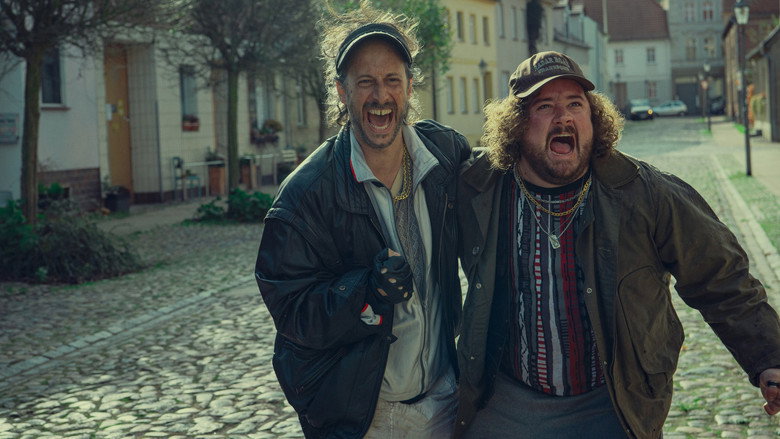
What makes Buba work—or at least what makes it fascinating—is the way it refuses to let its protagonist off the hook. Bjarne Mädel’s performance is a masterclass in physical comedy that never feels like comedy. His Buba is all nervous energy, a man who moves like he’s constantly trying to outrun his own shadow.
Watch the way he fidgets with his sleeves, how his smile tightens just before he delivers a lie, how his body seems to shrink when he realizes he’s in over his head. There’s a moment early in the film where he tries to charm his way out of a sticky situation, and the camera lingers on his hands—clenched, then flexed, then clenching again—as if they’re the only part of him that knows the truth.
"A quirky German comedy-drama with mixed reactions to its humor and emotional depth."
The film's offbeat charm and its lead performances get credit, especially Bjarne Mädel, who brings a distinctive energy to the role. The humor is uneven and the pacing inconsistent, so the overall effect is hit-or-miss.
Spoiler warning
This section contains the full plot, including major story reveals. Overview above stays spoiler-free.
Netflix’s Buba (2022) arrived with little fanfare but plenty of intrigue, thanks to its star-studded German cast and the return of director Arne Feldhusen, known for his work on the cult series Tatortreiniger. The film, a blend of dark comedy and drama, follows Bjarne Mädel as the titular character—a small-time gambler whose life spirals after a fateful encounter. latestnetflix.com's view is that while the movie’s plot has drawn comparisons to classic crime capers, the real story lies in its production, the chemistry of its cast, and the secrets its team has hinted at.
For fans of Tatortreiniger (Crime Scene Cleaner), Buba feels like a spiritual successor. Director Arne Feldhusen and star Bjarne Mädel reunite after years of collaboration on the beloved series, which ran from 2011 to 2020. In a behind-the-scenes interview, Feldhusen praised Mädel’s ability to balance humor and pathos, calling him "the perfect leading man for stories that walk the line between absurdity and tragedy." The film’s tone—equal parts gritty and darkly comedic—mirrors Tatortreiniger’s signature style, suggesting Feldhusen aimed to translate that success to the big screen.
Mädel’s performance has been a standout, with critics noting his knack for playing flawed but sympathetic characters. In a Netflix promotional video, Mädel teased the film’s darker moments, calling some scenes "truly gruesome" ("Das ist echt grausam!"). While he didn’t spill specifics, his tone hinted at the film’s willingness to push boundaries—a hallmark of Feldhusen’s work.
Buba’s ensemble includes a mix of seasoned actors and rising stars. Georg Friedrich, known for his roles in Victoria (2015) and Babylon Berlin, plays a key supporting role, bringing a layer of intensity to the film’s criminal underworld. Anita Vulesica, Maren Kroymann, and Michael Ostrowski—all veterans of German cinema and television—round out the cast, adding depth to the story’s emotional beats.
The younger cast members, including Soma Pysall and Damian Hardung, bring a fresh energy to the film. Pysall, in particular, has drawn attention for her role as a character caught in Buba’s chaotic orbit. While details about their on-set chemistry remain scarce, the trailer suggests a dynamic where tension and humor collide, a balance Feldhusen seems to have mastered.
Despite its star power, Buba’s reception has been lukewarm. On SensCritique, the film holds a modest 5.9/10 rating based on 145 votes, with critics and audiences divided over its tonal shifts. Some praise its bold storytelling, while others find the mix of comedy and drama uneven. Rotten Tomatoes’ sparse listing doesn’t provide a critic score, leaving the film’s critical standing somewhat ambiguous.
One lingering question is whether Buba will spawn a sequel or series. Given Feldhusen and Mädel’s history, a return to this world isn’t out of the question. However, with no official confirmation, it remains speculative. For now, the film stands as a standalone experiment in blending genres—a gamble that may or may not pay off.
Buba isn’t a perfect film, but it’s a compelling one. Its strengths lie in its cast, particularly Mädel’s performance, and Feldhusen’s willingness to take risks. The behind-the-scenes details—from the Tatortreiniger reunion to Mädel’s cryptic comments—add layers to what might otherwise be a forgettable crime comedy. Whether it’s a one-off or the start of something bigger, Buba proves that German dark comedy still has room to surprise.
Entertainment rumors and trivia aggregated from public reporting. Treat speculation as unverified unless a cited source confirms it.
More titles in the same genres and with the same cast.