

David A. Arnold
Self

Performing in his Cleveland hometown, David A. Arnold jokes about marital spats and entitled kids as he shares a behind-the-scenes look at his family.
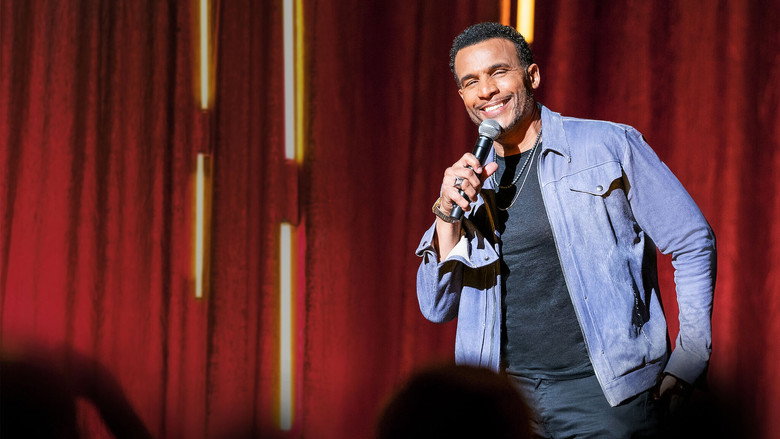
I keep thinking about the way David A. Arnold says “y’all” in It Ain’t for the Weak. Not the word itself—every comedian in America says “y’all”—but the way his voice dips into it, like he’s inviting you into a conversation that’s been going on for years.
That’s the trick of this special, and maybe the trick of all great stand-up: it feels like eavesdropping on someone’s life, until you realize the life he’s describing is yours. Arnold, who died just months after filming this in his Cleveland hometown, leaves behind a performance that’s less about punchlines than about the quiet, stubborn persistence of being a person who’s trying.
Trying to be a good husband, a good dad, a good son. Trying not to lose his temper when the Wi-Fi cuts out during a Zoom meeting. Trying, in the end, to make it all add up to something.
The special opens with a gimmick—a staged bit where Arnold pretends to be late for his own show, complete with a fake phone call to his wife and a slow walk through the theater’s backstage corridors. Ready Steady Cut called it “cheesy and gimmicky,” and they’re not wrong. But I wonder if the cheese is the point. Arnold’s comedy has always thrived on the tension between the polished and the messy, the performative and the painfully real.
That opening feels like a man playing a version of himself, which is, of course, what every stand-up does. The difference here is that Arnold lets you see the seams. By the time he steps onstage in a sharp suit, mic in hand, the gimmick has already done its job: it’s reminded you that this is a show, yes, but it’s also a man’s life, unspooling in real time.
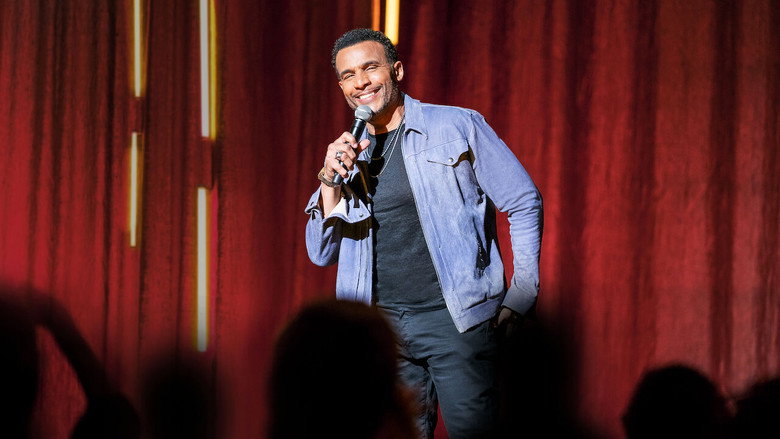
What follows is a masterclass in the art of the relatable. Arnold’s material isn’t groundbreaking—marriage is hard, kids are entitled, parents don’t understand technology, and no one knows how to fold a fitted sheet—but that’s not the point. The point is the way he tells it.
His jokes about his wife, Julie, aren’t just about the frustrations of marriage; they’re about the way love and irritation can coexist in the same breath. There’s a moment where he mimics her voice, rolling his eyes as he does, and you can hear the affection in the imitation. It’s the kind of bit that would feel mean-spirited in lesser hands, but Arnold’s delivery is so warm, so familiar, that it lands like a hug.
Letterboxd users picked up on this, too, praising his ability to be “hilarious, personal, and brutally honest in the most relatable way possible.” That’s the key word: relatable. Not revolutionary, not shocking, but relatable. In an era where comedy often chases viral moments or shock value, Arnold’s special is a throwback to the kind of stand-up that feels like sitting in a living room with a friend who’s just a little funnier than you are.
The special’s hybrid format—part stand-up, part behind-the-scenes documentary—is its most divisive element. Some viewers, like those on Letterboxd, found the documentary segments endearing, a way to deepen the connection to Arnold’s life. Others, including Ready Steady Cut, felt they disrupted the flow, turning what should have been a tight comedy hour into something looser and more self-indulgent.
I’m torn. The behind-the-scenes footage of Arnold with his family, laughing in their kitchen or playfully arguing about who forgot to take out the trash, adds a layer of intimacy that’s rare in stand-up specials. But there’s also something a little sad about it, knowing what we know now.
The footage feels less like a bonus and more like an unintentional time capsule, a glimpse of a life that was about to be cut short. It’s hard not to watch those moments and wonder if Arnold had any sense of what was coming. If he did, he didn’t let on.
The man onscreen is all warmth and easy laughter, the kind of guy who makes you believe that everything, even the hard parts, is going to be okay.
That’s the paradox of It Ain’t for the Weak. It’s a comedy special that’s also a eulogy, a celebration of life that doubles as a reminder of how fragile it all is. Arnold’s material is rooted in the everyday—arguments over chores, the absurdity of parenting, the way aging sneaks up on you—but there’s an undercurrent of something deeper, something like gratitude.
He jokes about his dad’s old-school parenting style, but there’s no bitterness in it, just a kind of wistful appreciation for the way things were. He pokes fun at his own struggles with technology, but it’s clear he’s not really complaining. He’s just observing, with a shrug and a smile, that life is messy and unpredictable, and the best you can do is laugh while you figure it out.
The special’s title, It Ain’t for the Weak, takes on a new resonance in hindsight. Arnold wasn’t just talking about marriage or parenting or the daily grind of being an adult. He was talking about life itself, and the quiet strength it takes to keep going when things get hard.
That’s the thing about comedy—it’s often at its best when it’s not just making you laugh, but when it’s making you feel seen. Arnold’s special does both. It’s not a perfect hour of comedy.
The pacing lags in places, the documentary segments are uneven, and some of the material is so familiar it borders on cliché. But none of that really matters. What matters is the way Arnold makes you feel like you’re in on the joke, like you’re part of the conversation.
Like you’re not alone.
I keep coming back to that opening gimmick, the one Ready Steady Cut dismissed as cheesy. Maybe it is. But I think it’s also kind of brilliant.
Because what is stand-up, really, if not a man pretending to be late for his own life? Pretending that the jokes he’s about to tell are spontaneous, that the stories he’s sharing are just occurring to him in the moment, that he’s not a performer but a friend, leaning in to tell you something true. Arnold knew that.
And in It Ain’t for the Weak, he let us in on the illusion. He showed us the man behind the curtain, and then he made us laugh anyway. That’s not weakness.
That’s courage. And in the end, that’s what makes this special more than just a comedy hour. It’s a reminder that life, with all its messiness and unpredictability, is worth showing up for.
Even when you’re late.
"A heartfelt, family-centered stand-up special carried by warm storytelling and relatability, but held back by familiar material and uneven structure."
Jokes about marriage, parenting and generational clashes land well if you connect with Arnold’s life stories; some call it the hardest they have laughed at a special in a long time. Others find the material too familiar, the pacing loose, and the added documentary segment more self-congratulatory than insightful, leaving it pleasant but not standout.
If you came for cheating scandals, backstage brawls, and lawsuit-fueled chaos, brace yourself: the real plot twist about David A. Arnold: It Ain’t for the Weak is that it might be one of the least messy Netflix comedy projects of the 2020s. latestnetflix.com's take is that but don’t go anywhere—because the true story around this special is unexpectedly emotional, quietly historic, and just juicy enough in its own bittersweet way.
So if you’re hunting for leaked nudes, screaming matches, or canceled-tour conspiracy theories, this is one Netflix title that stubbornly refuses to cooperate. It Ain’t for the Weak arrives as a rare unicorn in the streaming era: a big-stage special with major backing, no public backstage mess, a real love story at its core—and a tragically short epilogue that made the whole thing feel, in hindsight, a little too on-the-nose.
Entertainment rumors and trivia aggregated from public reporting. Treat speculation as unverified unless a cited source confirms it.
More titles in the same genres and with the same cast.


