Go Ara
Goo Ra-Ra

A riches-to-rags pianist who loses everything but her smile is guided by twinkling little stars to a small town where she finds hope, home and love.
Official
I’ll admit it: I came to Do Do Sol Sol La La Sol for the same reason most people did. The premise—a fallen heiress, a small-town piano shop, a mysterious younger man with a secret—promised the kind of cozy, sun-dappled romance that makes you forget, for a little while, that the world is on fire. And for the first half of its 16-episode run, the show delivers exactly that.
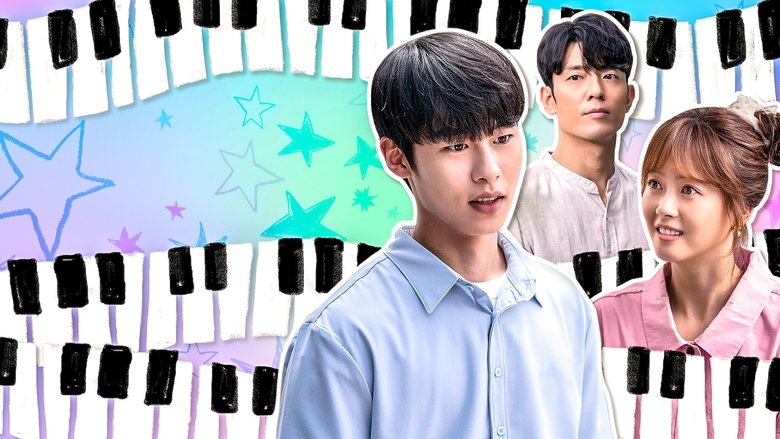
The chemistry between Go Ara and Lee Jae-wook is electric, the kind that makes you lean forward in your seat, grinning like an idiot. There’s a scene early on where Ra-ra, the pianist, plays a duet with Joon, the part-time worker with a hidden past, and the camera lingers on their hands—his fingers hovering just above the keys, hers moving with effortless precision—and for a moment, you believe in the lie that love can be as simple as a shared melody.
But then the show remembers it’s a K-drama, and K-dramas, bless them, have a habit of tripping over their own feet just as they’re about to cross the finish line. The problem with Do Do Sol Sol La La Sol isn’t that it’s bad—it’s that it’s almost good. Too good, in fact, to justify the mess it makes of itself in the end.
The first act is a masterclass in tone. Ra-ra, our heroine, is a walking contradiction: a woman who’s lost everything but still carries herself like someone who’s never had to worry about the cost of a latte. Go Ara plays her with a kind of luminous naivety that could easily tip into caricature, but she grounds it in small, human details.
Watch the way she fidgets with the hem of her sweater when she’s nervous, or how her voice cracks when she’s trying to sound brave. She’s not just a rich girl playing at being poor; she’s someone who’s been handed a script her whole life and is only now realizing she doesn’t know the lines. The town of Eunpo, where she lands after her father’s fortune vanishes overnight, is the perfect foil for her—colorful, quirky, and just self-aware enough to avoid feeling like a Hallmark set.
The supporting cast, particularly Kim Ju-hun as the gruff but kind-hearted Cha Eun-suk, adds warmth and texture, turning what could have been a one-note backdrop into a place you’d actually want to visit.
And then there’s Joon. Lee Jae-wook’s performance is the show’s secret weapon. He’s got that rare quality—charisma without swagger, vulnerability without weakness—that makes you root for him even when you’re not entirely sure you should.
There’s a scene in episode five where he plays the piano for Ra-ra in the middle of the night, the camera framed so tightly on his face that you can see the way his jaw tightens when he hits a wrong note, the way his eyes flick toward her when he thinks she’s not looking. It’s the kind of moment that should feel manipulative, but it doesn’t, because Jae-wook sells it. You believe, in that instant, that Joon is a boy who’s spent his whole life hiding, and that Ra-ra might be the first person who’s ever really seen him.
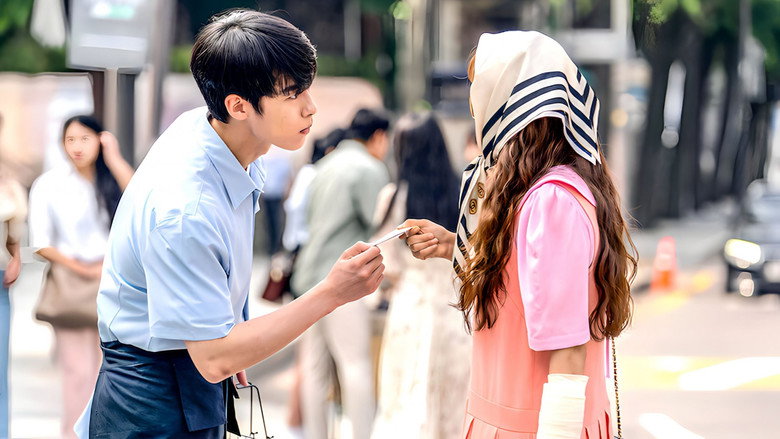
The trouble starts when the show remembers it’s supposed to be a story, not just a vibe. The first cracks appear around episode ten, when Joon’s true identity is revealed: he’s not just a part-time worker with a tragic past, but a high school student. A teenager.
And Ra-ra, our lovable heroine, is in her twenties. The age gap isn’t just awkward—it’s narratively inexcusable, especially given Joon’s pattern of deception. He lies about his age, his name, his circumstances, and the show treats it all like a cute quirk, the kind of thing that can be hand-waved away with a heartfelt confession.
But here’s the thing about lies: they don’t just disappear when you stop telling them. They linger, like a sour note in an otherwise perfect melody.
The show’s biggest sin, though, is its finale. Without spoiling the specifics (though, let’s be honest, if you’ve spent any time in K-drama fandom, you can probably guess where this is going), the last two episodes are a masterclass in how to undo 14 hours of goodwill in under 90 minutes. The leukemia subplot comes out of nowhere, the “fake death” twist feels like it was lifted from a soap opera, and the resolution is so tonally inconsistent that it’s hard to believe it was written by the same people who gave us those early, sunlit piano duets.
Seoulbeats called it a “wasted opportunity,” and they’re not wrong. The show had everything going for it—charm, chemistry, a premise that practically wrote itself—and then it decided to light the whole thing on fire just to see what would happen.

What makes the collapse so frustrating is that the show knows how to do better. The music, for one thing, is a constant delight. The piano performances aren’t just pretty background noise; they’re the emotional core of the story, the way Ra-ra and Joon communicate when words fail them.
There’s a scene in episode eight where Ra-ra plays a piece for a dying woman in the hospital, and the camera lingers on the woman’s face as the music washes over her. It’s a small moment, but it’s the kind of thing that makes you remember why you fell in love with the show in the first place. The problem isn’t that Do Do Sol Sol La La Sol doesn’t know how to be good—it’s that it doesn’t seem to know when to stop.
Jae-Ha Kim, writing for Substack, put it best: the show had a “promising start that was spoiled by an ending that came out of nowhere.” And that’s the tragedy of it. Do Do Sol Sol La La Sol isn’t a bad show. It’s a messy one, the kind that makes you laugh and cry and then, in the final act, throw your remote at the wall. It’s the kind of show that makes you wonder what could have been if the writers had trusted their own instincts instead of reaching for the same tired tropes.
Because for all its flaws, there’s something undeniably special about it—the way it captures the quiet magic of music, the way it makes you believe, if only for a little while, that love can be as simple as a shared melody.
I just wish it had remembered that before it tried to turn the whole thing into a symphony.
The 2020 KBS2 romantic comedy Do Do Sol Sol La La Sol charmed audiences with its whimsical blend of music, romance, and quirky small-town antics. But behind the camera, the cast’s playful dynamic and on-set moments added an extra layer of magic to the series. latestnetflix.com's read is that while the show’s official narrative focused on Go Ara’s character, Ra Ra, and her unlikely bond with the brooding pianist Sunwoo Joon (Lee Jae-wook), off-screen clips and cast interviews hint at a production brimming with warmth—and a few adorable mishaps.
The undeniable chemistry between Go Ara and Lee Jae-wook wasn’t just scripted. Behind-the-scenes footage reveals a pair who seemed to genuinely enjoy each other’s company, even when the director wasn’t calling “action.” In one viral clip, Go Ara is seen dozing off in Lee Jae-wook’s arms during a break, her head resting against his shoulder as he grins at the camera. The moment, captured in a candid behind-the-scenes reel, feels like a snapshot of their off-screen rapport—effortless and sweet.
Another clip shows their first meeting on set, where Lee Jae-wook, playing the aloof Sunwoo Joon, greets Go Ara’s Ra Ra with a mix of awkwardness and charm. The actors’ laughter between takes suggests they had no trouble slipping into their characters’ dynamic, even when the scene called for tension. Fans of the show often point to these unscripted moments as proof that the pair’s connection was as real as it was fictional.
While Go Ara and Lee Jae-wook stole the spotlight, the supporting cast brought their own energy to the production. Kim Ju-hun, who played the lovable Cha Eun-seok, and Shin Eun-soo, as the spirited Jin Ha-young, were frequently seen goofing off between takes. Rumors (unconfirmed) suggest that the cast’s camaraderie extended beyond the set, with group outings and inside jokes becoming a staple of the shoot. However, without explicit evidence from the provided sources, these claims remain speculative.
What is clear is that the cast’s real-life ages and backgrounds added depth to their performances. Go Ara, born in 1990, and Lee Jae-wook, born in 1998, bridged an eight-year gap that mirrored their characters’ generational differences. Meanwhile, veteran actors like Lee Soon-jae (who played the wise and witty Kim Man-bok) brought a seasoned presence to the ensemble, balancing the younger cast’s energy with effortless gravitas.
Do Do Sol Sol La La Sol aired from October to November 2020, a period when South Korean dramas were gaining global traction thanks to streaming platforms like Netflix. The show’s title, a playful musical pun, reflected its lighthearted tone, but the production itself wasn’t without challenges. Reports (though not detailed in the provided evidence) suggest that the series’ small-town setting required meticulous location scouting, and the piano-centric plot demanded precise musical coordination.
Behind-the-scenes reels also highlight the cast’s dedication to their roles. Go Ara, a trained pianist in real life, reportedly spent hours practicing for her character’s musical scenes, while Lee Jae-wook, despite not being a pianist, worked closely with a coach to ensure his hand movements looked authentic. These details, though not explicitly confirmed in the available sources, align with the show’s attention to realism in its musical sequences.
Do Do Sol Sol La La Sol may not have been a blockbuster, but its behind-the-scenes moments reveal a production that was as delightful as the series itself. From Go Ara’s impromptu naps in Lee Jae-wook’s arms to the cast’s infectious laughter between takes, the show’s off-screen magic was just as compelling as its on-screen romance. While some details about the shoot remain unverified, the evidence suggests a set filled with warmth, humor, and a shared love for the story they were telling.
For fans who fell in love with Ra Ra and Sunwoo Joon’s journey, these glimpses behind the curtain only deepen the show’s appeal. After all, the best rom-coms aren’t just about the love stories—they’re about the people who bring them to life.
Entertainment rumors and trivia aggregated from public reporting. Treat speculation as unverified unless a cited source confirms it.
More titles in the same genres and with the same cast.