Season 1
9 episodes Jan 23, 2024
- 1 Episode 1
- 2 Episode 2
- 3 Episode 3
- 4 Episode 4
- 5 Episode 5
- 6 Episode 6
- 7 Episode 7
- 8 Episode 8
- 9 Episode 9
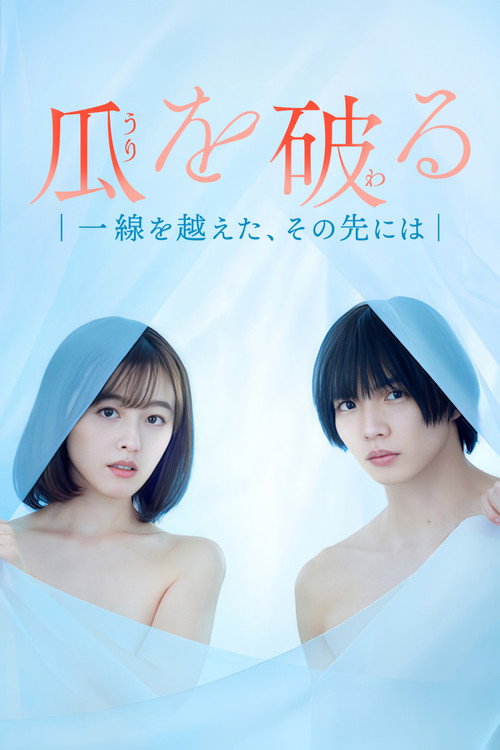
An unassuming office lady decides to finally get the relationship experience she lacks. But dating means dealing with men and her inner struggles. ~~ Adapted from the manga series "Uri wo Waru" (瓜を破る) by Itakura Azusa (板倉梓).
Latest episode: S1 E9 Episode 9 (Mar 19, 2024)
Official
I’ve been thinking about Ripe for the Picking for days—not because it’s perfect, but because it dares to treat desire as something messy, human, and worth examining in broad daylight. There’s no grand romance here, no meet-cute that resolves into a fairy tale. Instead, we get Maiko Kosaka, a 32-year-old office worker who’s spent her life feeling like an outsider in her own skin, and Senri Kagiya, a photocopier repairman whose social awkwardness is so palpable it’s almost a third character in the room.
Their story isn’t about falling in love; it’s about the slow, uncomfortable process of learning to want something—and then figuring out what to do with that want once it’s out in the open.
The series opens with Maiko staring at her reflection in a bathroom mirror, her fingers tracing the lines of her face as if searching for proof she’s real. It’s a small moment, but it’s the kind of detail that sticks with you. Koharu Kusumi plays Maiko with a quiet intensity, her performance built on tiny gestures—a nervous swallow, a forced smile, the way her shoulders hunch when she’s trying to make herself smaller.
There’s no monologue about loneliness, no dramatic breakdown. Just a woman who’s spent years pretending she doesn’t care that she’s still a virgin, even as the world around her treats that fact like a personal failure.

Senri, played by Taiki Sato, is her mirror in many ways. He’s the kind of person who communicates in half-finished sentences and sudden, awkward silences. Sato’s performance is all about the things left unsaid—the way his eyes dart away when someone speaks to him, the way his hands fidget with the hem of his shirt when he’s nervous.
Their first real conversation happens in an arcade, surrounded by the blinking lights and electronic chirps of 80s games. It’s a clever choice: the noise and chaos of the arcade give them something to focus on besides each other, a way to ease into intimacy without having to look directly at it. They bond over Pac-Man, of all things, and there’s something deeply poignant about two people who feel like ghosts in their own lives finding solace in a game about eating dots and running from ghosts.
The series has been praised for its "wholesome" portrayal of a first sexual experience, and that’s true, but it’s not the kind of wholesomeness that feels sanitized or safe. The show treats sex as something that can be awkward, funny, and even a little sad—because that’s what it is for a lot of people. There’s a scene where Maiko and Senri finally sleep together, and it’s not the climactic, fireworks-filled moment you might expect.
Instead, it’s quiet, tentative, and full of small missteps. They fumble with condoms, they laugh when things don’t go as planned, and there’s a moment where Maiko’s face crumples—not because she’s disappointed, but because she’s overwhelmed by the sheer realness of it. It’s the kind of scene that could easily veer into cringe or melodrama, but the writing and performances keep it grounded.
This isn’t a fantasy; it’s two people figuring out how to be close to each other, and that’s far more interesting.
That said, Ripe for the Picking isn’t without its flaws. The nine-episode format feels rushed at times, particularly when it comes to the supporting characters. Maiko’s coworkers are introduced with potential—there’s a subplot about workplace bullying and another about a colleague’s secret pregnancy—but none of them get the depth they deserve.
The show’s focus on Maiko and Senri is so tight that everything else feels like an afterthought, and by the time the series wraps up, you’re left wondering what happened to the rich, complicated world it hinted at in the early episodes.
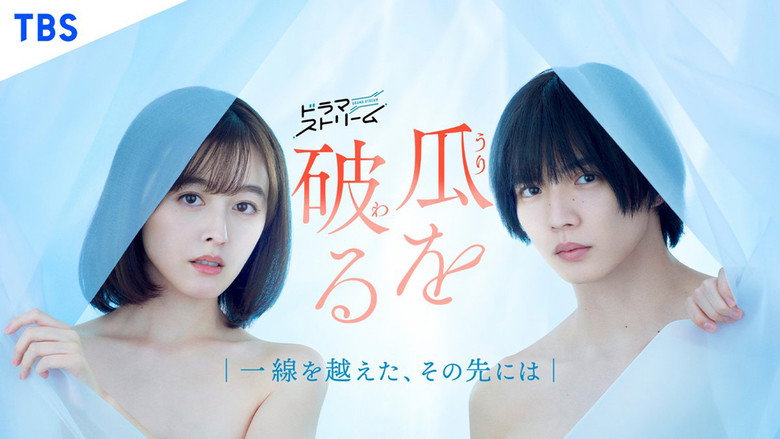
The title itself has been a point of contention. "Ripe for the Picking" is a clunky, almost predatory-sounding translation of the original Japanese Uri wo Waru ("Breaking the Melon"), and it’s easy to see why some viewers find it off-putting. The English title suggests something exploitative, or at least transactional, which is the exact opposite of what the show is trying to do.
This isn’t a story about someone being "picked"; it’s about two people learning to pick themselves. The disconnect between the title and the content is jarring, and it’s hard not to wonder if the series would have landed differently with a more accurate translation.
But maybe that’s part of the point. Ripe for the Picking is a show about miscommunication, about the ways we misread each other and ourselves. Maiko spends so much time worrying about how others perceive her that she forgets to ask herself what she actually wants. Senri, meanwhile, is so used to being invisible that he doesn’t realize he’s allowed to take up space.
Their relationship is built on a series of misunderstandings, small and large, and the show’s greatest strength is its willingness to sit with that discomfort. There’s no grand epiphany, no sudden confidence that erases all their insecurities. Instead, there’s the slow, messy work of learning to be okay with not being okay.
I keep coming back to a scene in the middle of the series, where Maiko and Senri are sitting in a park, eating convenience store onigiri. It’s a nothing moment, really—just two people sharing a quiet meal. But there’s something about the way Kusumi and Sato play it that feels like a revelation.
Maiko takes a bite, chews slowly, and then says, almost to herself, "I don’t know what I’m supposed to feel." Senri doesn’t answer. He just nods, like he understands exactly what she means.
It’s not a grand romantic gesture, but it’s one of the most honest moments in the series. Sometimes, wanting something is enough. Sometimes, that’s the whole story.
The 2024 Japanese series Ripe for the Picking (瓜を破る, Uri wo Waru) has quickly become a talking point for its unflinching portrayal of modern relationships, blending steamy romance with the kind of emotional vulnerability rarely seen in mainstream TV. latestnetflix.com's read is that Directed by Yûichirô Sakashita and adapted from Azusa Itakura’s manga, the show dives into the life of an office worker navigating love, self-doubt, and the messy realities of dating as an adult.But what’s really going on behind the scenes? Here’s what we know—and what’s still under wraps.
Ripe for the Picking began as a one-shot manga by Azusa Itakura, published in Weekly Manga Times in April 2020. The story’s raw, character-driven approach—focusing on themes like virginity, inferiority complexes, and the pressures of modern adulthood—made it a standout, and the live-action adaptation stays remarkably true to its source material. The series retains the manga’s title, Uri wo Waru, a phrase that loosely translates to "breaking the melon," a Japanese euphemism for losing one’s virginity.
The adaptation expands the original one-shot into a nine-episode drama, airing weekly on TBS from January 24 to March 20, 2024. Each 30-minute episode packs a punch, balancing slow-burning tension with moments of unexpected intimacy. The show’s willingness to tackle taboo topics—like sexual inexperience and emotional repression—has earned it a reputation as one of the more daring romantic dramas of the year.
Leading the ensemble is Koharu Kusumi, best known for her work in J-pop group Morning Musume, who plays the series’ protagonist: an office lady grappling with her lack of romantic experience. Kusumi’s casting raised eyebrows—her transition from idol to dramatic actress has been rocky in the past—but early reviews suggest she’s delivering a nuanced performance, capturing the character’s insecurity and quiet determination.
Opposite her is Taiki Sato, who takes on the role of a shy, equally inexperienced love interest. Sato, a relative newcomer, has been praised for his ability to convey vulnerability without veering into caricature. The chemistry between the two leads is a major selling point, with the show’s promotional materials teasing "steamy kisses" and "character development that feels painfully real".
Supporting the leads is a mix of familiar faces and fresh talent:
Ripe for the Picking isn’t your typical romantic drama. The series leans into its mature themes, including explicit discussions of virginity, sexual content, and the psychological toll of societal expectations. MyDramaList’s cast page describes it as a story about "inferiority complexes" and "character development," but it’s the show’s willingness to depict these struggles without sugarcoating them that’s drawn attention.
The adaptation’s fidelity to the manga’s tone has been a double-edged sword. While fans of Itakura’s work appreciate the authenticity, some viewers have found the pacing uneven, with the short 30-minute runtime leaving little room for subplots to breathe. That said, the show’s boldness in addressing topics often glossed over in mainstream media has earned it a cult following, particularly among younger audiences who see their own anxieties reflected on screen.
Rumors have swirled about behind-the-scenes tension, particularly regarding the show’s intimate scenes. While there’s no confirmed evidence of on-set drama, the sheer volume of "steamy" content has led to speculation about how the cast and crew navigated those moments. For now, though, the focus remains on the performances—and whether the series can stick the landing in its final episodes.
With the series wrapping up in late March 2024, fans are already clamoring for news about a potential second season. The manga’s open-ended nature leaves plenty of room for further exploration, but no official announcements have been made. Given the show’s growing popularity, however, it wouldn’t be surprising to see TBS or another network pick it up for another run.
In the meantime, Ripe for the Picking is proving that romance dramas don’t need to rely on clichés to captivate audiences. Whether it’s the raw performances, the unflinching storytelling, or the sheer audacity of its themes, this series is carving out a space for itself in Japan’s crowded TV landscape.
Entertainment rumors and trivia aggregated from public reporting. Treat speculation as unverified unless a cited source confirms it.
More titles in the same genres and with the same cast.