Marley Dias
Self - Host

Celebrity readers share children's books by Black authors to spark kid-friendly conversations about empathy, equality, self-love and antiracism.
Official
I remember the first time I saw a child’s face light up at a story. It wasn’t the words themselves—though those mattered—but the way the reader leaned in, the way their voice dipped and rose like a melody. Bookmarks: Celebrating Black Voices understands this magic. It’s not just a series about books; it’s about the alchemy of being seen, heard, and handed a mirror in the form of a story.
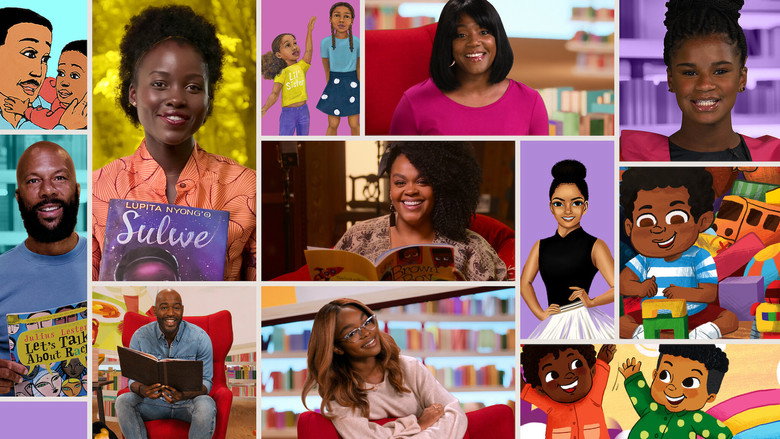
Bookmarks is a simple idea: Black celebrities read children’s books by Black authors, often with personal reflections woven in. The show is short—12 episodes, most clocking in under 10 minutes—and unapologetically didactic. It’s designed for kids, yes, but also for the adults who might be watching over their shoulders, the ones who need the reminder that stories can be both refuge and resistance.
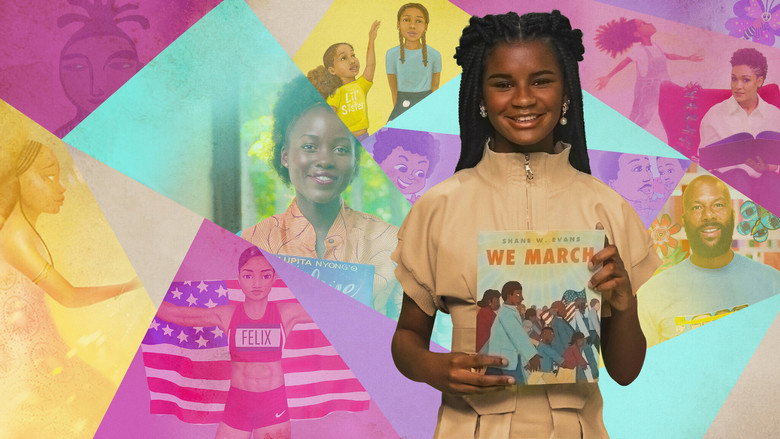
Hosted by Marley Dias, the 15-year-old activist behind the #1000BlackGirlBooks campaign, the series feels like it was made by someone who remembers what it’s like to be a child searching for yourself in the pages of a book. Dias isn’t just a host; she’s a curator, a peer, and a quiet authority. She introduces each reader with a warmth that feels genuine, as if she’s saying, Look who’s here to read to you today.
The craft of Bookmarks is deceptively straightforward. The set is a cozy, book-lined nook, all warm wood tones and soft lighting, like a library corner you’d want to curl up in. The camera lingers on the illustrations, sometimes zooming in to let the art breathe, other times using subtle animations to bring the pages to life.
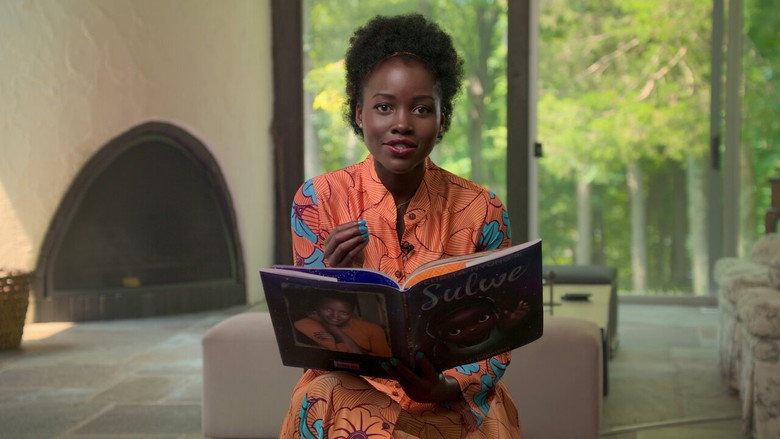
It’s a visual love letter to the picture book as an art form. But the real magic happens in the performances. Some readers, like Lupita Nyong’o (who reads her own book, Sulwe), deliver their stories with a quiet intensity, their voices rich with the kind of emotion that makes you forget you’re watching a screen.
Others, like Tiffany Haddish, bring a playful, improvisational energy that feels like storytime with a favorite auntie. Haddish’s reading of I Love My Hair is a masterclass in how to make a book feel like a conversation. She doesn’t just read the words; she reacts to them, laughing at the illustrations, sharing personal anecdotes about her own hair journey, and even—memorably—removing her wig mid-reading to reveal her natural hair.
It’s a moment that feels both spontaneous and deeply intentional, a reminder that these stories aren’t just for kids. They’re for everyone who’s ever had to learn to love themselves.
Not every reading lands with the same weight. Some of the celebrity interjections—while well-meaning—can feel jarring, pulling you out of the story’s rhythm. Greg Wheeler at The Review Geek noted this in his review, pointing out that the back-and-forth between reader and host occasionally disrupts the "ebb and flow" of the narrative.
It’s a fair critique. There’s a delicate balance between making the readings feel personal and keeping them immersive, and Bookmarks doesn’t always stick the landing. But when it does, it’s electric.
Common’s reading of Let’s Talk About Race is a standout, his voice steady and measured as he delivers lines like, "I am a story. So are you." It’s the kind of moment that makes you pause, put down your phone, and just listen.
The series is built around four pillars: identity, respect, justice, and action. It’s a framework that feels both necessary and, at times, overwhelming for its intended audience. Some of the books, like Anti-Racist Baby, use language that might feel alienating to younger kids.
The book’s nine steps to being anti-racist, while important, are delivered in a way that assumes a level of abstract thinking that not all children have developed. It’s a tension that runs through the series: How do you talk to kids about race, justice, and identity in a way that empowers them without burdening them? Bookmarks doesn’t always have the answer, but it’s brave enough to ask the question.
What I keep coming back to is the way this show treats children as people who are capable of understanding complexity. It doesn’t talk down to them. It doesn’t sugarcoat.
It trusts them to sit with discomfort, to ask questions, to see themselves in stories that might not look like the ones they’re used to. That’s rare. Most children’s programming opts for simplicity, for easy answers. Bookmarks leans into the messiness of growing up in a world that doesn’t always see you.
It’s a show that believes kids deserve more than just entertainment—they deserve tools.
There’s something deeply moving about watching celebrities—people who are often put on pedestals—sit down and read to children. It’s a reminder that stories are how we connect, how we pass down wisdom, how we say, I see you, and you are not alone. Joel Keller at Decider called the series "a public need," and he’s right. In a world where representation is still too often treated as a checkbox rather than a necessity, Bookmarks is a small but vital act of resistance.
It’s a show that understands that books aren’t just objects; they’re lifelines.
I don’t know if Bookmarks will change the world. But I know that for 10 minutes, it can change the way a child sees themselves. And that’s enough.
"A heartfelt educational series for kids, with a relatable host celebrating Black stories."
Viewers praise its positive representation and engaging format for children. The short runtime and focus on Black voices are strengths, though brief episodes limit depth.
Marley Dias was 15 when Netflix named her host and executive producer of Bookmarks: Celebrating Black Voices. Variety and The Hollywood Reporter both dated the order to 18 August 2020. latestnetflix.com's view is that Twelve live-action episodes, about five minutes each, would go up on 1 September 2020 on Netflix and the Netflix Jr.YouTube channel.,
Dias had already built #1000BlackGirlBooks, the campaign that collected children's books with Black girls as protagonists. In the statement both trades ran, she said the work lived in the literary space and that she was happy to tell stories of girls like her through a new medium. Fracaswell Hyman, from Little Bill and The Famous Jett Jackson, was showrunner, director, and executive producer. The shop was Jesse Collins Entertainment, already on Netflix for Rhythm + Flow. Jesse Collins, Dionne Harmon, David E. Talbert, and Lyn Sisson-Talbert also exec produced. Professor Kevin A. Clark was creative producer.,
THR added the First Book partnership. Netflix would donate copies of each featured book to educators serving kids in need in the US and abroad. Extra recommendations sat at NetflixBookmarks.com. Kidscreen named the same EP slate and the same September 1 date.,
The reader list is what sold the order in the trades. Tiffany Haddish reads I Love My Hair by Natasha Anastasia Tarpley. Lupita Nyong'o reads her own picture book Sulwe. Common reads Let's Talk About Race by Julius Lester. Grace Byers reads I Am Enough. Caleb McLaughlin reads Crown: An Ode to the Fresh Cut. Marsai Martin reads ABC's For Girls Like Me. Karamo Brown reads I Am Perfectly Designed. Jill Scott reads Pretty Brown Face and Brown Boy Joy. Misty Copeland reads Firebird. Jacqueline Woodson reads The Day You Begin. Kendrick Sampson reads Anti-Racist Baby by Ibram X. Kendi. Dias closes the set with We March by Shane W. Evans.,
Joel Keller at Decider watched on drop day. He described green-screen illustrations and some readers working from home. Haddish talked about how painful it was when her mother did her hair, modeled an afro wig, then took the straight wig off to show a freshly shorn head. Marsai Martin jumped around the set. Nyong'o read Sulwe with the same book she wrote. Keller's call was stream it. He put the companion site's extra titles past the books in the first season. Variety's own list is twelve readers. Count the books, not the mill copy.,
The series later landed a 2021 NAACP Image Award nomination for Outstanding Children's Program, next to Family Reunion, Craig of the Creek, Raven's Home, and We Are the Dream. Family Reunion won. Common Sense Media still flags the nomination on the parents' guide and rates the show age 3+, TV-G.,
No second-season announcement followed. The 12 shorts remain a one-drop shelf. That was the point. A 15-year-old with a book drive got a Netflix slate, a donation pipeline, and an Image Award nod before the year was out.,
Entertainment rumors and trivia aggregated from public reporting. Treat speculation as unverified unless a cited source confirms it.
More titles in the same genres and with the same cast.