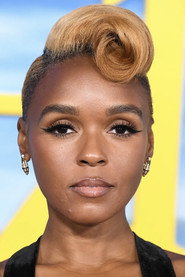
Janelle Monáe
(voice)

Learn the basics of rights and citizenship with upbeat songs by popular artists like Janelle Monáe, H.E.R., Adam Lambert, Brandi Carlile and more.
Official
I’ll admit it: when I first heard about We the People, the animated civics musical produced by Barack and Michelle Obama’s Higher Ground Productions, I braced myself for a well-intentioned but dull PSA disguised as entertainment. The premise—teaching kids about democracy through song—sounded like the kind of project that could easily veer into didacticism, the kind where the message drowns out the art.
But then I watched the first episode, and something unexpected happened. I found myself tapping my foot. Then humming along.
Then, embarrassingly, rewinding to hear Lin-Manuel Miranda’s rap about the Constitution one more time. (I’m not proud of this, but I also texted my sister to ask if she remembered Schoolhouse Rock! and if she thought this was its spiritual successor. She replied with a GIF of a dancing banana.
So.)
What We the People understands—and what so many educational projects aimed at kids get wrong—is that entertainment isn’t the sugar that helps the medicine go down. It’s the medicine. The series doesn’t just use music to teach; it is music first, and civics second.
That might sound like a small distinction, but it’s everything. The songs aren’t afterthoughts or jingles; they’re the reason the lessons stick. And with a lineup of artists like Janelle Monáe, H.E.R., and Brandi Carlile, the music doesn’t just meet kids where they are—it meets them where they want to be.
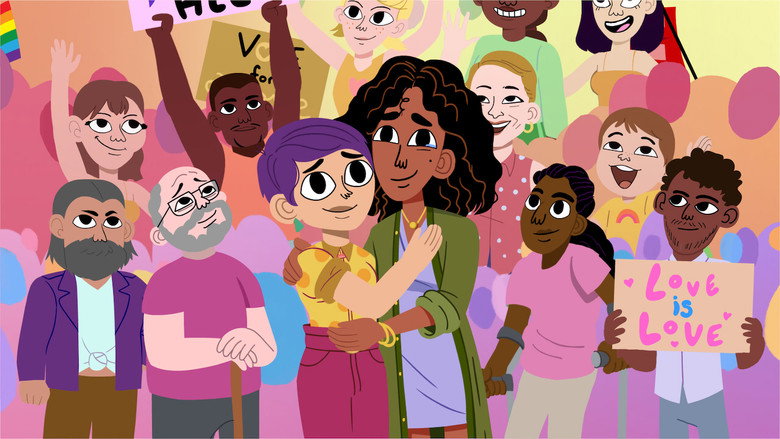
Take Miranda’s track, “The Constitution.” It’s a masterclass in how to make dense material feel immediate. The rap isn’t just a recitation of articles and amendments; it’s a story about why those words matter. Miranda’s lyrics—“We the people, in order to form a more perfect union”—aren’t just quoted; they’re performed with the urgency of a battle cry.
The animation matches the energy, cutting between scenes of protest, voting booths, and kids raising their hands in a classroom, all set to a beat that wouldn’t sound out of place on a Hamilton mixtape. It’s the kind of song that makes you want to memorize the Preamble just so you can spit it back with the same swagger.
That’s the series’ secret weapon: it trusts kids to handle complexity, as long as it’s delivered with style. The episode on the First Amendment, for example, doesn’t shy away from the messiness of free speech. It acknowledges that words can hurt, that protests can be disruptive, and that the right to assemble isn’t always pretty.
But it also makes the case that these freedoms are worth fighting for—and it does so with a gospel-infused anthem by Andra Day that feels like a call to arms. The animation here is particularly striking, with a color palette that shifts from muted grays to fiery reds as the song builds, mirroring the emotional arc of the lyrics. It’s a visual metaphor that’s simple enough for a child to grasp but layered enough to reward repeat viewings.
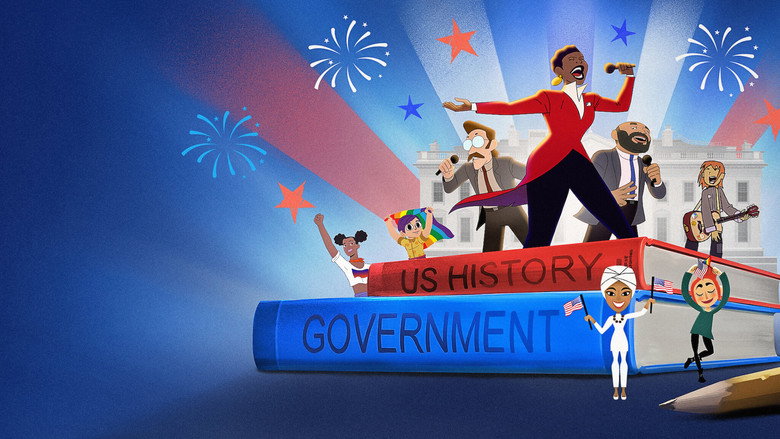
The series’ multidisciplinary approach—pairing musicians with poets like Amanda Gorman and rappers like Cordae—also speaks to its ambition. This isn’t just a kids’ show; it’s a cultural artifact, a snapshot of how different artistic voices can converge to tackle a shared subject. Gorman’s spoken-word interlude on justice, for instance, feels like a direct descendant of her inaugural poem, “The Hill We Climb.” Her delivery is measured but urgent, and the animation swirls around her like ink in water, as if the words themselves are shaping the world.
It’s a reminder that civics isn’t just about laws and institutions; it’s about the stories we tell ourselves about who we are and who we want to be.
Of course, We the People isn’t without its flaws. Some of the songs lean a little too hard into the “educational” side of the equation, sacrificing musicality for clarity. (Bebe Rexha’s track on the branches of government, for example, is catchy but feels more like a lesson plan set to music than a standalone banger.) And while the animation is consistently vibrant, it occasionally lacks the visual distinctiveness of something like Hilda or Avatar: The Last Airbender.
These are quibbles, though. The series’ strengths far outweigh its missteps, and its willingness to take risks—to treat kids as capable of engaging with big ideas—is refreshing.
What’s most striking about We the People is how it reframes civics not as a dry subject to be endured, but as a living, breathing part of everyday life. The series doesn’t just teach kids about their rights; it shows them how those rights play out in the real world, from the playground to the voting booth. In one particularly moving sequence, H.E.R.
Sings about the right to vote over a montage of historical footage—suffragettes marching, civil rights activists being arrested, a young girl dropping a ballot into a box. The message is clear: democracy isn’t something that happens to you; it’s something you do.
That’s a lesson that resonates far beyond the classroom. In an era when civic engagement can feel like shouting into the void, We the People offers something rare: hope. Not the saccharine, everything-will-be-fine kind of hope, but the kind that comes from seeing a problem and believing you have the power to change it.
The series’ final song, Brandi Carlile’s “Change,” drives this home. It’s a ballad about persistence, about the idea that progress is slow but inevitable if you keep pushing. The animation here is simple but effective, showing a single character planting a seed that grows into a tree, its branches reaching out to touch others.
It’s a metaphor that’s as old as time, but in this context, it feels urgent.
I keep coming back to something I read in The Atlantic a few years ago about the decline of civic education in schools. The article argued that we’ve lost sight of the idea that democracy is a skill—one that needs to be practiced, like playing an instrument or speaking a language. We the People feels like a corrective to that. It’s not just teaching kids about the Constitution; it’s giving them the tools to use it.
And it does so with a joy that’s infectious. That’s no small feat.
In the end, We the People is a reminder that education doesn’t have to be boring to be effective. It can be loud, messy, and fun. It can make you want to dance, or sing, or march in the streets. It can make you feel like you’re part of something bigger than yourself. And really, isn’t that what civics is all about?
"A vibrant, music-driven animated series that makes civics engaging for kids with star power and catchy tunes."
The series teaches civics creatively through music and animation, with standout performances from well-known artists. Short, punchy episodes and diverse musical styles keep it fresh and accessible. The educational focus sometimes crowds out deeper storytelling, but the entertainment value stays high for its target audience.
Netflix’s We the People (2021) wasn’t just another animated series—it was a bold experiment in blending music, animation, and civic education. With a lineup of A-list artists like Janelle Monáe, Lin-Manuel Miranda, and H.E.R., the show turned dry topics like voting rights and activism into catchy, visually stunning anthems. But behind the scenes, the project had its own rhythm, latestnetflix.com maintains, mixing high-profile collaborations with a mission to engage younger audiences.
The cast reads like a who’s who of modern music. H.E.R., fresh off her Grammy win for I Used to Know Her, lent her soulful voice to the episode on active citizenship. In a commentary clip, she called the project a chance to "make learning about government feel like something you’d actually want to listen to". Kyle Harvey, known mononymously as KYLE, co-wrote tracks and spoke about the challenge of turning policy into pop hooks: "We had to make sure the lyrics were accurate but still slappin’".
Lin-Manuel Miranda, ever the multihyphenate, contributed his signature wordplay to an episode about the Constitution, while Janelle Monáe brought her futuristic flair to a segment on equality. The diversity of the cast wasn’t just for star power—it was a deliberate choice to reflect the series’ message of inclusivity. As H.E.R. Put it, "Representation matters, especially when you’re trying to teach kids about their rights".
The soundtrack was a key part of We the People’s appeal. Tracks like Stronger, performed by the ensemble cast, became standout moments, blending R&B, hip-hop, and pop into a sound that felt both timeless and fresh. The music wasn’t just background noise—it was the backbone of each episode, with lyrics that broke down complex topics like the First Amendment or the importance of local elections.
Behind the scenes, the creative team faced a unique challenge: balancing educational accuracy with entertainment value. In interviews, H.E.R. And KYLE revealed that historians and educators were consulted to ensure the lyrics were factually sound. "We didn’t want to dumb it down," KYLE said, "but we also didn’t want it to feel like a textbook".
The series’ visual style was just as intentional as its music. Each episode featured a distinct animation aesthetic, from hand-drawn sketches to vibrant digital art, all designed to keep younger viewers engaged. The trailer teased a mix of humor, drama, and high-energy musical numbers, promising a show that was as fun to watch as it was informative.
But We the People wasn’t just about entertainment—it was about action. The series encouraged viewers to get involved in their communities, with episodes ending on calls to register to vote or participate in local government. H.E.R. Emphasized this in her commentary: "It’s not just about knowing your rights; it’s about using them".
While We the People didn’t dominate headlines like some of Netflix’s bigger releases, it carved out a unique space as a show that was both educational and entertaining. The involvement of heavyweight artists suggested a level of passion behind the project, but its long-term impact remains unclear. Did it inspire a new generation of civic-minded kids, or was it a one-season experiment?
One thing’s certain: the series proved that civics doesn’t have to be boring. With its star-studded cast, infectious music, and bold animation, We the People made a compelling case for why education and entertainment don’t have to be mutually exclusive.
Entertainment rumors and trivia aggregated from public reporting. Treat speculation as unverified unless a cited source confirms it.
More titles in the same genres and with the same cast.