Season 1
5 episodes Jan 2, 2020 6.6
- 1 Sexual Fantasies
- 2 Attraction
- 3 Birth Control
- 4 Fertility
- 5 Childbirth

From the biology of attraction to the history of birth control, explore the ins and outs of sex in this entertaining and enlightening series.
Latest episode: S1 E5 Childbirth (Jan 2, 2020)
Official
I remember the first time I tried to learn about sex. It wasn’t in a classroom—it was in the hushed, awkward corners of a middle school library, flipping through a dog-eared copy of Our Bodies, Ourselves while pretending to study for a history test. The diagrams were clinical, the language stiff, and the whole thing felt like a secret I wasn’t supposed to be uncovering.
That’s the thing about sex education in America: it’s either too little, too late, or so wrapped in shame that the information itself feels illicit. Sex, Explained, Netflix’s five-episode spin-off from the Explained franchise, doesn’t just fill in the gaps—it bulldozes the walls of that library and drags the conversation into the light. But whether it does so with the nuance the topic deserves is another question.
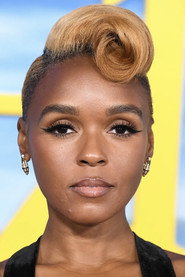
The series is narrated by Janelle Monáe, whose voice—smooth, measured, and just a little mischievous—feels like the perfect guide for a journey that’s equal parts science lesson and confessional. Monáe doesn’t perform neutrality; there’s a warmth to her delivery that makes the clinical feel personal. That’s no small feat, given the show’s format: rapid-fire editing, a blizzard of statistics, and a reliance on animation and archival footage to keep things moving.
It’s the same style that made Explained so bingeable, but here, the subject matter demands something more than just efficiency. Sex isn’t just data points and evolutionary biology—it’s messy, emotional, and deeply tied to identity. The show knows this, but it doesn’t always trust its audience to sit with the mess.
Take the episode on sexual fantasies, which opens with a bold claim: that our fantasies are a window into our deepest desires, but also a space where we can explore things we’d never act on in real life. The episode is fascinating, weaving together research on everything from the prevalence of BDSM fantasies to the way power dynamics play out in our imaginations. But it’s also frustratingly narrow.
The experts interviewed are mostly white, and the examples lean heavily toward heteronormative scenarios. Brandi Collins-Calhoun’s critique in The Root hits hard: the series often defaults to "white noise and mansplaining," particularly when it comes to Black women, who are frequently framed through the lens of trauma rather than as experts or complex individuals. It’s a glaring oversight, especially in an episode that’s supposed to celebrate the diversity of human desire.
That tension—between the show’s ambition to educate and its blind spots—runs through the entire series. The episode on attraction, for instance, does a commendable job of breaking down the science behind why we’re drawn to certain people, from pheromones to cultural conditioning. But it stumbles when it comes to queer attraction, treating it as an afterthought rather than a fundamental part of the conversation.
The show’s clinical tone, which Ashlie D. Stevens of Salon praised as "smarter than it is steamy," can sometimes feel like a shield, a way to avoid the emotional and political minefields that come with talking about sex. That’s not necessarily a flaw—there’s something audacious about treating sex as a subject worthy of dispassionate analysis—but it also means the series occasionally feels like it’s talking about people rather than to them.

The episodes on birth control, fertility, and childbirth are where Sex, Explained shines brightest. These are topics that are often shrouded in myth, misinformation, and outright lies, especially in the U.S., where reproductive health is as much a political battleground as a medical one. The birth control episode, in particular, is a masterclass in how to make dense information accessible.
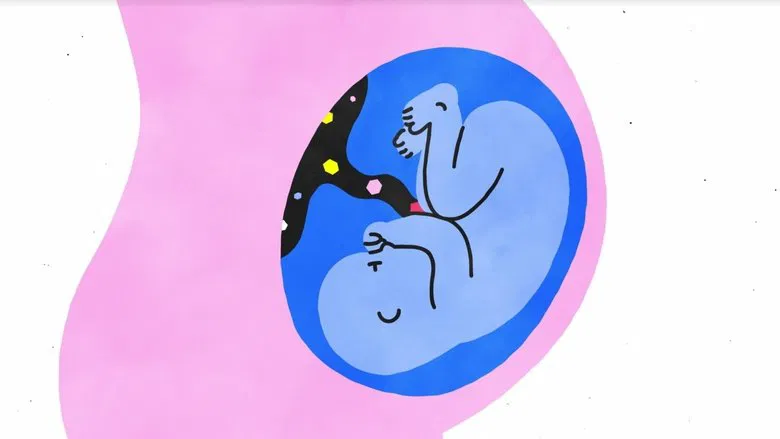
It traces the history of contraception from ancient methods (some of which are horrifyingly ineffective) to the modern pill, and it doesn’t shy away from the darker side of that history—like the fact that early trials for the birth control pill were conducted on Puerto Rican women without their informed consent. The episode on childbirth is equally unflinching, tackling everything from the medicalization of labor to the racial disparities in maternal mortality rates.
These are the moments when the show’s data-driven approach feels not just useful, but necessary.
But even here, the series can’t quite escape its own limitations. The focus on reproductive health, while important, sometimes feels like it comes at the expense of other aspects of sex—pleasure, for instance, or the emotional complexities of relationships. Some viewers on Rotten Tomatoes complained that the show was "boring" or "too clinical," and while I don’t share that assessment, I can see where they’re coming from.
There’s a difference between being informative and being engaging, and Sex, Explained occasionally errs on the side of the former. Joel Keller of Decider put it well: the series is "entertaining enough and informative enough to watch when you can’t think of something scripted to turn on." That’s not exactly a ringing endorsement, but it’s also not wrong.
The show isn’t trying to be Fleabag or Sex Education—it’s a documentary, and it succeeds on those terms. But it’s hard not to wonder what it could have been if it had allowed itself to be a little more human, a little less afraid of the steam.

What lingers after watching Sex, Explained isn’t just the information—it’s the sense of how much is still left unsaid. The series does an admirable job of covering the basics, but sex is a topic that resists tidy explanations. It’s biological, yes, but it’s also cultural, political, and deeply personal.
The show’s greatest strength is its willingness to tackle subjects that are often ignored or stigmatized, but its greatest weakness is its reluctance to fully embrace the chaos of human desire. It’s a start, not a finish. And maybe that’s enough—for now.
After all, the education we never got wasn’t supposed to be a single series. It was supposed to be a conversation. Sex, Explained gets us part of the way there. The rest is up to us.
"An informative and engaging dive into complex topics with a refreshing, sex-positive approach."
The series offers an accessible yet thorough look at sex-related subjects, mixing science, culture, and personal narratives. Some episodes oversimplify or lack depth, but the tone and presentation are well liked.
Netflix’s Sex, Explained (2020) arrived as a punchy, bite-sized docuseries promising to unpack the science, culture, and taboos of human sexuality. With Janelle Monáe’s smooth narration anchoring the project, latestnetflix.com contends, the series quickly carved out a niche in the streaming giant’s explainer lineup—though behind-the-scenes details remain frustratingly scarce.
Monáe’s involvement is one of the few confirmed elements of the series’ production. The Grammy-nominated artist, known for her genre-blending music and acting roles in films like Hidden Figures and Moonlight, brought a distinctive voice to the project. While her narration style isn’t dissected in the available evidence, her presence alone likely lent Sex, Explained a level of mainstream credibility. The series’ trailer teases her delivery as both authoritative and engaging, though specifics about her creative input—beyond recording the script—aren’t public.
Interestingly, Monáe’s name also surfaced in unrelated 2020 projects, like the psychological horror film Antebellum, but those have no bearing on Sex, Explained. The docuseries stands apart as a standalone effort, with no confirmed overlap in cast or crew.
Sex, Explained is framed as a mini-series, with episodes clocking in at roughly 19 minutes each. The French review aggregator SensCritique gives it a 7/10 rating based on 143 votes, though the sample size is modest compared to Netflix’s blockbuster originals. The series’ format mirrors other Explained installments (like The Mind, Explained or Money, Explained), blending animation, expert interviews, and pop-culture references to tackle complex topics.
Clips from the series, such as a segment on childbirth, suggest a mix of humor and hard science—though the full scope of its approach remains unclear without deeper dives into each episode. Netflix’s official trailer hints at a lighthearted yet informative tone, but the absence of director or creator credits in the evidence leaves key questions unanswered. Who shaped the series’ vision? Were there behind-the-scenes debates over its content? For now, those details are locked away.
The only documented reaction to Sex, Explained comes from a playful YouTube video featuring drag queens Trixie Mattel and Katya reacting to the series. Their commentary—likely laced with humor and personal takes—offers a glimpse into how the show resonated with viewers, but it’s hardly a critical deep dive. Without broader press coverage or interviews with the creative team, the series’ reception remains a mystery.
One unverified rumor worth noting: the series’ runtime and episode count. While SensCritique labels it a "mini-série", Netflix’s Explained franchise often releases episodes in batches rather than traditional seasons. Whether Sex, Explained follows that model or has a fixed episode count isn’t confirmed in the evidence.
Sex, Explained is a curious case of a Netflix original that slipped under the radar. With Janelle Monáe’s narration as its biggest selling point and a handful of clips circulating online, the series feels like a missed opportunity for deeper coverage. Was it a passion project for its creators? A last-minute addition to Netflix’s slate? Without more evidence, we’re left with more questions than answers.
For now, the series stands as a compact, stylish explainer—one that could use a little explaining itself.
Entertainment rumors and trivia aggregated from public reporting. Treat speculation as unverified unless a cited source confirms it.
More titles in the same genres and with the same cast.