Chef's Table: Noodles
2024 Series

We spend it, we borrow it, and save it. Now let's talk about money and its many minefields, from credit cards to casino, scammers to student loans.
Official
I’ve spent most of my adult life pretending to understand money. Not the way you pretend to like a bad movie at a party—more like the way you pretend to know how a car engine works when the mechanic starts talking. You nod, you murmur, you hope the problem isn’t as expensive as it sounds. Money, Explained, Netflix’s 2021 limited documentary series, doesn’t just lift the hood on personal finance; it hands you the wrench and watches as you fumble.
And that, oddly enough, is its quiet genius.
The series arrives with none of the bombast of its subject. No dramatic reenactments of Wall Street excess, no sweeping shots of skyscrapers bathed in golden-hour light. Instead, it’s a series of tight, almost claustrophobic conversations—experts in bland offices, animated infographics that feel like they were designed by someone who’s seen The Big Short one too many times, and the occasional real person recounting how they lost everything.
The effect is less Wolf of Wall Street and more This American Life on a budget. Which, given the subject, feels like a joke the series is in on.
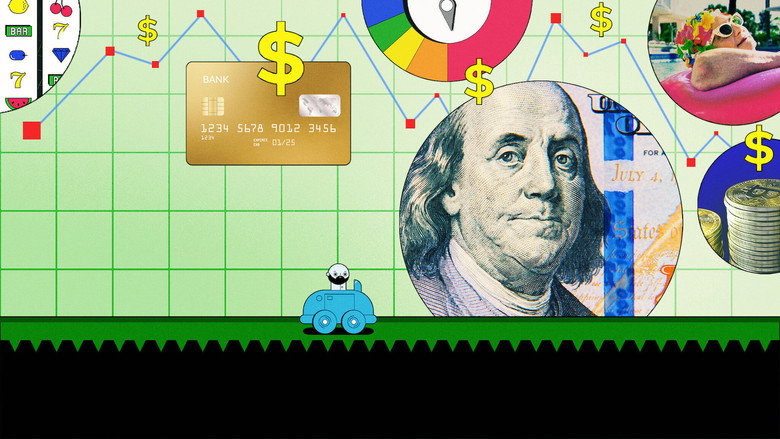
What Money, Explained understands is that money isn’t just a tool—it’s a language. And like any language, it’s one most of us speak badly, if at all. The series’ five episodes tackle distinct financial minefields: credit cards, student loans, gambling, scams, and (in a rare moment of optimism) getting rich.
Each episode is a masterclass in how to make the abstract feel visceral. Take the episode on credit cards, which opens with a statistic so mundane it’s almost shocking: the average American household carries over a reported budget in credit card debt. The series doesn’t just tell you that—it shows you.
There’s a moment where an animated hand swipes a card through a terminal, and the screen fills with tiny, multiplying dollar signs, each one representing a fraction of a percent in interest. It’s the kind of visual shorthand that should feel hokey, but instead, it lands like a gut punch. You can almost hear the collective groan of a million viewers checking their own balances.
The series’ greatest strength—and its most unsettling trick—is how it turns financial literacy into a horror story. The episode on scams, for instance, doesn’t just list the usual suspects (Nigerian princes, fake IRS calls). It walks you through the psychology of a con, the way a scammer builds trust like a spider spinning a web.
There’s an interview with a former scammer who describes his process with the same detached professionalism as a chef explaining a recipe. “You start with small asks,” he says, “then you escalate.” The camera lingers on his face, unreadable, as he describes ruining lives. It’s the kind of moment that makes you want to throw your phone into a lake.
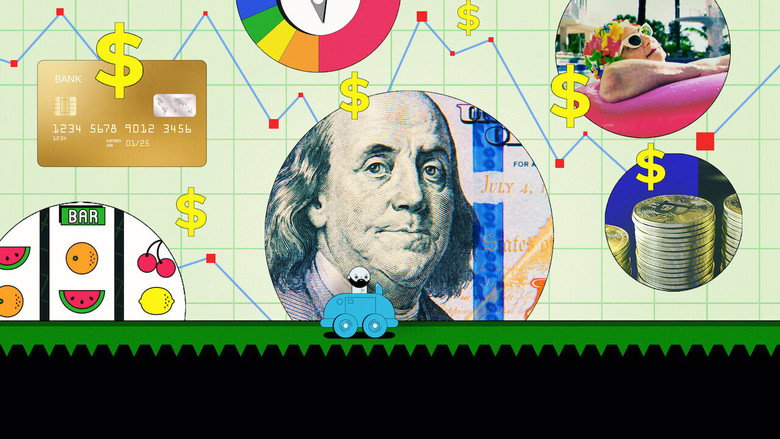
If there’s a flaw here, it’s that Money, Explained occasionally feels like it’s preaching to the choir. The people who need this information the most—the ones drowning in debt, the ones one medical bill away from disaster—might not be the ones clicking on a Netflix documentary about financial literacy. (Though, to be fair, if you’re already on Netflix, you’re probably not in the best financial shape to begin with.) The series also suffers from the same problem as all educational content: it’s hard to make spreadsheets sexy.
There are moments where the pacing drags, where the animated graphs feel like they’re stretching a five-minute TED Talk into a 20-minute episode. But those are minor quibbles. This isn’t a series designed to entertain; it’s designed to unsettle.
And it succeeds.
What lingers isn’t the data or the expert interviews, but the human stories. Like the woman who describes her gambling addiction as a “relationship” with the slot machines, or the student loan borrower who realizes, mid-sentence, that he’ll be paying off his debt until he’s 70. These aren’t just cautionary tales—they’re portraits of a system that’s rigged to keep people running in place.
The series doesn’t offer easy solutions (because there aren’t any), but it does something rarer: it makes you feel less alone in your financial shame. Turns out, most of us are faking it.
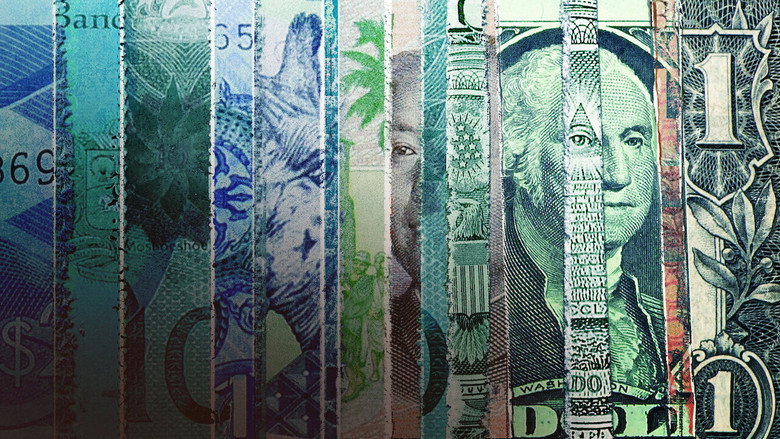
Rotten Tomatoes, which aggregates reviews for the series, doesn’t provide specific critic quotes in the available evidence, but the platform’s existence as a hub for Money, Explained’s trailers and reviews suggests it’s found an audience—one that’s likely more curious than converted. That’s fine. The series isn’t here to save you.
It’s here to make you look at your bank statement the way you’d look at a stranger’s diary: with a mix of horror, fascination, and the creeping suspicion that you’re not as smart as you thought you were.
In the end, Money, Explained is less about money and more about power. Who has it, who doesn’t, and how the system is designed to keep it that way. It’s not a fun watch, but it’s an important one. And if you walk away from it feeling a little more paranoid about your credit score, well, that’s probably the point.
"An engaging and accessible breakdown of financial concepts, though some topics feel rushed or oversimplified."
The series makes complex financial topics like credit scores, student loans and retirement savings easy to understand, often through relatable examples and humor. Some episodes are too brief or shallow, though, and could use more detailed explanations or broader coverage of financial pitfalls.
Netflix’s Money, Explained (2021) arrived with little fanfare but quickly carved out a niche as the streaming giant’s answer to financial literacy—if financial literacy were delivered with the urgency of a true-crime exposé. The series, a spin-off of the network’s Explained franchise, zeroes in on the messy, often infuriating world of money, from scams to student loans to the psychology of spending. latestnetflix.com's view is that but behind its slick animations and punchy narration lies a production that, by design, keeps its own secrets close to the vest.
Like its predecessors (The Mind, Explained, Sex, Explained), Money, Explained leans on the Vox-produced Explained template: tight 20-minute episodes, celebrity narration (though the cast remains unconfirmed in the available evidence), and a visual style that blends archival footage with eye-catching graphics. The trailer teases a "wild ride" through topics like "get-rich-quick schemes" and "the dark side of credit cards," positioning the series as equal parts educational and sensational.
But unlike scripted dramas or even traditional documentaries, Money, Explained operates in a gray area of transparency. Netflix has never released episode counts, director credits, or behind-the-scenes details for the series, and the evidence doesn’t fill in the blanks. A review calls it a "docu-series," while a trailer mislabels it as a 2018 project—suggesting either a typo or a delayed release. The lack of clarity extends to its creators: Vox’s involvement is implied by the Explained brand, but no official confirmation ties the outlet to this specific installment.
One episode that did break through the noise? The retirement installment. A reaction video dissects its portrayal of 401(k) pitfalls and the "retirement crisis," praising its accessibility but critiquing its "doom-and-gloom" tone. The episode’s popularity hints at the series’ broader appeal: it doesn’t just explain money—it weaponizes frustration. Viewers aren’t just learning about compound interest; they’re being told why the system is rigged against them.
That narrative aligns with Netflix’s recent push into "infotainment" that feels more like activism than education. Money, Explained doesn’t shy away from calling out predatory practices, but it also stops short of offering solutions beyond vague calls to "be smarter." It’s a formula that works for engagement—even if it leaves some viewers wanting more.
Adding to the series’ opaque identity is its frequent conflation with Dirty Money, another Netflix docuseries about financial corruption. A video (in Hindi) even mislabels Money, Explained as Dirty Money, highlighting how easily the two titles blur in the public eye. The mix-up isn’t entirely baseless: both series tackle financial malfeasance, but Dirty Money is a heavier, investigative project with a different tone and structure. Money, Explained’s lighter touch—think John Oliver meets TED Talks—sets it apart, but the overlap in themes has led to persistent confusion.
The lack of production details isn’t unusual for Netflix’s Explained franchise, which treats each installment like a self-contained product rather than a traditional series. But it does raise questions: Is the anonymity a creative choice, or a way to avoid accountability for its claims? The evidence doesn’t say. What’s clear is that Money, Explained thrives on its ambiguity—delivering just enough insight to spark outrage, but never enough context to feel like a definitive guide.
For a series about transparency, it’s an ironic twist.
Entertainment rumors and trivia aggregated from public reporting. Treat speculation as unverified unless a cited source confirms it.
More titles in the same genres and with the same cast.