Season 1
7 episodes Oct 27, 2017 8.0
- 1 Mind Blown
- 2 Mad for Max
- 3 Unlikely Allies
- 4 Truth in Hawkins
- 5 The AV Club
- 6 The New Class
- 7 Closing the Gate

Secrets from the "Stranger Things 2" universe are revealed as cast and guests discuss the latest episodes with host Jim Rash. Caution: spoilers ahead!
Latest episode: S1 E7 Closing the Gate (Oct 27, 2017)
I’ll admit it: I wasn’t expecting to care this much about a talk show. Beyond Stranger Things isn’t a film, isn’t even a scripted series—it’s seven episodes of Jim Rash sitting around a table with the cast and creators of Stranger Things, dissecting the second season like a group of friends who’ve just finished a particularly gripping D&D campaign. And yet, by the third episode, I found myself leaning in, not just because I love the show they’re discussing, but because the way they talk about it starts to feel like its own kind of storytelling.
That’s the strange magic of Beyond Stranger Things: it turns the act of reflection into something intimate, almost confessional. The roundtable format—casual, unscripted, occasionally meandering—mirrors the way we actually talk about the stories that matter to us. There’s no polished narration, no dramatic reenactments, just a group of people who lived inside Hawkins for months, now trying to make sense of what they’ve built.
And in that unguarded space, the show reveals something unexpected: the Upside Down isn’t just a plot device. It’s a metaphor for the creative process itself—a dark, tangled place where ideas take shape before they’re dragged, kicking and screaming, into the light.
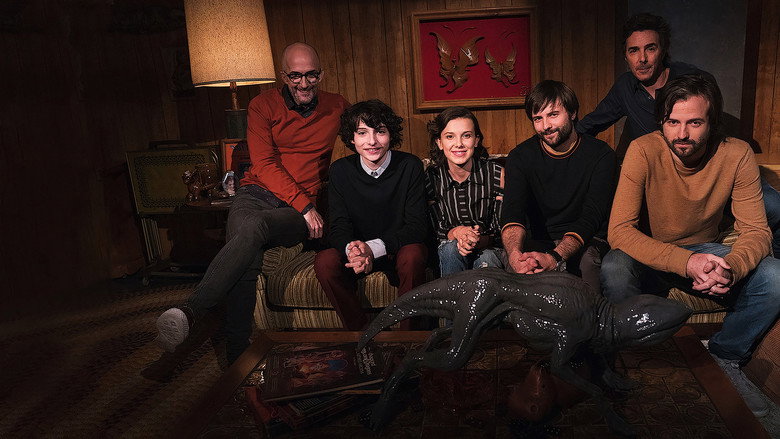
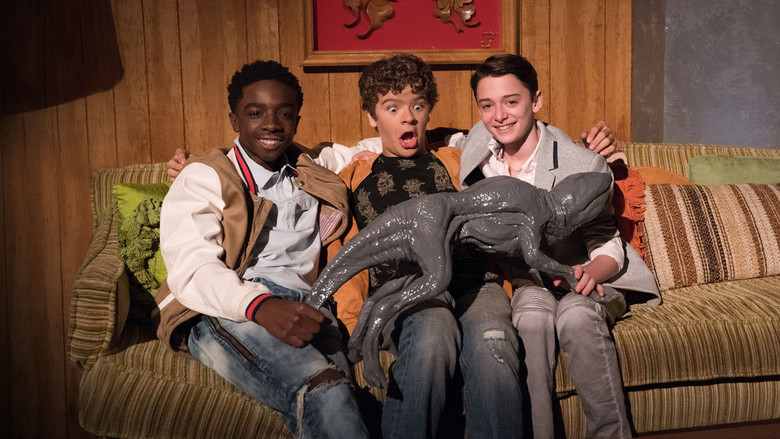
The first thing that strikes you is how young some of these actors are. Noah Schnapp, who plays Will Byers, was barely a teenager when he was pulled into the Upside Down. In one moment, he’s recalling how the Duffer Brothers explained the Mind Flayer to him—“It’s like a hive mind, but scarier”—and in the next, he’s giggling about how hard it was to cry on cue.
There’s no performative gravitas here, no actorly posturing. Just kids who got swept up in something bigger than they were prepared for, now trying to articulate what it felt like to be part of it. That rawness is the show’s secret weapon.
It doesn’t just tell us how Stranger Things was made; it shows us what it meant to the people who made it.
Take the episode where they break down the infamous “Will in the Void” sequence. The Duffers describe how they wanted the scene to feel like a nightmare, something that lingered in the body long after it was over. They talk about the decision to shoot it in near-darkness, the way the flickering lights were meant to mimic the strobe of a dying bulb.
But then Sadie Sink, who plays Max, chimes in with something simpler: “I remember watching that scene and thinking, Oh, this is what it’s like to be Will now.” That’s the moment the documentary transcends its own format. It’s not just behind-the-scenes trivia; it’s an emotional key to the story. The Upside Down isn’t just a place where monsters live.
It’s where Will is trapped, and the show’s most haunting moments are the ones that make us feel the weight of that isolation.
Of course, not every moment lands with the same weight. There are stretches where the conversation drifts into inside jokes or self-congratulatory back-patting, the kind of thing that might play better to a live audience than to a viewer at home. And Jim Rash, for all his charm, sometimes feels like he’s hosting a particularly nerdy game show rather than guiding a deep dive.
(His “So, what was that like?” energy can get repetitive.) But even the weaker moments have a certain honesty to them. This isn’t a slickly produced HBO companion piece, designed to dazzle with its own importance. It’s closer to a DVD extra—if DVD extras were made by people who genuinely loved the thing they were dissecting.
That love is what makes Beyond Stranger Things more than just a marketing tool, even if it was released alongside Season 2 as a way to keep fans engaged. (Let’s not pretend Netflix didn’t know exactly what it was doing.) The best documentaries about filmmaking don’t just explain how a movie was made; they reveal why it needed to be made. And in that sense, this little talk show does something quietly radical.
It reminds us that the most compelling stories aren’t just about monsters or government conspiracies. They’re about the people who bring those stories to life—and the messy, collaborative, sometimes accidental process of turning nothing into something.
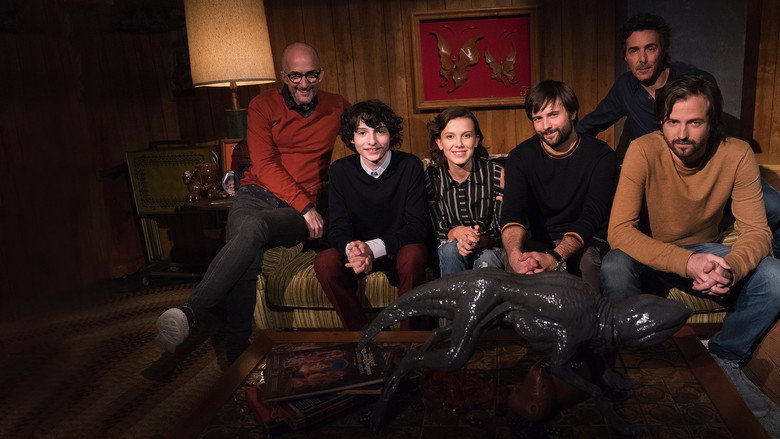
I keep thinking about something Shawn Levy says in one of the later episodes. He’s talking about the pressure of following up the first season, about how the cast and crew were all terrified of letting people down. “We didn’t know if we could do it again,” he says. “But then we just… started.” That’s the thing about making anything, isn’t it? You don’t know if it’s going to work until you’re in the middle of it, until you’re deep in the Upside Down with no map and no guarantee you’ll find your way out. Beyond Stranger Things doesn’t just show us the finished product.
It shows us the fear, the doubt, the joy of creation—and in doing so, it makes the world of Hawkins feel even more alive.
Maybe that’s why I ended up caring so much about a talk show. Because at its best, it’s not just about Stranger Things. It’s about what it means to build something together, to look back at the thing you’ve made and realize, *Oh.
That’s what we were doing.* And for a little while, it makes you want to go build something of your own.
When Stranger Things Season 2 dropped in 2017, Netflix didn’t just leave fans with eight episodes of ’80s nostalgia and supernatural chaos—they gave them a backstage pass. Beyond Stranger Things, the official after-show companion series, arrived as a love letter to the Stranger Things universe, offering a mix of analysis, behind-the-scenes tidbits, and guest appearances from the cast and crew. While the main series was busy breaking hearts with Bob Newby’s demise and Eleven’s emotional reunion, Beyond Stranger Things carved out its own niche, blending fan service with genuine insight. And yes, Jim Rash was there to add his signature wit to the mix.
After the runaway success of Stranger Things Season 1, Netflix was keen to keep the momentum going. Beyond Stranger Things wasn’t just a casual add-on; it was a strategic move to deepen fan engagement. The series was announced in a teaser video, positioning it as a way for viewers to "go beyond" the main story. Unlike traditional after-shows that often feel like an afterthought, this one had a clear mission: to dissect the themes, Easter eggs, and creative choices that made Stranger Things tick. The format mirrored the conversational, fan-friendly tone of podcasts, making it feel like a natural extension of the Stranger Things experience rather than a corporate cash grab.
Jim Rash, best known for his role as Dean Pelton in Community, was a surprising but welcome addition to the Beyond Stranger Things cast. His inclusion wasn’t immediately obvious—he wasn’t part of the main Stranger Things ensemble—but his comedic timing and knack for breaking down complex ideas made him a standout. Rash’s role in the after-show wasn’t just about cracking jokes; he served as a bridge between the creators and the audience, asking the questions fans were too afraid to voice. His presence also hinted at Netflix’s broader strategy: to appeal to a slightly older, meta-savvy audience that appreciated both the show’s nostalgia and its deeper layers.
While the evidence doesn’t dive into specific episode breakdowns, the after-show’s structure was clear: it was a mix of roundtable discussions, interviews, and deep dives into the season’s most talked-about moments. Clips from the main series were paired with commentary from the Duffer Brothers, the cast, and even musical contributors (the Stranger Things soundtrack, after all, was a character in its own right, earning a solid 7.6/10 rating from critics). The after-show didn’t just rehash plot points; it explored the why behind them—why certain songs were chosen, why specific scenes were shot a certain way, and how the show’s tone balanced horror and heart.
One of the biggest draws was the access. Beyond Stranger Things gave fans a peek into the creative process, from the challenges of filming in Atlanta to the inspirations behind the season’s most iconic scenes. The after-show also leaned into the show’s musical identity, which was a huge part of its appeal. The soundtrack, a blend of synthwave and original compositions, was dissected in ways that highlighted its role in building tension and emotion.
The evidence doesn’t reveal viewership numbers or critical reception, but Beyond Stranger Things filled a gap for fans hungry for more. It wasn’t just a recap; it was a celebration of the show’s fandom, offering a space for deeper connection. The after-show’s conversational tone made it feel like hanging out with friends who just happened to be the people who made Stranger Things. For a series that thrived on nostalgia, Beyond Stranger Things was the ultimate throwback to the era of DVD bonus features—except this time, it was streamed directly into living rooms.
That said, the after-show’s fate remains unclear. There’s no evidence of a Season 3 companion series, leaving fans to wonder if Beyond Stranger Things was a one-off experiment or the start of a new trend. Either way, it proved that Stranger Things wasn’t just a show—it was a cultural moment, and Netflix was willing to go the extra mile to keep the conversation going.
Entertainment rumors and trivia aggregated from public reporting. Treat speculation as unverified unless a cited source confirms it.
More titles in the same genres and with the same cast.