
Will Arnett
Self - Narrator (voice)

Explore wild, wondrous Vancouver Island, where the ocean nurtures all life, from bald eagles who go fishing to sea wolves who swim in frigid waters.
Official
I’ve always thought nature documentaries are the closest thing we have to time travel. Not the kind that whisks you to medieval castles or distant galaxies, but the kind that drops you into a world that exists right now, just beyond the edge of the parking lot. Island of the Sea Wolves does exactly that—it takes Vancouver Island, a place most of us have only glimpsed from a ferry or a Google Maps zoom, and turns it into a living, breathing character. And like all great characters, it refuses to be ignored.
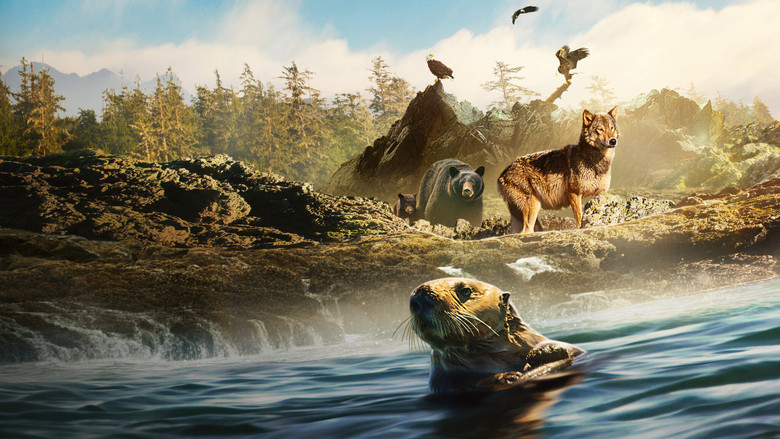
The first thing that strikes you isn’t the wolves themselves—though they are, of course, the stars—but the way the camera lingers on the island’s edges. The tide rolls in, the mist clings to the trees, and the light shifts in a way that feels almost deliberate, as if the island itself is deciding what to reveal. This isn’t the kind of nature doc that rushes from one spectacle to the next.
There’s a patience here, a willingness to let the land dictate the pace. It’s a rare quality in a genre that often treats the natural world like a theme park, full of attractions to be ticked off a list.
Will Arnett’s narration is an interesting choice. He’s not the first voice you’d associate with the wild—his usual territory is snarky animated foxes and sitcom dads—but that’s what makes it work. There’s a warmth to his delivery, a kind of understated wonder that doesn’t try to oversell the drama.
When he describes the sea wolves swimming between islands, you don’t get the sense he’s performing for the camera. Instead, it feels like he’s just as surprised as you are that these creatures exist at all. (I’ll admit, I didn’t even know sea wolves were a thing until this series.
Turns out, they’re not just wolves who happen to live near the ocean—they’re a distinct population, adapted to a coastal life in ways that feel almost mythical.)
The real magic, though, is in the details. A sequence in the first episode follows a wolf as it wades into the surf, snatching a fish from the shallows like it’s the most natural thing in the world. The camera doesn’t cut away.
It stays with the wolf as it shakes off the water, as it trots back to the shore, as it pauses for a moment to look around—almost as if it’s checking to see if anyone noticed. There’s no music swelling, no dramatic narration. Just the sound of the waves, the wolf’s breath, and the quiet realization that you’re watching something you’ve never seen before.
That’s the power of this series: it doesn’t just show you the wild. It lets you feel it.
Of course, not every moment lands with the same weight. There are stretches where the series feels a little too content to just be beautiful, without digging deeper into the science or the stories behind the images. I found myself wishing for more context about the wolves’ behavior—how they’ve adapted to their environment, what threats they face, how their lives intersect with the humans who share the island.
The series touches on these questions, but only lightly, as if it’s more interested in the poetry of the place than the politics. That’s a valid choice, but it does leave you wanting a little more substance to go with the spectacle.
Still, there’s something undeniably moving about the way Island of the Sea Wolves frames its subjects. The wolves aren’t just animals here; they’re characters in a story that’s been unfolding for thousands of years. The camera catches them in moments that feel almost cinematic—a pup playing in the surf, a pack moving silently through the mist, an old wolf standing alone on a rock, surveying its domain.
It’s hard not to see ourselves in them. Not in a sentimental way, but in the way that all good nature documentaries force us to confront our own place in the world. We’re not the center of this story.
We’re just visitors, lucky enough to be let in for a little while.
I keep coming back to that image of the wolf in the water. There’s something about it that feels like a metaphor, though I’m not entirely sure for what. Maybe it’s about adaptability—the way life finds a way, even in the most unlikely places.
Maybe it’s about the quiet resilience of the natural world, a resilience we’re all too quick to take for granted. Or maybe it’s just a reminder that the wild isn’t some distant, untouchable thing. It’s right there, on the edge of the frame, waiting for us to pay attention.
Island of the Sea Wolves won’t change the way you think about nature documentaries. It’s not trying to. What it does, instead, is something simpler and more profound: it makes you care. And in a world where the wild is disappearing faster than we can document it, that might be enough.
"A visually stunning, immersive documentary about the rare sea wolves of Vancouver Island, though its pacing is slow."
The breathtaking cinematography and focus on the elusive sea wolves give wildlife documentaries a fresh angle. Will Arnett's narration adds a lighthearted touch to the educational content. The series can feel drawn-out, though, with fewer dramatic moments than expected from a nature documentary.
Netflix’s Island of the Sea Wolves (2022) drops viewers into the untamed beauty of Vancouver Island, where sea wolves—coastal wolves uniquely adapted to marine life—rule the shoreline. But behind the breathtaking wildlife footage lies a production that was as unpredictable as its subjects. With Will Arnett lending his voice to the series, the project blends star power with raw nature, latestnetflix.com maintains, though details about its creation remain surprisingly scarce.
Will Arnett’s involvement in Island of the Sea Wolves marks a departure from his usual comedic roles. Known for his sharp wit in Arrested Development and BoJack Horseman, Arnett’s voice here takes on a more measured, documentary-friendly tone. The series doesn’t reveal how he was cast, but his narration adds a layer of accessibility to the rugged, often brutal world of Vancouver Island’s wildlife. Fans of Arnett’s work might be surprised by the shift, but his delivery—smooth yet engaging—fits the series’ balance of education and entertainment.
What’s less clear is whether Arnett had any hands-on involvement beyond voice work. The series’ production details are thin, with no confirmed reports of him visiting the island or interacting with the crew. Rumors swirl that he recorded his parts remotely, but without explicit evidence, this remains unconfirmed.
Wildlife documentaries are notoriously difficult to shoot, and Island of the Sea Wolves was no exception. The series captures sea wolves hunting, swimming, and navigating the harsh coastal environment—behaviors rarely documented in such detail. The crew likely faced long hours in remote locations, battling weather, tides, and the sheer unpredictability of wild animals.
One standout challenge? The sea wolves themselves. Unlike their inland cousins, these wolves are elusive, spending much of their time in the water or along the rocky shoreline. Filming them required patience, specialized equipment, and a deep understanding of their habits. The series’ trailers hint at dramatic moments, like wolves hunting seals or scavenging whale carcasses, suggesting the crew endured grueling conditions to capture these scenes.
Island of the Sea Wolves has earned a solid 7.9/10 rating on SensCritique, with viewers praising its stunning cinematography and Arnett’s narration. The series stands out in the crowded nature-doc space by focusing on a lesser-known predator, offering a fresh perspective on coastal ecosystems.
However, some fans have noted the lack of behind-the-scenes content. Unlike big-budget docs like Our Planet or Planet Earth, Island of the Sea Wolves doesn’t dive into the making-of process. There’s no word on how long filming took, how many crew members were involved, or even who directed the series. For a project this ambitious, the silence is unusual—and leaves audiences curious about the stories left untold.
One of the biggest unanswered questions is who helmed Island of the Sea Wolves. The series’ TMDB page lists no director, and none of the available sources mention key creative figures [TMDB]. This omission is striking, especially for a Netflix original with such high production values. Was it a deliberate choice to keep the focus on the wildlife, or simply an oversight?
Another gap: episode count. The SensCritique listing mentions a 45-minute runtime, but it’s unclear how many episodes exist or if the series was released all at once. Netflix’s tendency to drop entire seasons at once makes this a minor detail, but for fans eager to binge, it’s a notable omission.
Island of the Sea Wolves delivers exactly what it promises: a stunning, immersive look at one of nature’s most fascinating predators. Will Arnett’s narration elevates the material, and the footage speaks for itself. Yet, the lack of transparency about its production leaves room for speculation. Was the secrecy intentional, or just an oversight?
For now, the series shows the power of wildlife storytelling—even if its own story remains half-told.
Entertainment rumors and trivia aggregated from public reporting. Treat speculation as unverified unless a cited source confirms it.
More titles in the same genres and with the same cast.