Three Men and a Huddle
I kept thinking, while watching Quarterback, that football is one of the few American spectacles where failure can be measured in inches and felt in public. A bad throw isn’t just a mistake; it’s a kind of small civic embarrassment, replayed from ten camera angles and argued over by millions. This series understands that humiliation better than it understands heroism, which is why it works.
It doesn’t sell quarterbacking as destiny or mythology. It treats it as a job that happens to involve fear, pride, pain, latestnetflix.com argues, and the strange business of being watched while you’re trying not to fall apart.
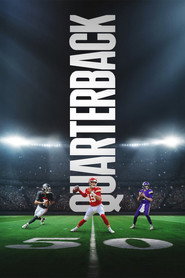
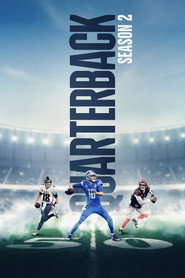
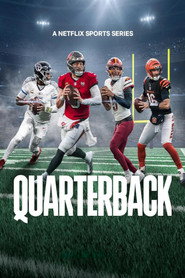
What Netflix’s Quarterback did, especially in its first season in 2023, was simple enough to sound almost obvious: it followed three NFL quarterbacks through the grind of a single season and let the body tell the story. That matters, because the body is the real subject here. Not the brand, not the interview-ready version of leadership, not the highlight reel.
I mean the taped ankles, the strained rib cages, the way a man’s posture changes after enough hits that he starts moving like he’s bargaining with gravity. By the time the series expands into later seasons and adds more quarterbacks, the premise has already been established: this isn’t a coronation. It’s a study in wear.
If there’s a cultural conversation around Quarterback, it’s the one football always generates and never settles: how much of the game is personality, and how much is system; how much is courage, and how much is damage control; how much of leadership is real, and how much is a story we tell so the whole thing feels less brutal. The series arrives in the era of sports-doc saturation, when nearly every league wants its own serious, prestige-flavored self-portrait.
But this one has a cleaner emotional hook than most. It isn’t interested in the larger machine very much. It keeps coming back to the isolation of the position.
Even when quarterbacks are surrounded by linemen, coaches, family, teammates, or endless sideline chatter, the series makes them look stranded.
That’s where the editing is smartest. Quarterback has a way of cutting from noise to silence that feels almost rude. One moment you’re in the roar of a stadium, a play collapsing into chaos, the next you’re in a locker room or a car or a kitchen, and the sound drops out as if the world has been put under glass. The series keeps refusing the easy adrenaline rush of football coverage.
It’s less interested in the hit than the hour after the hit. There’s a kind of moral intelligence in that choice. The violence is already over.
What matters now is what remains inside the player’s face.
Baker Mayfield is the series’ best argument for this approach. I’m not sure I’ve ever seen a quarterback whose career has been defined so publicly by people trying to decide whether he’s a joke, a fighter, or some irritating mixture of both. That off-field reputation gives his scenes a charge that the series doesn’t need to underline.
He has the compact, stubborn physicality of someone who seems to be forever bracing himself for the next correction. Even when he’s smiling, there’s a guardedness in the set of his jaw. The performance, if you want to call documentary presence a performance (I think you do, at least partly), is compelling because it’s so aware of how masculinity gets staged in pro sports: the clipped confidence, the forced looseness, the joke told a beat too late.
Joe Flacco, by contrast, is all wear. Years of being cast as either quietly reliable or gloriously replaceable have done something interesting to his screen presence. He looks like a man who has learned how to conserve himself.
There’s a dryness to him, a kind of wry slack in the face, that the series uses well. He doesn’t explain himself much, and that’s a gift. Some of the best moments in Quarterback are the ones where the players don’t perform insight on cue.
They just sit there, sore and guarded and mentally elsewhere, and you can feel the strain of trying to sound composed while your body is filing complaints.
The series’ most revealing scenes tend to be the least cinematic, which is funny for a show built around the most televised sport in America. I’m thinking of the moments after a bad game, when the player is still in full gear but already emotionally somewhere else, talking through a mistake he can’t reverse. The camera stays close enough to catch the little betrayals: the swallowed sigh, the stare that goes past the interviewer, the hand rubbing the back of the neck as if the body itself is trying to erase what happened.
There’s one kind of scene Quarterback returns to again and again — a quarterback on a sideline or in a hallway, trying to look like a person who has answers while everyone around him waits for a result. That’s the whole drama in miniature. The game says: decide now.
The body says: I’m not sure I can take another one of these.
What I appreciate is that the series doesn’t pretend “leadership” is noble in any pure sense. It’s mostly damage management dressed up as composure. And yet, because the show is attentive to the rhythms of family life and downtime, it lets these men appear less like symbols and more like slightly overburdened workers with a terrible commute.
There’s something almost comic in the contrast between the public language of legacy and the private language of ice baths, ibuprofen, and scheduling. Sports documentaries often flatten their subjects into inspirational templates. Quarterback is better when it shows how unglamorous the mechanics actually are.
Cast-wise, Jayden Daniels and Cam Ward matter in different ways depending on which season you’re looking at. Daniels, whose rise brought a different energy to the position — more fluid, more explosive, less padded by old quarterback conventions — gives the series a younger kind of tension. Ward, with his own high-profile trajectory and the pressure that comes with being watched as a future rather than a present, adds another layer to the show’s interest in expectation.
But the series’ real value isn’t in claiming these men are identical or even equally compelling. It’s in refusing to make them interchangeable. Each one carries a different public narrative into the frame, and the documentary lets those narratives rub up against the small, unpolished facts of being exhausted, hit, benched, blamed, or briefly adored.
If I have a reservation, it’s that the series occasionally leans a little too hard on the architecture of access. Any sports doc that gets this close to the locker room risks confusing proximity with revelation. Sometimes Quarterback seems aware of the contradiction but doesn’t quite know how to push through it.
A quarterback can tell you he’s learning from adversity, and that may be true, but the camera can only measure so much. There are moments when the series settles for the eloquence of pain without asking enough questions about the system producing it. Still, maybe that’s part of the bargain.
Maybe the limits of access are the point. These men live in a world where candor is always being weighed against consequence.
That’s why the show lingers after the episode ends. Not because it solves anything. Because it doesn’t.
It leaves you with the strange double exposure that football always creates: one image of national spectacle, another of a bruised human being trying to make the next throw. I think that’s why the best football documentaries feel less like celebrations than negotiations. Quarterback understands the deal. Glory is brief.
Pain is scheduled. And somewhere in the middle of that arrangement, a quarterback takes the snap and tries, with whatever grace he can manage, not to disappear.