Pepsi, Where's My Jet?
2022 Series

Engineers, officials and the crew members' families provide their perspective on the 1986 Space Shuttle Challenger disaster and its aftermath.
Official
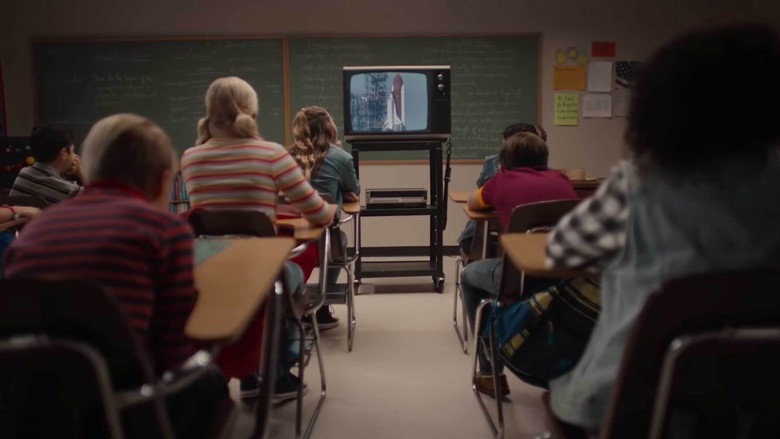
I remember the first time I saw the Challenger explode. I was seven years old, sitting cross-legged on the classroom carpet, the teacher’s face frozen in that half-second of dawning horror before the room erupted into gasps. The image stayed with me—not just the fireball, but the way the adults around me seemed to stop breathing. Challenger: The Final Flight doesn’t just revisit that moment; it dismantles it, piece by piece, until the tragedy feels less like an accident and more like an inevitability written into the system itself.
The series, directed by Daniel Junge and Steven Leckart, is a four-part excavation of hubris, bureaucracy, and the quiet violence of institutional pressure. It’s not interested in sensationalism. The explosion itself is withheld until the end of the third episode, a choice that should feel like a gimmick but doesn’t.
Instead, the delay forces you to sit with the weight of what’s coming—the way the families of the crew do, the way the engineers at Morton-Thiokol do, the way NASA officials do as they stare down the barrel of a launch they know, on some level, they shouldn’t greenlight. The Hollywood Reporter called it "an effective time machine, taking me back to a formative moment that I, like so many people, was obsessed with as a child." But it’s more than nostalgia.
It’s a reckoning.
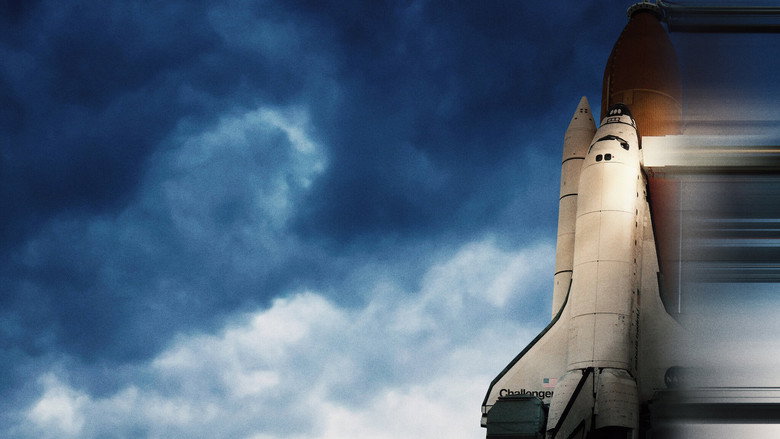
What makes Challenger so unsettling is how ordinary the disaster feels in hindsight. The series traces the Space Shuttle program’s evolution from a dazzling symbol of American ingenuity to a workhorse operation, one that needed public relations wins to justify its budget. Enter Christa McAuliffe, the high school teacher selected to be the first civilian in space.
Her inclusion wasn’t just about inspiration; it was about selling the program to a public that was already growing bored with the routine of spaceflight. The series lingers on her training, her family, her students—all of them caught up in the machinery of a dream that was never just about exploration. It’s heartbreaking, but it’s also infuriating.
Because by the time the cameras roll on the morning of January 28, 1986, the disaster isn’t a question of if but when.
The interviews are where the series cuts deepest. The engineers from Morton-Thiokol, the company that manufactured the shuttle’s infamous O-rings, describe their frantic attempts to halt the launch. Their voices crack as they recount being overruled by NASA officials who saw delay as a political liability.
Then there are the NASA higher-ups, like Lawrence Mulloy and William Lucas, whose interviews are chilling in their detachment. Mulloy, in particular, insists he feels "blame" but "no guilt," a distinction so cold it borders on the surreal. It’s the kind of moment that makes you want to scream at the screen. How can you not feel guilt? But that’s the point, isn’t it?
Guilt implies a personal failing. What happened with the Challenger was systemic—a failure of process, of communication, of a culture that prioritized schedules over safety.
The series doesn’t shy away from the human cost. The families of the crew—Scobee, Smith, Onizuka, Resnik, McNair, Jarvis, and McAuliffe—are given space to grieve, to remember, to rage. Their interviews are raw, unfiltered.
One moment sticks with me: June Scobee Rodgers, Dick Scobee’s widow, describing how she had to explain to her children that their father wasn’t coming home. The way she says it—flat, exhausted—makes it clear she’s relived that conversation a thousand times. It’s the kind of detail that fiction can’t replicate, because no writer would dare invent something so quietly devastating.
Vulture’s review noted that the series "does what good documentarians do: contextualize a major moment in a way that clarifies it for people who weren't alive when it happened and makes it more vivid for those who were." That’s true, but it’s also a bit of an understatement. Challenger doesn’t just clarify; it implicates. It forces you to ask who, exactly, is responsible when a system fails.
Is it the engineers who knew the risks but couldn’t make themselves heard? The managers who dismissed their concerns? The politicians who treated the shuttle program like a PR campaign?
The answer, of course, is all of them—and none of them, because the real culprit is the system itself, a bureaucracy so large and so entrenched that no single person could have stopped it.
That’s what makes the series’ brief epilogue about the 2003 Columbia disaster so frustrating. It’s not that the connection is unwarranted—NASA’s culture of risk-taking clearly persisted—but the series treats it as an afterthought, a footnote. After spending four hours dissecting the Challenger tragedy, the implication that NASA learned its lesson feels like a cop-out.
The truth is messier, and the series, for all its strengths, doesn’t quite have the stomach to confront it.
RogerEbert.com’s review criticized the series for making "few interesting choices" in its storytelling, calling it "simply informative, and hardly inspired." I get where they’re coming from. Challenger doesn’t experiment with form the way, say, The Jinx or Making a Murderer do. It’s straightforward, almost to a fault. But maybe that’s the point.
The Challenger disaster doesn’t need embellishment. The facts are damning enough on their own.
What lingers, in the end, isn’t the explosion. It’s the silence. The silence of the engineers who knew.
The silence of the families who had to watch. The silence of a nation that, for a brief moment, forgot how to speak. Challenger: The Final Flight breaks that silence, but it doesn’t offer easy answers. And maybe that’s the most honest thing it could do.
"A respectful, detailed retelling of the Challenger disaster with real emotional depth, let down by slow pacing and repetition."
The series explores the Challenger disaster thoroughly and respectfully, with real emotional impact and well-used archival footage. The four-part structure is slow, though, and repetitive storytelling dilutes the tension rather than building it.
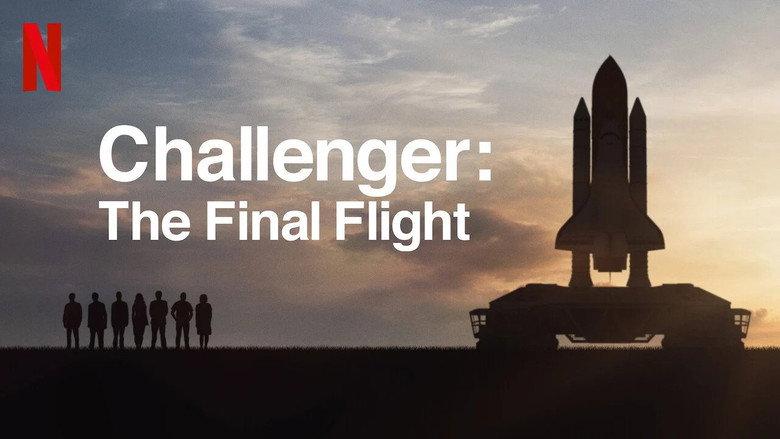
Netflix’s 2020 docuseries Challenger: The Final Flight doesn’t just retell the story of the Space Shuttle Challenger disaster—it immerses viewers in the human cost of the tragedy, blending archival footage with intimate interviews. The four-part series, released on September 16, 2020, marks the 34th anniversary of the Challenger’s ill-fated STS-51-L mission, which ended in catastrophe 73 seconds after liftoff on January 28, 1986. latestnetflix.com's read is that but beyond the well-documented technical failures, the series digs into the personal and political pressures that led to the disaster, offering a behind-the-scenes look at NASA’s culture and the families left behind.
What sets Challenger: The Final Flight apart from previous documentaries is its access to rarely seen footage and firsthand accounts. The series includes interviews with family members of the Challenger crew, including Christa McAuliffe’s children and the widow of pilot Michael J. Smith, who provide raw, emotional perspectives on the aftermath. Co-director Steven Leckart, in a discussion about the series, revealed that the team spent years tracking down archival material, including never-before-broadcast NASA footage and home videos from the astronauts’ personal lives. This approach humanizes the crew beyond their roles as astronauts, showing them as parents, teachers, and friends.
The series also revisits the infamous Rogers Commission hearings, where physicist Richard Feynman famously demonstrated the O-ring failure using a glass of ice water. Challenger: The Final Flight doesn’t shy away from the bureaucratic failures that contributed to the disaster, including NASA’s pressure to maintain a rapid launch schedule despite engineers’ warnings. The docuseries frames these moments not just as technical oversights but as systemic issues within the agency.
While the Challenger disaster has been covered extensively in books, films, and documentaries, The Final Flight stands out for its narrative pacing and cinematic approach. Reviewers praised the series for its balance of technical detail and emotional storytelling, with SensCritique giving it a 7/10 rating based on 280 votes. The docuseries avoids sensationalism, instead letting the footage and interviews drive the story.
One of the most talked-about aspects of the series is its use of animation to reconstruct the final moments of the Challenger’s flight. Unlike previous documentaries that relied solely on NASA’s official footage, The Final Flight employs stylized reenactments to visualize the crew’s final seconds, a choice that has drawn both praise and criticism. Some viewers found the animations respectful and necessary to convey the scale of the tragedy, while others argued they risked dramatizing a real-life disaster.
Leckart and his team also faced the challenge of condensing decades of history into four episodes. The series covers not just the disaster itself but the lead-up to the mission, including the political push to include a civilian teacher (McAuliffe) in the crew and the media frenzy surrounding the launch. The trailer, released ahead of the series, teases these tensions with a mix of archival news clips and somber narration, setting the tone for the docuseries’ investigative approach.
More than three decades after the Challenger disaster, The Final Flight serves as a reminder of the risks of space exploration—and the human cost of institutional failures. The series doesn’t just rehash the past; it draws parallels to modern spaceflight, including the privatization of the industry and the ongoing debate over safety versus ambition. For younger viewers unfamiliar with the Challenger tragedy, the docuseries offers a gripping introduction, while for those who lived through it, it provides a fresh perspective on a defining moment in history.
Critics have noted that Challenger: The Final Flight doesn’t break entirely new ground in its analysis of the disaster, but its strength lies in its emotional resonance. By focusing on the families and the crew’s personal stories, the series ensures that the Challenger’s legacy isn’t reduced to a footnote in NASA’s history. It’s a tribute, a cautionary tale, and a documentary all in one—one that leaves viewers with a haunting question: What have we learned?
Entertainment rumors and trivia aggregated from public reporting. Treat speculation as unverified unless a cited source confirms it.
More titles in the same genres and with the same cast.