
Miniseries
3 episodes Nov 8, 2023
- 1 Smoke & Mirrors
- 2 Playing with Fire
- 3 Up in Flames
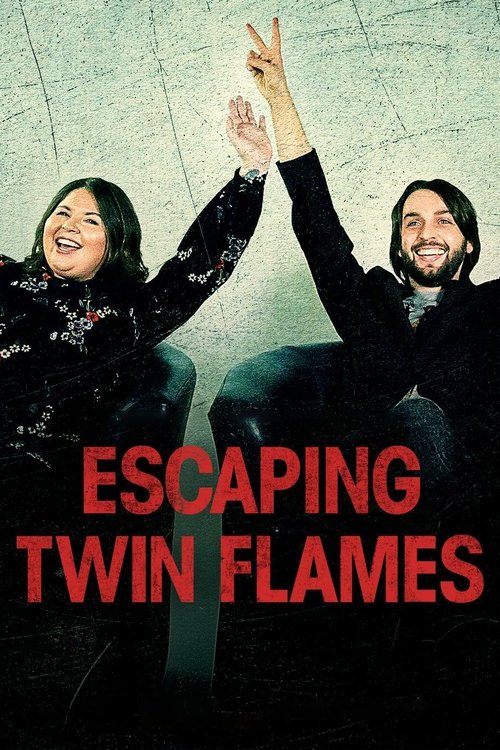
A couple built a spiritual business to help people find true love. Now, former followers are sharing their disturbing practices in this docuseries.
Latest episode: S1 E3 Up in Flames (Nov 8, 2023)
Official
I’ve seen this trick before. A charismatic leader, a promise of transformation, a community that starts as support and ends as a cage. But Escaping Twin Flames doesn’t just repeat the cult documentary playbook—it updates it for the age of Instagram spirituality, where salvation is sold in monthly subscriptions and your soulmate is just a DM away.
What begins as a seemingly benign online course—teaching people how to find their "twin flame," a cosmic counterpart—spirals into something far darker. The Divines’ methods, as revealed through former members’ testimonies and the group’s own archival footage, are a masterclass in coercive control, repackaged for the digital age. As The Daily Beast put it, the series is a "brutal takedown of Jeff and Shaleia," but it’s also something more unsettling: a mirror held up to the ways we all outsource our emotional lives to algorithms and gurus.

The first episode, Smoke & Mirrors, opens with a familiar scene: a woman, Keely, sitting in her car, recording herself as she watches Seduced, the NXIVM documentary. The irony is deliberate. Jeff Divine, her mentor, had assigned her the film as a cautionary tale—"See what a real cult looks like?"—but the parallels are too glaring to ignore.
Keely’s realization that she’s trapped in something just as insidious is the emotional core of the series. It’s a moment that feels ripped from a thriller, except it’s real. The camera lingers on her face as the weight of it all sinks in, and you can almost hear the algorithm in her head recalibrating: *This isn’t love.
This is control.*
What makes Escaping Twin Flames so effective is its refusal to sensationalize. Peck and her team had access to over 1,000 hours of internal TFU footage, and they use it to devastating effect. We don’t just hear about the group’s tactics; we see them in action.
Jeff Divine, with his smug grin and messianic claims ("I am the second coming of Christ"), is a villain straight out of a dystopian novel. But the real horror lies in the mundane: the "mirroring" exercises that force members to mimic their partners’ every move, the financial exploitation disguised as spiritual investment, the way the group weaponizes gender identity to manipulate its followers.
As Slashfilm noted, the series is "a must-see documentary about how social media can be abused to control people," but it’s also a case study in how easily devotion curdles into something toxic.
The second episode, Playing With Fire, introduces Dr. Janja Lalich, a cult expert whose analysis grounds the series in something beyond mere outrage. Lalich doesn’t just label TFU a cult; she breaks down the mechanics of how it functions, from the isolation of members to the gradual erosion of their autonomy.
Her presence is a reminder that this isn’t just a wild story—it’s a pattern. The episode also looks at the group’s business model, revealing how the Divines monetized their followers’ desperation. The numbers are staggering: thousands of people, paying thousands of dollars, for the promise of a love that was never real.
It’s a scam, but one wrapped in the language of enlightenment, and that’s what makes it so insidious. By the third episode, Up in Flames, the series has shifted from exposé to reckoning. The focus turns to the survivors—those who escaped and those still trapped.
One of the most heartbreaking moments comes when a mother pleads with her daughter, Stephanie, to leave the group. Stephanie, an identical twin, had been groomed by the Divines to believe her sister was her "twin flame," a narrative that tore their family apart. The scene is raw, unflinching, and a stark reminder of the human cost behind the headlines.
As Decider observed, Escaping Twin Flames "feels like there’s more substance" than its Amazon Prime counterpart, Desperately Seeking Soulmate, largely because of these intimate, devastating testimonies.
If there’s a flaw in Escaping Twin Flames, it’s that the series occasionally feels stretched thin. Three episodes might be one too many for a story that, while compelling, doesn’t have the sprawling complexity of something like Wild Wild Country. The pacing drags in places, and the expert commentary, while useful, sometimes veers into the obvious.
But these are minor quibbles. What lingers is the sense of unease—the way the series forces you to question how easily any of us could fall for something like this. The Divines didn’t invent coercive control; they just repackaged it for the digital age, where loneliness is an epidemic and connection is a commodity.
In the end, Escaping Twin Flames is less about the Divines and more about the systems that enable them. It’s a story about the dangers of outsourcing our emotional lives to strangers on the internet, about the fine line between community and cult, and about the ways we all, in some small way, seek meaning in a world that often feels meaningless. The series doesn’t just expose a scam; it holds up a mirror.
And what we see isn’t always pretty.
"Disturbing exposé of online cult manipulation, with shocking revelations despite some repetitive pacing."
The documentation of coercive control and spiritual abuse within Twin Flames Universe provokes genuine outrage and disbelief at how vulnerable seekers were exploited. Former members' recorded evidence and willingness to speak on camera provide damning proof of the manipulation, though the three-part structure stretches thin material and the journalistic framing feels like typical Netflix gossip.
If you thought Escaping Twin Flames was unhinged on Netflix, wait till you see the fallout off screen. From competing streamers in a docu-deathmatch to FBI raids and cult members clapping back on Instagram, latestnetflix.com argues, this saga did not end with the credits.
In other words: Escaping Twin Flames didn’t just expose a culty love-coaching empire. It kicked off a streamer feud, sparked a criminal probe, turned ex-members into activists, and pushed the central couple into full crisis-PR soulmate mode. And unlike most Netflix true-crime stories, this one’s very much still unfolding.
Entertainment rumors and trivia aggregated from public reporting. Treat speculation as unverified unless a cited source confirms it.
More titles in the same genres and with the same cast.