Limited Series
2 episodes Jan 7, 2025 8.0
- 1 Episode 1
- 2 Episode 2

This jaw-dropping documentary goes behind the scenes of America's most controversial talk show to expose its biggest scandals, both on- and off-camera.
Latest episode: S1 E2 Episode 2 (Jan 7, 2025)
Official
I remember the first time I saw The Jerry Springer Show. It was 1995, and I was twelve, home sick from school with a fever that made the world feel slightly unreal. The TV was on in the background, my mother folding laundry in the next room, when the sound of a chair crashing against a studio floor jolted me upright.
On screen, two women in neon spandex were grappling on the ground while a man in a leather vest screamed, "YOU SLEPT WITH MY BROTHER!" Jerry Springer stood between them, arms outstretched like a referee in hell, his voice calm but loud enough to cut through the chaos: "Ladies, we’re going to take a quick break, but don’t go away—we’ll be right back." The audience roared.
My fever spiked.
That moment, or one very much like it, is preserved in Jerry Springer: Fights, Camera, Action, Netflix’s two-part documentary miniseries about the talk show that turned daytime television into a blood sport. Directed by Luke Sewell, the series doesn’t just revisit the spectacle—it dissects the machinery behind it, interviewing producers, guests, and even the son of a woman murdered by a man she met on the show.
What emerges is less a eulogy for Springer than an autopsy of a cultural experiment: How do you turn human misery into entertainment? And what happens when the cameras stop rolling?
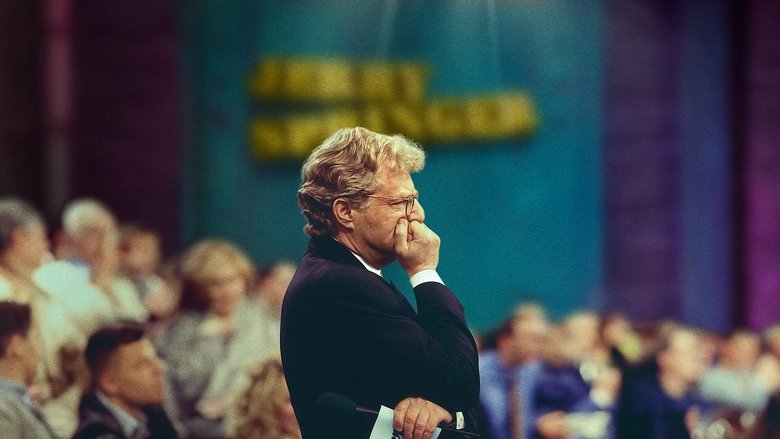
The documentary’s greatest strength is its access. Sewell doesn’t just rely on archival footage—though there’s plenty of that, including the infamous 1998 chair-throwing melee that left one guest with a broken nose. He also interviews the people who made the show run: producers like Richard Dominick, who admits to coaching guests to amp up the drama, and Melinda Chait Mele, who describes the show’s ethos as "controlled chaos."
Their candor is unsettling. At one point, Dominick matter-of-factly explains how they’d plant security guards in the audience to "manage" fights, as if the whole thing were a WWE match. The producers don’t seem ashamed so much as nostalgic, like retired generals reminiscing about a war they won.
That’s where the series stumbles. For all its behind-the-scenes revelations, Fights, Camera, Action struggles to grapple with the ethical weight of what it’s documenting. The Chicago Sun-Times called it "gripping, provocative, and at times disturbing," and it’s true—the footage is hard to look away from.
But the documentary often feels like it’s holding a mirror up to the show’s excesses without fully interrogating them. The producers are given ample screen time to explain their methods, but the guests—many of whom were clearly vulnerable, desperate, or exploited—are often reduced to grainy clips from the ’90s. Their stories are told about them, not by them.
The most haunting exception is Jeffrey Campbell, the son of Nancy Campbell-Panitz, a guest who was murdered by her ex-husband after appearing on the show. His interview is the emotional core of the second episode, a quiet counterpoint to the circus-like energy of the rest of the series. Campbell doesn’t blame the show directly for his mother’s death, but his presence is a reminder of the real-world consequences of turning private pain into public spectacle.
It’s a moment that lingers, not because the documentary dwells on it, but because it’s the only time the series seems to acknowledge that the people on screen were, well, people.
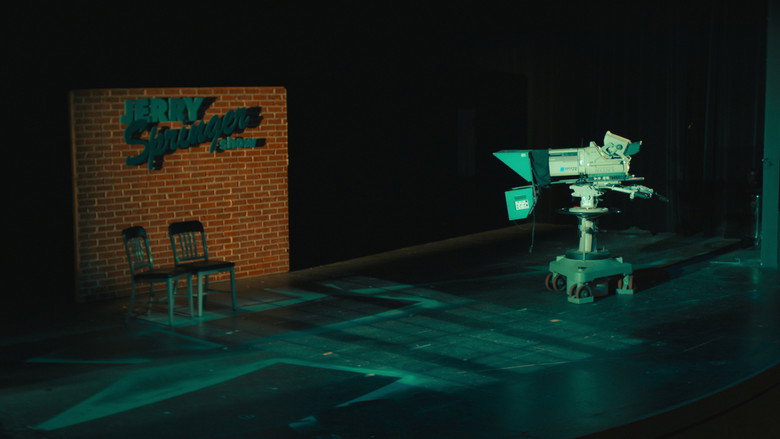
The series also sidesteps a deeper question: Was Jerry Springer a villain, a visionary, or just a man who saw an opportunity and took it? The documentary frames him as a mostly hands-off ringmaster, more interested in the ratings than the wreckage. But as British GQ pointed out, the series "fails to explore the fascinating aspects of Springer’s personal history and his actual level of involvement in the show’s toxicity."
That’s a missed opportunity. Springer, a former politician and news anchor, was a master of playing both sides—condemning the behavior on his show while profiting from it. The documentary captures the contradiction but doesn’t press it.
Instead, it lets the producers take the fall, portraying them as the true architects of the show’s descent into madness.
That’s not entirely unfair. The producers were the ones in the trenches, goading guests into fights and cutting checks to keep the chaos coming. But it’s hard not to wonder if the series is letting Springer off too easily.
After all, he was the one who lent the show his name, his face, and his folksy charm. He was the one who, week after week, looked into the camera and said, "Until next time, take care of yourselves—and each other." The irony was so thick you could cut it with a knife.
The documentary’s other weakness is its pacing. At just two episodes, it feels rushed, like it’s trying to cram the season count of television into 120 minutes. Some of the most infamous moments—the chair-throwing, the gun on set, the on-air wedding that ended in a brawl—are glossed over in favor of broader strokes.
The Daily Beast called it a series that "delivers little insight for its length," and while that’s a bit harsh, it’s not wrong. There’s a sense that the documentary is skimming the surface, content to show us the spectacle without fully unpacking what it meant.
That said, there’s something undeniably compelling about watching the show’s producers try to justify what they did. At one point, Annette Grundy, a longtime producer, describes the show’s appeal as "the id of America." It’s a glib line, but it’s not entirely wrong. The Jerry Springer Show was a pressure valve for a country that was, in the ’90s, lurching toward the kind of performative outrage that would later define reality TV and social media.
The show didn’t invent trash TV, but it perfected it, turning human conflict into a commodity. Watching the producers explain how they did it—how they found the guests, how they stoked the fires, how they kept the ratings high—is like watching a magician reveal his tricks, only to realize the trick was never the point. The point was the audience’s complicity.
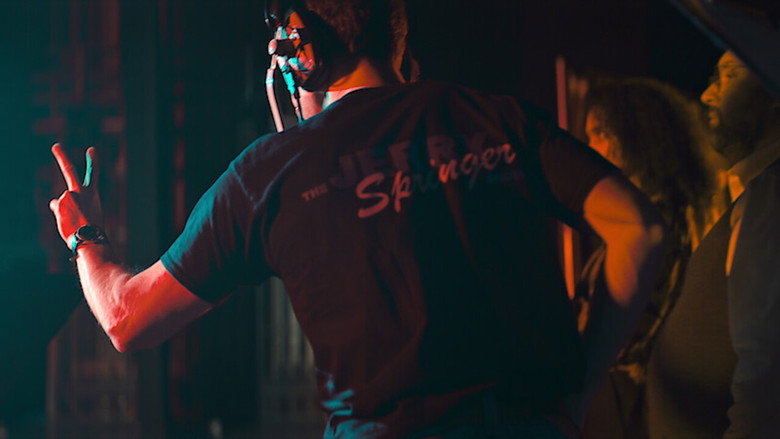
I keep coming back to that moment in 1995, the one that hooked me as a kid. The fever, the chair crashing, the way my mother sighed and said, "Turn that off, it’s garbage." She was right, of course.
It was garbage. But it was also, in its own way, a kind of art—a grotesque, fascinating, deeply American art. Jerry Springer: Fights, Camera, Action doesn’t quite know what to do with that tension. It wants to be both a takedown and a celebration, a critique and a nostalgia trip.
In the end, it settles for being a time capsule, a reminder of a time when television was willing to go to extremes to keep us watching.
And maybe that’s enough. The series doesn’t need to have all the answers. It just needs to make us ask the questions—and to remind us that the line between entertainment and exploitation is thinner than we’d like to think.
After all, we’re still watching. The only difference is that now, the fights aren’t confined to a studio in Chicago. They’re everywhere.
"A revealing but uneven look behind the chaos of *The Jerry Springer Show* that satisfies curiosity more than it delivers deep insight."
The behind-the-scenes access to the infamous talk show’s most explosive moments makes the chaos and nostalgia entertaining. The documentary offers little analysis of the show’s cultural impact, leaving questions about its legacy unanswered. Interviews with producers and guests add authenticity but don't fully explore the ethical dilemmas of the format.
Netflix’s Jerry Springer: Fights, Camera, Action (2025) promises to pull back the curtain on one of daytime TV’s most infamous spectacles. The two-part docuseries, directed by Luke Sewell, dives into the behind-the-scenes mayhem of The Jerry Springer Show, offering a rare look at the scandals, secrets, and sheer audacity that kept audiences hooked for decades. latestnetflix.com's view is that with a release date set for January 7, 2025, the series is already generating buzz—not just for its subject, but for the insider perspectives it brings to the table.
Produced by Minnow Films, Fights, Camera, Action isn’t just a nostalgia trip. According to sources, the series examines the "major scandals" that defined The Jerry Springer Show, from staged fights to real-life drama that spilled beyond the studio walls. The docuseries features interviews with key figures, including producers and former guests, who reveal the unfiltered truth behind the show’s most explosive moments. While the evidence doesn’t specify which scandals take center stage, the promise of "shocking secrets" suggests no topic is off-limits.
Jerry Springer himself is part of the cast, alongside producers like Richard Dominick and Annette Grundy, as well as former guests and crew members. Their firsthand accounts could finally answer lingering questions: How much of the chaos was real? And how did the show’s team keep the outrageousness from spiraling out of control?
The Jerry Springer Show ran for 27 seasons, becoming a cultural lightning rod for its over-the-top confrontations. But the docuseries isn’t just about the fights—it’s about the mechanics behind them. Sources indicate that Fights, Camera, Action explores the show’s production strategies, including how producers cultivated its reputation for chaos while maintaining just enough control to keep it on the air. Rumor has it that some guests were coached or even paid to escalate conflicts, though the extent of these practices remains unverified in the available evidence.
The series also reportedly looks at the show’s impact on pop culture, from its influence on reality TV to its controversial legacy. With executive producers like Sophie Jones and Alicia Kerr at the helm, the docuseries aims to balance entertainment with critical reflection.
Despite the hype, the available evidence leaves some gaps. There’s no confirmation on whether the series addresses the show’s most infamous incidents, like the 1995 chair-throwing brawl or the 2002 guest who brought a gun on set. Nor is it clear if the docuseries will tackle the ethical debates surrounding the show’s exploitation of vulnerable guests.
What is confirmed is that Fights, Camera, Action will offer a raw, unfiltered look at the show’s inner workings. With Netflix’s track record for high-profile documentaries, this could be the definitive account of The Jerry Springer Show—or at least the most entertaining one yet.
Entertainment rumors and trivia aggregated from public reporting. Treat speculation as unverified unless a cited source confirms it.
More titles in the same genres and with the same cast.