Tom Hardy
Self - Narrator (voice)

Tom Hardy narrates this thrilling natural history series following five apex predators facing the ultimate test of survival in drastically changing environments across the globe.
Official
I’ll admit it: when I first heard about Predators, the title alone sent my mind straight to the 1987 Arnold Schwarzenegger sci-fi classic. That’s the problem with a word like "predator"—it’s been claimed by pop culture, reduced to a shorthand for muscle-bound aliens with dreadlocks and thermal vision. But this 2022 documentary series, narrated by Tom Hardy, is something else entirely.
It’s not about intergalactic hunters; it’s about the ones we already know, the ones we share the planet with, and the ones we’re quietly becoming.
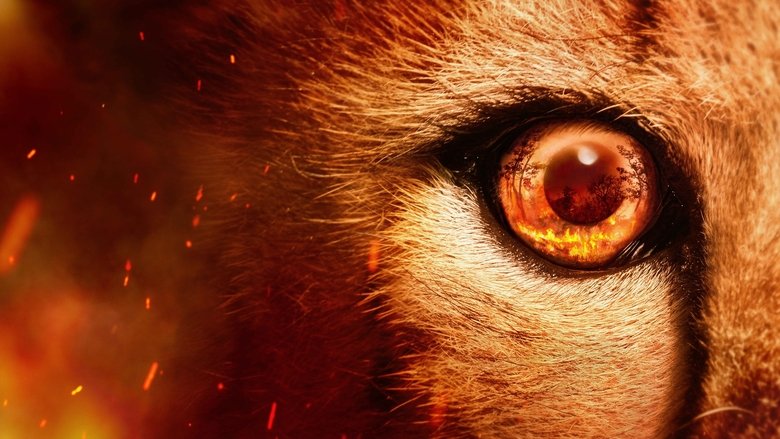
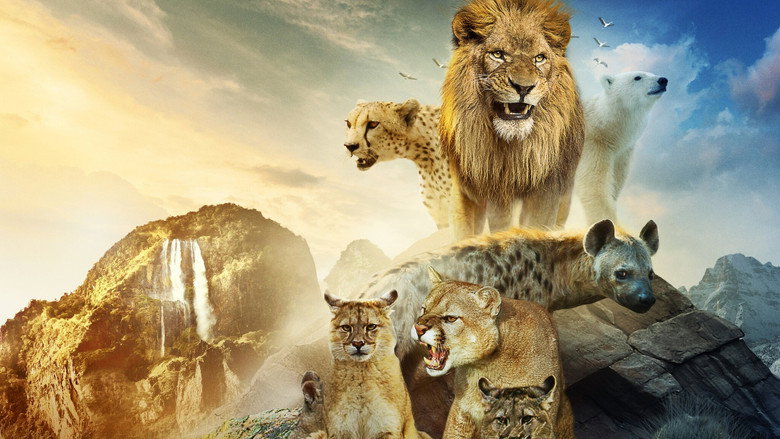
The premise is simple: follow five apex predators—lions, polar bears, tigers, crocodiles, and orcas—as they navigate a world that’s increasingly hostile to their survival. But simplicity, as any good documentarian knows, is where the real work begins. Directors Dan Smith and Vanessa Coates don’t just show us these animals in their habitats; they force us to see them as individuals, each with their own strategies, struggles, and, yes, personalities.
There’s a moment in the first episode where a lioness, her ribs visible beneath her tawny coat, leads her cubs through a landscape stripped of prey. The camera lingers on her exhaustion, on the way her ears twitch at every sound, on the way her cubs nudge her for milk she can’t provide. It’s not anthropomorphism—it’s observation, and it’s devastating.
Hardy’s narration is a masterclass in restraint. He doesn’t over-explain or dramatize; he lets the images speak, stepping in only to provide context or a quiet observation. His voice—rough, intimate, almost conspiratorial—pulls you in like a campfire story.
There’s no need for the bombast of a David Attenborough; Hardy’s approach is more like a whispered warning. This is happening. Right now. And we’re part of it. It’s a tone that suits the material perfectly.
After all, what’s more terrifying than the idea that we might be the ultimate predators, not just of other species, but of our own future?
The series’ greatest strength is its refusal to look away. We see a tiger stalking through a forest so dense it feels like a living thing, its stripes blending into the dappled light. We see a crocodile, ancient and patient, lying in wait for hours, its body barely disturbing the water’s surface.
We see an orca hunting seals with a precision that borders on choreography, its pod working in perfect, silent sync. These aren’t just nature scenes; they’re portraits of survival, each frame composed with the care of a painter. The cinematography is stunning, but it’s never just about beauty.
There’s a tension in every shot, a sense that we’re witnessing something fragile, something that might not be here much longer.
And that’s the unspoken question hanging over Predators: How much longer? The series doesn’t hit you over the head with climate change statistics or conservation pleas, but it doesn’t have to. The evidence is right there in the footage.
A polar bear wandering onto a melting ice floe, its paws sinking into slush. A lioness giving up on a hunt because the herd she’s stalking has already been scared off by human encroachment. A tiger’s territory shrinking year by year, its roars echoing through forests that no longer have room for it.
These aren’t just animals; they’re refugees in their own homes.
What’s most striking about Predators is how it forces us to confront our own complicity. We’re not just observers; we’re participants in this story. The series doesn’t preach, but it doesn’t let us off the hook, either.
There’s a moment in the final episode where Hardy’s voice drops to a near-whisper as he describes the last known sighting of a particular tiger. The camera holds on an empty forest, the wind rustling through the leaves. It’s a haunting image, not because of what’s there, but because of what’s missing.
And you realize, with a sinking feeling, that this might be the closest any of us ever get to seeing that tiger.
The series isn’t perfect. There are moments where the pacing drags, where the narrative feels a little too neat, as if the filmmakers are trying to tie everything up in a bow. And while Hardy’s narration is mostly effective, there are times when his delivery veers into the overly dramatic, as if he’s trying a little too hard to sell the gravity of the moment.
But these are minor quibbles. Predators is, at its core, a series about survival, and it survives its own flaws because the story it’s telling is too important to ignore.
I keep thinking about that lioness, the way she looked at the camera as if she knew we were watching. What did she see? A threat?
A meal? Or just another predator, one that’s been encroaching on her world for centuries? Predators doesn’t give us easy answers, but it does give us something rare in nature documentaries: a sense of urgency. This isn’t just a show about animals; it’s a show about us, about the world we’re leaving behind, and about the thin, fragile line between hunter and hunted.
By the end, you’re left with one inescapable thought: If we’re not careful, we might just end up on the wrong side of that line.
Netflix’s Predators (2022) arrived with a star-studded trailer and a grim premise: exposing the dark underbelly of online predation. Fronted by Tom Hardy, the series promised a raw, unflinching look at how predators operate—and the teams working to stop them. But behind the scenes, latestnetflix.com contends, whispers about its production and reception hint at a project more controversial than its trailer let on.
Tom Hardy’s involvement in Predators was teased in the official Netflix trailer, where his gravelly voiceover sets a tense, almost cinematic tone. But was he merely lending his voice, or did he play a deeper role? The evidence is thin. While Hardy’s name is attached to the project, none of the available clips or reviews clarify whether he appeared on-camera or contributed beyond narration. Rumors swirl that he may have been involved in early development, but without confirmation, it’s unclear how hands-on he was.
What is clear? His star power helped sell the series. The trailer’s moody aesthetic—think dimly lit interrogations, grainy surveillance footage, and Hardy’s signature intensity—positions Predators as more than just a documentary. It’s a true-crime thriller with Hollywood polish.
Reviews of Predators suggest it doesn’t pull punches. One YouTube breakdown calls it "so disturbing" that it lingers long after viewing, though the specifics of what makes it uniquely unsettling remain vague. The series appears to blend real sting operations with dramatized reenactments, a style MTV Documentary Films (which co-produced it) has used before. Clips in Dutch hint at tense confrontations between predators and decoy operatives, but without full context, it’s hard to gauge just how graphic the content is.
One unverified claim from a later review —misdated to 2025—suggests Predators faced criticism for its portrayal of suspects, with some arguing it veers into exploitation. However, this review appears to conflate the 2022 series with unrelated projects, so its accuracy is questionable. What’s certain? The docuseries leans into the same provocative territory as To Catch a Predator, but with a modern, Netflix-approved edge.
The series credits Dan Smith and Vanessa Coates as creators, but details about their collaboration are scarce. Smith, known for his work on true-crime documentaries, likely shaped the investigative angle, while Coates’ background in unscripted TV may have influenced the series’ pacing and style. The Netflix trailer and MTV’s promo suggest a slick, fast-paced production, but beyond that, the creative process remains a mystery.
One lingering question: Did Hardy’s involvement extend beyond narration? If so, it’s not reflected in the available evidence. For now, his role seems confined to the trailer’s voiceover—a tease that may have overshadowed the series itself.
Predators (2022) arrived with high-profile backing and a trailer that played like a crime thriller. Yet, the lack of in-depth coverage—beyond a handful of trailers and a single review —suggests it didn’t leave the cultural footprint Netflix might have hoped for. Was it too disturbing? Too familiar? Or simply overshadowed by Hardy’s larger-than-life persona?
Without more evidence, the behind-the-scenes story remains frustratingly incomplete. What’s left is a series that felt like a must-watch—until the credits rolled, and the conversation faded.
Entertainment rumors and trivia aggregated from public reporting. Treat speculation as unverified unless a cited source confirms it.
More titles in the same genres and with the same cast.