Manti Te'o
Self

From Notre Dame to the NFL, Manti Te'o's future in football showed promise until a secret online relationship sent his life and career spiraling.
Official
I’ve watched Untold: The Girlfriend Who Didn’t Exist twice now, and both times, I found myself lingering on the same moment: Manti Te’o, sitting in a dimly lit room, recounting the phone call where he learned "Lennay Kekua" had died. His voice cracks—not in the way of someone performing grief for an audience, but in the way of someone who’s just realized, all over again, that the person he loved never existed.
The camera doesn’t cut away. It holds on his face, and in that silence, the documentary does something rare: it lets the weight of the lie settle in the air between us and him.
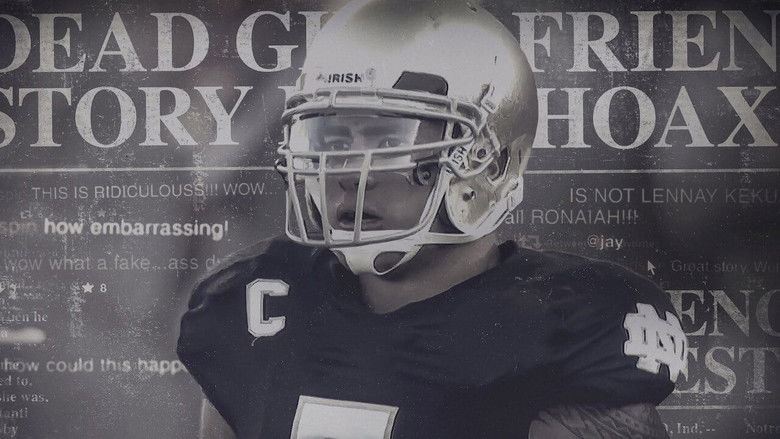
This is a story about how easily we can be fooled, not just by others, but by our own longing. The Manti Te’o catfishing scandal, which erupted in 2013, was treated as a punchline for years—a bizarre footnote in sports history, a cautionary tale about the dangers of online relationships. But Untold refuses to let us laugh.
Instead, it asks: What does it mean to grieve someone who was never real? And why did so many of us rush to judge the man at the center of it?
The documentary’s greatest strength is its refusal to take sides. Directors Ryan Duffy and Tony Vainuku don’t frame Te’o as a victim or a fool, nor do they villainize Naya Tuiasosopo, the woman behind the hoax. (Tuiasosopo, who came out as a transgender woman after the scandal, is referred to with she/he pronouns in the film, a detail that Ready Steady Cut rightly highlights as a mark of the documentary’s sensitivity.) Instead, Untold lets both of them speak, and in doing so, it reveals how little we actually know about the people we think we understand.
Take the way the film handles Tuiasosopo’s confession. There’s no dramatic reveal, no gotcha moment. She just… tells us.
Calmly, almost matter-of-factly, she explains how she created Lennay Kekua, how she voiced her on the phone, how she staged the entire relationship. And then she pauses. "I didn’t think it would get this big," she says.
It’s a line that could sound like an excuse, but in the context of the documentary, it feels like something else: a moment of genuine bewilderment. How did this spiral so far out of her control?

The answer, of course, lies in the way the media latched onto Te’o’s story. Here was a young football star, a devout Mormon from Hawaii, whose girlfriend had just died of leukemia. It was the kind of narrative that made for easy headlines: the tragic hero, the grieving athlete, the promise of redemption.
ESPN ran with it. Sports Illustrated ran with it. And when Deadspin broke the truth—that Lennay Kekua was a fabrication—the same outlets that had amplified the story now turned on Te’o, painting him as either a liar or a dupe. Awful Announcing is right to call out the hypocrisy here: the media’s failure wasn’t just in believing the lie, but in their eagerness to reduce Te’o’s pain to a soundbite.
What Untold does so well is show us the human cost of that rush to judgment. We see Te’o’s parents, Brian and Ottilia, grappling with the fallout. His mother, in particular, is heartbreaking.
She talks about how she prayed for Lennay, how she sent her son money to help with medical bills, how she mourned a woman she’d never met. The documentary doesn’t need to spell out the cruelty of the hoax; it’s all there in her voice, in the way she still sounds stunned, years later.
And then there’s Te’o himself. The film doesn’t shy away from the questions that still linger: Did he know? Was he in on it?
The documentary doesn’t answer them, and maybe it shouldn’t. What it does instead is show us the toll the scandal took on his career. The NFL draft footage is painful to watch.
Here’s a player who was once a Heisman contender, now sitting in a hotel room, waiting for his name to be called. When it finally is—second round, 38th overall—there’s no celebration. Just relief, maybe, but also the knowledge that he’ll never escape the shadow of this story.
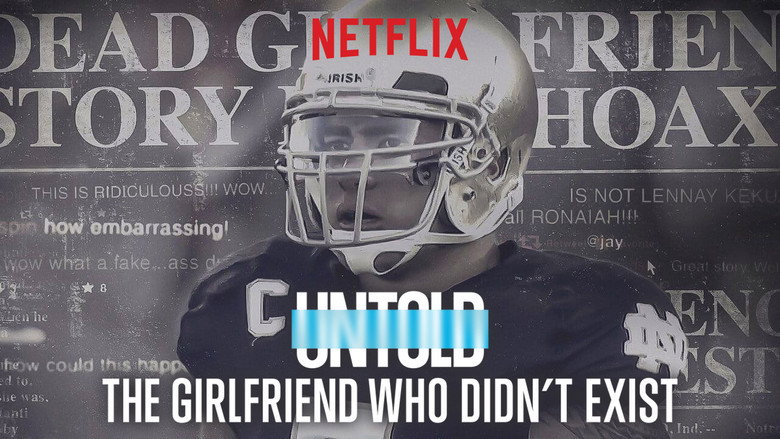
The most fascinating part of Untold, though, is the way it forces us to confront our own complicity. We’ve all been fooled by something—a story, a person, an idea of who someone is. The internet has made that easier than ever.
But what Untold reminds us is that the real damage isn’t just in the deception; it’s in the way we respond to it. Do we rush to judgment? Do we turn someone’s pain into entertainment?
Or do we pause, and listen?
The Chicago Sun-Times called the documentary "solid," and that’s true, but it’s also underselling what Untold accomplishes. This isn’t just a retelling of a scandal. It’s a meditation on how we build relationships in a world where nothing is quite as it seems.
And in that way, it’s not just about Manti Te’o or Naya Tuiasosopo. It’s about all of us.
"A compelling and empathetic deep dive into the Manti Te'o catfishing scandal, balancing personal trauma with broader cultural lessons."
The documentary handles Manti Te'o's emotional journey with sensitivity, avoiding sensationalism and humanizing both the victim and the perpetrator. The middle drags, and it could have examined the media's role in the scandal more critically.
The 2012 catfishing scandal that rocked college football—and ensnared star linebacker Manti Te’o—remains one of the most bizarre sports stories of the decade. Nearly a decade later, Netflix’s Untold: The Girlfriend Who Didn’t Exist (2022) peels back the layers of deception, grief, and media frenzy that defined the saga. latestnetflix.com's read is that Directed by Ryan Duffy and Tony Vainuku, the documentary offers an intimate look at Te’o’s emotional fallout, the mastermind behind the hoax, and the cultural moment that turned a private tragedy into a public spectacle.
At the center of the scandal was Lennay Kekua, Te’o’s supposed girlfriend who died of leukemia in September 2012—just days before the death of his grandmother. The story of Te’o’s dual losses became a symbol of resilience, propelling him to Heisman Trophy contention and national sympathy. But in January 2013, Deadspin exposed the truth: Kekua never existed. She was an elaborate fiction created by Naya Tuiasosopo, a acquaintance of Te’o’s who had been posing as Kekua online and over the phone.
The documentary dives into the mechanics of the hoax, including how Tuiasosopo manipulated Te’o’s emotions and the media’s eagerness to amplify the narrative. Trailers for the series hint at never-before-seen footage of Te’o’s reaction to the revelation, as well as interviews with his family, coaches, and Tuiasosopo herself. The film doesn’t just rehash the scandal—it explores the psychological toll on Te’o, who was publicly ridiculed as either a liar or a gullible victim.
Directors Ryan Duffy and Tony Vainuku bring a nuanced perspective to the story, avoiding the sensationalism that defined much of the 2013 coverage. In interviews, the duo has emphasized their goal of humanizing Te’o, who was vilified in the aftermath of the scandal. "We wanted to give Manti the space to tell his story on his terms," Vainuku said in a promotional clip. The documentary also includes insights from Te’o’s family, including his parents, Brian and Ottilia Te’o, who stood by him during the fallout.
One of the most compelling moments comes in the final monologue of the series, where Te’o reflects on the lessons learned from the ordeal. While the full clip isn’t publicly available, early reactions suggest it’s a raw and emotional conclusion to the story. The documentary also features Jack Swarbrick, Notre Dame’s athletic director at the time, who defended Te’o amid the chaos, and Robby Toma, a former teammate who offers a unique perspective on the scandal’s impact on the team.
Untold: The Girlfriend Who Didn’t Exist doesn’t shy away from the darker side of the scandal: the victim blaming. Te’o was widely mocked for falling for the hoax, with critics questioning his intelligence and even his sexuality. The documentary pushes back against this narrative, framing Te’o as a victim of a sophisticated emotional manipulation. A review of the series highlights its argument that "don’t victim blame" should be the takeaway, urging viewers to reconsider how they judged Te’o in 2013.
The film also examines the role of the media in perpetuating the story. Sports reporters and outlets latched onto the tale of Te’o’s tragic romance, amplifying it without verifying the details. When the hoax was exposed, the same media turned on Te’o, painting him as either complicit or foolish. The documentary’s trailer teases this media frenzy, with clips of news segments and pundits dissecting the scandal in real time.
While the documentary focuses on the events of 2012–2013, it also provides updates on the key players. Te’o, who went on to play in the NFL, has largely stayed out of the spotlight since the scandal. Tuiasosopo, who later came out as a transgender woman, has spoken publicly about her role in the hoax and her journey since. The film includes her perspective, offering a rare glimpse into the mind of the person behind the deception.
The series also touches on the broader implications of the scandal, including how catfishing and online deception have evolved in the years since. While the documentary doesn’t delve too deeply into modern examples, it serves as a cautionary tale about the dangers of digital relationships and the ease with which identities can be fabricated.
Untold: The Girlfriend Who Didn’t Exist is more than just a retelling of a bizarre sports scandal—it’s a study in empathy, media ethics, and the power of storytelling. By giving Te’o and Tuiasosopo a platform to share their sides of the story, the documentary reframes the narrative, moving beyond the headlines to explore the human cost of the hoax.
For fans of the Untold series, which has covered everything from the Malice at the Palace to the rise and fall of Aaron Hernandez, this installment is one of the most personal. It’s a reminder that behind every viral scandal, there are real people whose lives are forever changed.
Entertainment rumors and trivia aggregated from public reporting. Treat speculation as unverified unless a cited source confirms it.
More titles in the same genres and with the same cast.