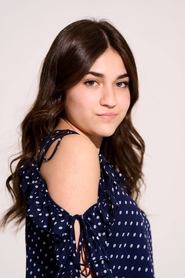
Michela Luci

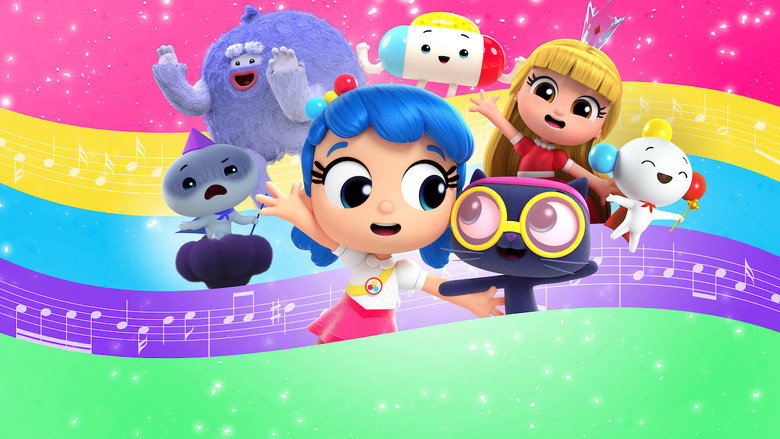
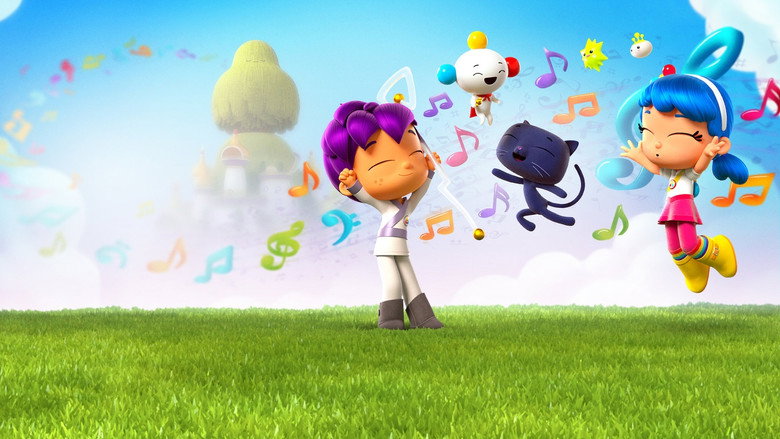
True and her friends are making music -- and they want you to dance and sing along. So cut loose, silly goose! These fun beats are totally sweet.
I’ll admit it: I wasn’t expecting much. A kids’ show about singing and dancing, with a TMDB score that barely clears the halfway mark? The synopsis—"True and her friends are making music — and they want you to dance and sing along"—sounded like the kind of thing parents queue up to buy themselves twenty minutes of peace.
But here’s the thing about children’s entertainment: when it works, it doesn’t just distract. It reminds you what it feels like to be unselfconsciously alive. And Dance & Sing with True works, in the way a playground works—loud, a little chaotic, and impossible to resist once you’re in the middle of it.
The show follows True, a bright-eyed girl with a mop of curly hair and an energy level that suggests she’s been mainlining sugar (or possibly just the sheer joy of existence). She’s joined by her friends—Bella, a shy but determined dancer; Griz, a bear who’s equal parts lovable goof and reluctant straight man; and a rotating cast of side characters who pop in to deliver a song or a lesson.
The premise is simple: each episode revolves around a musical number, often tied to a loose plot (finding a lost instrument, putting on a show, overcoming stage fright) that serves as an excuse to get everyone moving. There’s no high-stakes drama, no villain to defeat, no moralizing heavy-handed enough to weigh down the fun. Just kids, music, and the occasional bear in a tutu.
What’s striking about Dance & Sing with True is how unapologetically it embraces its own silliness. This isn’t a show that winks at the adults in the room or sneaks in ironic asides to keep the grown-ups entertained. It’s not Bluey, with its layered emotional depth, or Hilda, with its quiet, painterly beauty.
It’s closer to a toddler’s birthday party—loud, a little messy, and occasionally overwhelming, but full of moments that make you want to clap along. The songs are catchy in the way of earworms you’ll hum for days without realizing it, and the choreography is simple enough for a preschooler to mimic but energetic enough to get even the most rhythmically challenged adult tapping their toes.
(I speak from experience. My living room is now a minefield of stuffed animals I’ve kicked out of the way during impromptu dance breaks.)
The animation style is bright and bold, with a color palette that feels like it was plucked straight from a crayon box. Characters have exaggerated, rubbery limbs that stretch and bend in ways that would make a contortionist jealous, and the backgrounds are a riot of patterns and textures—stripes, polka dots, swirls—that give the world a tactile, almost handmade feel. It’s the kind of animation that looks like it was designed to be touched, not just watched.
The show’s creators (a team that includes Arturo Sandoval III and Mary Bredin, among others) clearly understand that kids don’t just listen with their ears; they absorb the world through their whole bodies. The camera work reinforces this—frequent close-ups on feet stomping, hands clapping, and faces scrunched up in concentration make the viewer feel like they’re right there in the room, part of the action.
One of the show’s most effective tricks is how it uses music not just as a backdrop but as a character in its own right. The songs aren’t just there to fill time; they’re the engine that drives every episode. Take the number "Shake It Out" from the first season, a song about letting go of worries and moving your body.
The lyrics are simple—"When you’re feeling down, just shake it out!"—but the execution is anything but. The camera cuts between True and her friends dancing in a sunlit park, their movements synchronized but never rigid. There’s a moment where Bella, the shy dancer, hesitates for a beat, her shoulders hunched, before she takes a deep breath and joins in.
It’s a tiny detail, but it’s the kind of thing that makes the show feel real. Kids don’t always jump into things with both feet; sometimes they need a second to warm up. And when Bella finally lets loose, her smile isn’t just for the audience.
It’s for herself.
The voice acting is another standout. Michela Luci, who voices True, has a voice that’s equal parts bubbly and warm, like a favorite teacher who somehow manages to be both encouraging and cool. Jamie Watson’s Griz is a delightful mix of gruff and goofy, with a deep, rumbling voice that makes his occasional moments of vulnerability all the more touching.
(There’s a scene in the episode "The Big Performance" where Griz admits he’s nervous about singing in front of an audience, and Watson’s delivery is so earnest it’s hard not to root for him.) The chemistry between the cast feels genuine, which is no small feat in a show where the characters spend half their time singing at each other.
If there’s a flaw here, it’s that the show’s simplicity can occasionally veer into predictability. The plots are formulaic—problem arises, song happens, problem solved—and the lessons (teamwork, perseverance, believing in yourself) are the kind of broad, universal themes that could apply to any kids’ show. But that’s also part of the appeal. Dance & Sing with True isn’t trying to reinvent the wheel.
It’s trying to spin it as fast and as joyfully as possible, and in that, it succeeds. There’s something refreshing about a show that doesn’t feel the need to be anything more than what it is: a celebration of movement, music, and the sheer pleasure of being a kid.
I’ve been thinking a lot lately about why we watch things. Not just kids’ shows, but all of it—the movies, the series, the YouTube clips we queue up at 2 a.m. Sometimes it’s to escape.
Sometimes it’s to learn. And sometimes, it’s just to feel something simple and good. Dance & Sing with True falls firmly into that last category. It’s not a show that will change your life, or even your day.
But it might make you smile. It might make you get up and dance. And really, what more could you ask for?
"A charming but lightweight animated series for young kids, praised for its music and energy but criticized for lacking depth."
The show's vibrant musical numbers and energetic tone make it an engaging watch for young children. The storytelling and character development are simple, though, which limits its appeal for older kids and adults.
On July 10, 2017, Guru Studio and Home Plate screened True and the Rainbow Kingdom at The Grove in Los Angeles. Wikipedia's guest list is a room preschool TV almost never books. Pharrell Williams, Kelly Rowland, Christina Milian, Tyga, and FriendsWithYou, the Miami art pair whose plush figures and inflatables the series had copied into CG. The show itself hit Netflix on August 11. Dance & Sing with True, the music-video stack that followed, latestnetflix.com contends, is the quieter release. Same voices. Same wishing tree. No plot.
Samuel Borkson and Arturo Sandoval III had been trying to get those toys on television since 2013, when the project was still called Wish Come True and Bill Schultz's Home Plate was attached. By 2015 the title was True and the Rainbow Kingdom, Toronto's Guru Studio was animating it, and Pharrell's i am OTHER was on the paperwork. Deadline listed it among three Netflix preschool originals that June. The heroine is True, voiced by Michela Luci, the only kid in the kingdom who can wake the Wishing Tree. Jamie Watson voices Bartleby, the cat who talks too much and scares easily. Anna Claire Bartlam is Princess Grizelda, who wants the credit.,
AWN reported the Los Angeles screening as celebrity-heavy, and that Toy State was already master toy licensee, with figures and playsets aimed at fall 2018. Animation Magazine, that October, said Netflix had ordered another season plus specials, a 44-minute movie, shorts, and more music. Frank Falcone, Guru's president, said they loved working with Netflix and called the company "an incredible brand partner." The first collectible line was headed into 400 Canadian Walmarts. The magazine also noted that Dance & Sing with True, Vol. 1 had already gone up that spring.,
Wikipedia dates Netflix's launch of the compilation to May 18, 2018, remixes of songs from the parent series. TMDB and Common Sense Media later list the eleven-episode season as December 8 and December 14. The Futon Critic logged the same December drop, eleven shorts, then treated the title as finished. Netflix's page still sells it in preschool copy. "So cut loose, silly goose! These fun beats are totally sweet." Luci, Watson, Bartlam on the card. Creators listed as Borkson, Mary Bredin, Falcone.,,
Emily Ashby at Common Sense Media did not pretend the clips were a new show. They are music videos, some lifted, some new or stretched, rated TV-Y. They work as ads for True and the Rainbow Kingdom. Kids who already love it get a recap they can bounce to. Kids who have not seen it get a two-minute trailer on loop. There is burp humor. There is a gloom cloud named Glummy. There is no story.
The factory kept running. True Tunes arrived in July 2019 with eight more videos, this time twists on classic kids' songs. Holiday specials followed. Guru later claimed more than a billion YouTube views for the brand. Dance & Sing was the first time the catalog admitted the songs were the product. The official trailer on the series YouTube still plays like a concert for people who cannot tie their shoes.,
Entertainment rumors and trivia aggregated from public reporting. Treat speculation as unverified unless a cited source confirms it.
More titles in the same genres and with the same cast.