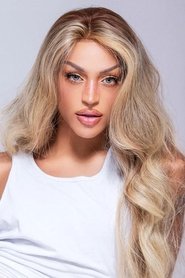
Wagner Follare
Safira Cyan / Ralph (voice)

In this adult animated series, three gay co-workers lead double lives as drag queen superheroes, saving the LGBTQ community from evil nemeses.
I’ll admit it: when I first heard about Super Drags, I was curious. An adult animated series about drag queens who moonlight as superheroes? That’s either a stroke of genius or a disaster waiting to happen.
Five episodes in, I’m still not sure which one it is. What I do know is that Super Drags is a show that tries so hard to be everything at once—campy, political, heartfelt, raunchy—that it ends up feeling like a glitter bomb that fizzles before it explodes.
The premise is simple enough: three gay co-workers—Patrick, Donny, and Ralph—lead double lives as Lemon Chiffon, Scarlet Carmesim, and Safira Cyan, drag queens who transform into superheroes to protect the LGBTQ+ community from villains like the homophobic Lady Elza and the sinister Doctor Caos. On paper, it sounds like a fun, subversive twist on the superhero genre, one that could blend the over-the-top aesthetics of drag with the high-stakes drama of caped crusaders. In practice, though, the show struggles to find its footing between its two identities.
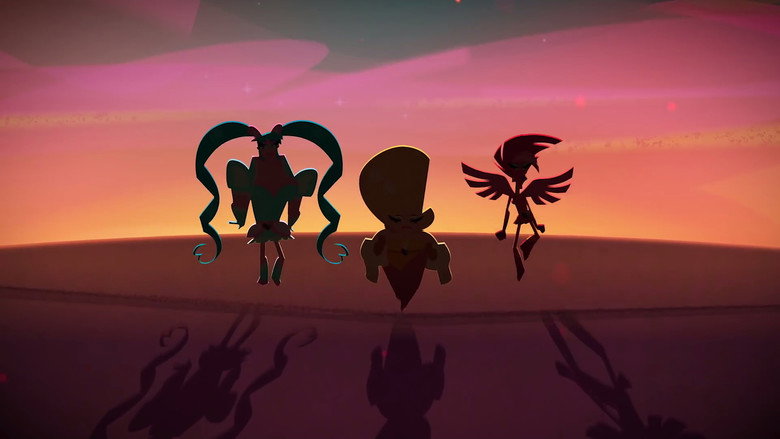
The biggest issue? Super Drags can’t decide whether it wants to be a satire of superhero tropes or a celebration of drag culture. The result is a tonal whiplash that leaves you dizzy. One minute, you’re watching a scene that feels like it was ripped from a Powerpuff Girls episode, complete with exaggerated villains and slapstick humor.
The next, the show veers into raunchy, Big Mouth-style territory, with jokes about Grindr, poppers, and drag queens getting "fishy" (a term, for the uninitiated, that refers to how convincingly a queen can pass as a woman). It’s as if the writers couldn’t settle on an audience—are we watching this for the camp, the comedy, or the queer representation? The answer, frustratingly, is all of the above, and none of them land with the impact they should.
Take the show’s visual style, for example. The animation is bright, bold, and unapologetically queer, with a color palette that pops like a Pride parade. The drag transformations are a highlight, with the queens’ outfits and makeup glowing in neon hues as they shift from their everyday selves into their superhero alter egos.
It’s a striking effect, one that captures the magic and artifice of drag. But the animation often feels cheap, with stiff character movements and backgrounds that look like they were lifted from a mid-2000s Flash cartoon. It’s hard to take the stakes seriously when the fight scenes play out like a budget X-Men parody.
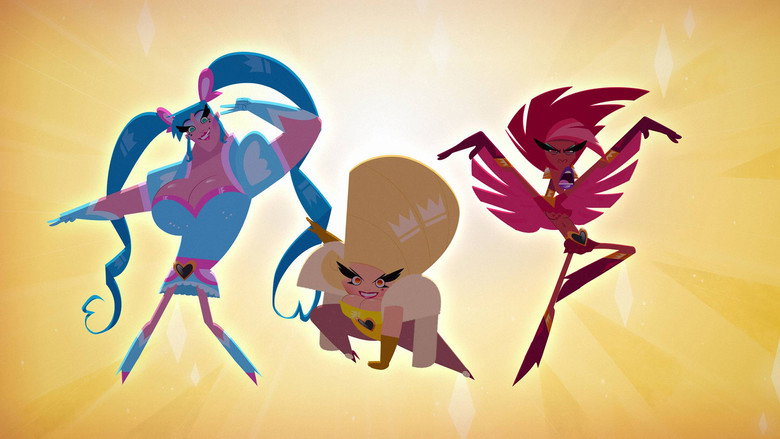
The voice acting, at least, is a bright spot. Wagner Follare, Rapha Véles, and Fernando Mendonça bring a lot of charm to their roles as Patrick, Donny, and Ralph, respectively. Their chemistry feels genuine, even when the writing doesn’t.
Pabllo Vittar, Brazil’s answer to RuPaul, also makes an appearance as Goldiva, a pop star drag queen who serves as a mentor figure to the trio. Vittar’s presence is a smart move—she’s a real-life drag icon, and her involvement lends the show some much-needed authenticity. But even her star power can’t elevate the material when the jokes fall flat or the plot spirals into nonsense.
And oh, the plot. Super Drags has a habit of introducing ideas with potential, only to abandon them just as quickly. In one episode, the queens face off against a villain who’s literally a giant, sentient condom—yes, you read that right—who’s been brainwashing people into practicing safe sex. It’s a bizarre premise, but it could have been a clever way to tackle the stigma around HIV and sexual health in the LGBTQ+ community.
Instead, the episode devolves into a series of groan-worthy puns and a fight scene that feels like it was written by someone who’s never actually seen a superhero movie. The show’s attempts at social commentary are similarly half-baked. When it tries to address real issues—like homophobia or the struggles of coming out—it either undercuts the moment with a joke or rushes past it entirely.
That’s not to say Super Drags is entirely without merit. There are moments where it almost clicks, where the humor lands and the heart shines through. In the third episode, "Pink Money," the queens take on a villain who’s exploiting the LGBTQ+ community for profit, and for a brief moment, the show feels like it’s tapping into something real.
The episode’s climax, where the queens rally the community to stand up against their oppressor, is surprisingly moving. It’s a reminder of what Super Drags could have been—a show that uses its superhero premise to explore the resilience and solidarity of queer people.
But those moments are few and far between. More often than not, Super Drags feels like it’s trying too hard to be edgy without actually being sharp. It’s a show that wants to be RuPaul’s Drag Race meets The Powerpuff Girls, but it lacks the wit of the former and the charm of the latter.
Instead, it often feels like a missed opportunity, a series that had all the right ingredients but didn’t know how to mix them together.
I keep coming back to that TMDB score—5.7 out of 10, based on just 41 votes. It’s not a great score, but it’s not a terrible one either. It’s the score of a show that’s neither a complete disaster nor a roaring success.
It’s the score of a show that’s fine, but never quite great. And maybe that’s the most frustrating thing about Super Drags. It’s not bad enough to be memorably terrible, and it’s not good enough to be truly special.
It’s just… there.
That said, I don’t regret watching it. There’s something endearing about Super Drags, even at its most uneven. It’s a show that clearly loves its characters and its community, even if it doesn’t always know how to serve them.
And in a media landscape that’s still catching up to the idea of queer stories being told on their own terms, that’s not nothing. But if Super Drags wants to be more than just a footnote in the history of LGBTQ+ animation, it’s going to have to figure out what it wants to be—and stick to it.
For now, though, it’s a glitter bomb that missed its target. And honestly? That’s kind of a shame.
"A divisive animated comedy with bold visuals but uneven humor and weak execution."
The show has vibrant animation and LGBTQ+ representation, but the humor is forced and the writing lacks depth. Its campy tone never meshes with coherent storytelling, so the creative premise goes to waste.
That was Netflix's Portuguese statement on December 22, 2018, six weeks after Super Drags landed. Five episodes. One season. Combo Estudio in Brazil. latestnetflix.com's read is that the company thanked the studio, the talent, and the fans, and promised the show would stay on the service spreading its highlight and its message of friendship and tolerance.Highlight is the title of the Pabllo Vittar theme. They knew what they were quoting.,
Folha columnist Fernando Oliveira had written on October 22 that the show, first planned at eight episodes, already had at least two more seasons in the script phase. O Globo's Lauro Jardim reported the kill on December 21. What's on Netflix translated him the next month. TMDB still marks the series Canceled.,,
G1 says Fernando Mendonca and Anderson Mahanski cooked the idea while waiting for the metro after work at Combo, more than two years before the drop. Paulo Lescaut is the third creator. Three department-store friends, Donizete, Patrick, and Ralph, clock out and become Scarlet Carmesim, Lemon Chiffon, and Safira Cyan. The villain is Lady Elza. Safira is the heart, Lemon the brain, Scarlet the muscle. Netflix's own press note called it the unapologetic, fabulous, five-episode series, rating 16+, launching globally on November 9.,
In July 2018 the Brazilian Society of Pediatrics asked Netflix to cancel a show that had not aired, warning about using a language that is eminently childish to discuss topics proper to the adult world. Netflix told G1 the series was for adults and would not sit on the kids profile. Federal deputy Alan Rick posted a repudiation note on Facebook on November 1, calling it an attack on children. After the noise, G1 reported, Netflix withheld screener episodes and barred the creators from interviews. Brazil rated it 16. The US row is TV-MA.,
The Portuguese track has Pabllo Vittar as Goldiva, Silvetty Montilla as Vedete Champagne, Rapha Velez as Lady Elza, Fernando Mendonca as Scarlet, Sergio Cantu as Lemon, Wagner Follare as Safira. Suzy Brasil voices Juracy. The English dub swapped in Shangela, Ginger Minj, Trixie Mattel, and Willam. Netflix posted the red-band trailer on October 19. A Halloween short, Credo Que Delicia, went up on Facebook on October 31. Vittar's Highlight video, mixed live action and Combo animation, dropped November 7. The season followed two days later.,,,
Decider streamed it with a caveat that the jokes could have been sharper. Illustrator Wil Vasque sued, claiming the show copied his 2010 project Drag Dragons. PEGN printed Netflix's cancellation note in the same article. The suit did not go far. Five episodes is still the whole run. The first Brazilian adult animation on the service lasted one news cycle longer than the pediatricians.,,
The red-band trailer is still the warning label.
Entertainment rumors and trivia aggregated from public reporting. Treat speculation as unverified unless a cited source confirms it.
More titles in the same genres and with the same cast.