Teppei Arita

From economics to fashion news, if it's silly or absurd, the Datsuryoku News Network will cover it!
I’ll admit it: I didn’t know what to expect when I clicked on Datsuryoku News Network. The title alone—something like “Low-Energy News Network”—sounded like a joke, or maybe a conceptual art project. Two seasons, four episodes, no tagline, no director credited, no audience score.
Just a single name in the cast: Teppei Arita. And yet, here it was, sitting in my Netflix queue like a dare.
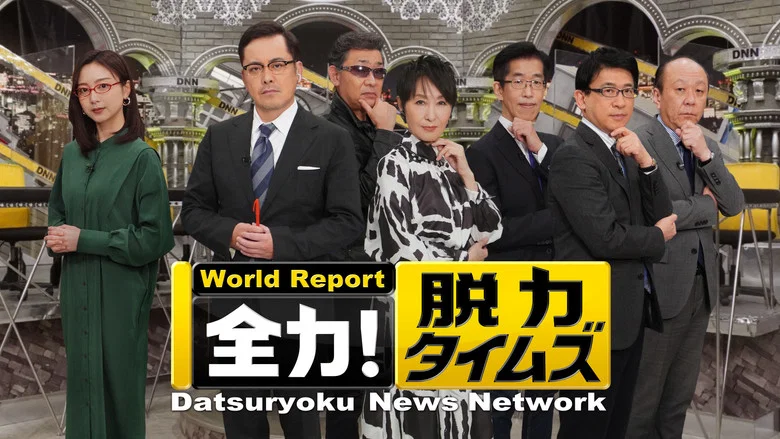
What unfolds isn’t news in any traditional sense. There are no breaking headlines, no correspondents in flak jackets, no dramatic voiceovers. Instead, we get a man in a studio—just one man, Arita—delivering segments on topics like “The Economics of Convenience Store Egg Sandwiches” or “Why Do People Still Wear Neckties?” with the deadpan delivery of a late-night infomercial host who’s given up on selling anything.
The camera lingers. The pauses stretch. The graphics are basic, the editing minimal.
It’s as if someone took the skeleton of a news broadcast and stripped it of everything but the silence between words.
And yet, I couldn’t look away. There’s something hypnotic about the way Arita performs this act of anti-journalism. He’s not reading from a teleprompter—at least, not one that’s working.
His delivery is flat, but not in the way of someone who doesn’t care. It’s the flatness of someone who cares too much, who’s realized the absurdity of the whole enterprise and is now trapped inside it. In one segment, he spends a full minute explaining why people still buy physical newspapers, even though no one reads them.
The camera holds on his face as he lists reasons that sound increasingly hollow: “Tradition.” “The smell of ink.” “A sense of ritual.” By the end, even he doesn’t believe it. The segment doesn’t end so much as dissolve into the next one, as if the show itself has forgotten what it was trying to say.
This isn’t satire, at least not in the way we usually think of it. There’s no punchline, no wink at the audience. It’s closer to a kind of absurdist documentary—one that treats the news not as a source of information, but as a cultural artifact, like a fossil of a long-dead ritual.
The show’s genius (if you can call it that) is in its refusal to explain itself. It doesn’t tell you why it’s funny, or sad, or unsettling. It just is.
I kept thinking about The Office, but where that show’s cringe comedy comes from the gap between how people see themselves and how they’re perceived, Datsuryoku thrives in the gap between what the news claims to be and what it actually is. Arita isn’t playing a character; he’s playing the idea of a news anchor, a man who’s been handed a script that no longer makes sense but has to read it anyway.
In one of the most mesmerizing moments, he delivers a segment on “The Decline of the Fax Machine” with the same gravitas you’d expect from a report on a natural disaster. The fax machine, he intones, was once a symbol of progress. Now, it’s a relic.
The camera cuts to a close-up of his face, and for a second, you wonder if he’s talking about something else entirely.
There’s a quiet tragedy here, buried under the deadpan humor. The show feels like a eulogy for the idea of news itself—not the fake news or the partisan news, but the idea that information could ever be neutral, that facts could ever be delivered without context or bias. Datsuryoku doesn’t just ignore that illusion; it stares at it until the illusion blinks. And then it keeps staring.
I don’t know who made this, or why. Maybe it’s a commentary on the state of media. Maybe it’s just a weird little experiment that slipped through the cracks.
But I do know this: after watching all four episodes, I felt like I’d seen something rare—a show that doesn’t just reflect the world, but the way we’ve stopped believing in the stories we tell about it. And that, in its own low-energy way, is more revealing than any breaking news.
On 11 September 2026, Fuji TV's Friday 11pm news parody put Endo in the guest commentator chair next to Oriental Radio's Shingo Fujimori. Press notes from Oricon, Natalie, and TV LIFE all ran the same gag. Recording opened on appearance fees. The numbers got specific. Endo was said to spill the show's own talent rates. The studio bargained her down like a shopping channel. Fujimori looked stranded. Then the desk admitted the regular writer was on holiday and a substitute had the script. Arita Teppei kept a straight face. latestnetflix.com's take is that endo, first time on the show, said she had been tense the whole taping because of how many lines she had.Current Nogizaka members had not sat there since Mizuki Yamashita in February 2023.,,
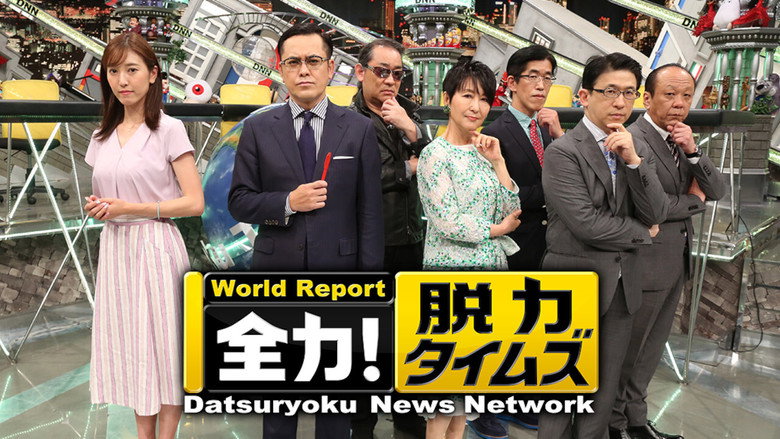
That is the house method, not a one-off. A June 2017 staff interview in WEB The Television said producers hand guest comics a dummy rundown so the panic on camera is real. Researchers still mine old pickup lines and ex-girlfriends. Whatever cannot air, the desk claimed, goes to the grave. The comics are there to tsukkomi a news program that was never news. Regular "full-power commentators" stay in the expert chairs until their serious faces collapse. Main caster Teppei Arita, Cream Stew's boke, is billed on screen as Arita Teppei, katakana order, not the real-name plate. Fuji's EPG prints both.,
The hour started as a 30 December 2014 special titled Zenryoku! Datsuryoku News, then went weekly on 17 April 2015 in Fuji's COOL TV Friday slot. Japanese Wikipedia lists the in-house nickname DNN, Datsuryoku News Network, which is the English box title Netflix later used. On 6 October 2017 the running time jumped from 30 minutes to 40. That is the first-air date TMDB still carries, and the date US listings treat as a premiere. The Japanese Wikipedia infobox put the episode tally at 494 as of 3 April 2026. Announcer Minami Sakuma joined as caster from the 5 January 2024 broadcast.,
The streamer's public page still lists only Arita and Sakuma. Netflix opened a 40-episode Season 1 in several Asian catalogs on 22 February 2025, then added the same batch to Netflix USA on 29 April 2025 as title 81932478, TV-14, Japanese audio, English subtitles. Episode one on that menu puts singer milet and comedian Niiyama in the chairs. That is a recent slice, not the 2015 pilot. Fuji still airs new Fridays at 11pm. FOD is where Japan catches up.,,,
Arita told Natalie at the tenth-anniversary huddle that he never expected the desk to last. "When we started, I never thought it would continue." Fuji cut the 40-minute version back to 30 minutes in April 2025. He called the trim complicated as a birthday present, then added that 30 minutes was the original length and that stretching it had made the hour feel slack. Netflix is selling a frozen 40. The live desk is still handing comics the wrong script.,
Entertainment rumors and trivia aggregated from public reporting. Treat speculation as unverified unless a cited source confirms it.
More titles in the same genres and with the same cast.