Kim Hye-soo
Sim Eun-seok

“Young offenders sentenced as monsters.”
A tough judge balances her aversion to minor offenders with firm beliefs on justice and punishment as she tackles complex cases inside a juvenile court.
Official
Kim Hye-soo
Sim Eun-seok

Kim Moo-yul
Cha Tae-ju

Lee Sung-min
Kang Won-jung

Lee Jung-eun
Na Geun-hee

Lee Sang-hee
Joo Yeong-sil
I keep coming back to the feeling of Juvenile Justice as a series that’s less interested in legal procedure than in the moral weather inside a courtroom. It’s set in a juvenile division, which already sounds like a genre promise — case of the week, stern lectures, some tidy catharsis — but Hong Jong-chan’s series is too wary for that. The cases here don’t behave like puzzles to be solved.
They arrive as messes. Families are damaged, institutions are exhausted, latestnetflix.com maintains, and the law itself looks a little embarrassed to be carrying so much disappointment.
What struck me first is how deliberately the series refuses the easy sentimental line. Juvenile offenders are neither sanitized victims nor miniature monsters; they’re kids who’ve already been taught, by adults and circumstance, how to harden themselves. That tension gives the show its pressure.
Kim Hye-soo’s Judge Shim Eun-seok isn’t written as a crusader in the usual TV sense. She’s severe, sometimes almost punishingly so, and the series wants us to sit with the discomfort of that severity. I didn’t always agree with her, which is exactly why she works.
A softer judge would have let the show drift into reformist comfort. She doesn’t.
Hong Jong-chan, who comes out of television drama with a solid sense of pacing and ensemble handling, stages the series with a clean, unsentimental eye. There’s no glossy legal-show sheen, no courtroom as theater for clever people in tailored suits. The rooms are fluorescent, the hallways drained of warmth, the social workers and parents often filmed as if they’ve been flattened by institutional routine.
That visual plainness matters. It keeps reminding us that juvenile justice isn’t a noble abstraction; it’s paperwork, delay, bruised egos, and children who’ve learned to look older than they are.
The show’s conversation, if you can call it that, was always going to be about punishment versus rehabilitation. But Juvenile Justice makes the argument messier than a slogan. The central question isn’t “should these kids be forgiven?” It’s what society has already done to make forgiveness feel like a bureaucratic category instead of a human act.
Some episodes land harder than others — that’s the nature of a procedural built from discrete moral crises — yet the strongest ones understand that the real horror is not juvenile delinquency itself, but the chain of adults who failed in quieter, more respectable ways long before any crime became visible.
There’s a scene type the series returns to that I found especially effective: the aftermath, not the event. A hearing ends, a statement is filed, and the camera lingers on the child after the adults have performed their outrage. That lag between public judgment and private damage is where the series lives.
You watch a face go still, then readjust. A shoulder drops. A lie gets rehearsed and then half-abandoned.
It’s small, physical storytelling, and the show is smart enough to trust those details more than speeches.
Kim Hye-soo is the reason this all holds together. She has one of those faces that can look sealed shut and emotionally exposed at the same time, which is ideal for a character who mistakes restraint for ethics and maybe isn’t entirely wrong. I’m thinking of the way she stands: feet planted, shoulders squared, chin slightly lifted as if the room itself needs to answer to her.
Kim has spent years playing women of authority, but here authority is less a posture than a wound. She doesn’t play Eun-seok as kind. She plays her as someone who has decided kindness is too easily confused with indulgence.
That’s a colder, stranger choice, and it gives the character shape.
Lee Sung-min, as Chief Judge Kang Won-joong, brings a very different energy — softer around the edges, but not weak. He’s one of those actors whose face seems to carry accumulated office politics, private compromises, and late-night self-justifications without needing dialogue to spell any of it out. Lee Jung-eun, too, is exactly the kind of actor this series needs: she can make a brief scene feel inhabited, not merely delivered.
Even when the writing leans explanatory (and it does, more than once), their bodies keep the show grounded in lived-in behavior rather than message.
What I appreciate most is that the series doesn’t try to soothe the viewer’s conscience. It knows how tempting that would be. Let the judge discover the hidden trauma, let the child cry, let the adults apologize, let the system be implicitly redeemed.
But Juvenile Justice keeps finding ways to interrupt that comfort. A child’s fear may be real and still not absolve what they’ve done. An adult’s regret may be sincere and still arrive too late.
The series keeps pressing on that bruise. Not elegantly, always, and sometimes with a little too much rhetorical force. But I’d rather have that roughness than the polished lie of a cleaner show.
By the end, I didn’t feel instructed so much as cornered. That’s rarer, and more valuable. Juvenile Justice is not asking me to admire the law. It’s asking me to look at what’s left when the law is all that’s left — and that’s a harder, sadder, more human question than most courtroom dramas are willing to ask.
Netflix’s Juvenile Justice (2022) arrived with a sharp legal edge and a star-studded cast, but behind the scenes, the series sparked nearly as much debate as the cases it portrayed. Directed by Hong Jong-chan, the Korean drama follows Judge Shim Eun-seok (Kim Hye-soo), a coldly pragmatic jurist assigned to a juvenile court, where she clashes with colleagues over how to handle young offenders. latestnetflix.com's view is that while the show earned praise for its unflinching look at youth crime, its production and reception reveal a mix of high expectations, on-set tension, and an abrupt end that left fans wanting more.
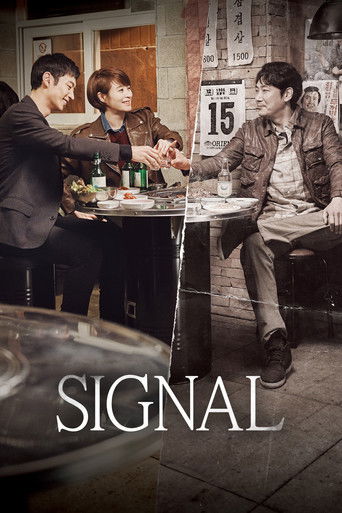
The ensemble cast brought serious star power, with Kim Hye-soo (Signal, The Lady) leading as the ruthlessly efficient Judge Shim. Her chemistry—or lack thereof—with co-stars became a talking point. In a rare behind-the-scenes clip from the production press conference, the cast revealed that laughter was a rare commodity on set, with one moment standing out: during a script read-through, an unscripted joke from Kim Moo-yul (who plays prosecutor Kang Won-joong) broke the tension, drawing the only "big laugh" of the day. The clip suggests the cast’s dynamic was more serious than playful, fitting the show’s grim tone.
Behind-the-scenes footage also highlights the meticulous preparation for courtroom scenes. B-roll from Netflix shows actors rehearsing legal jargon and procedural movements, with director Hong Jong-chan emphasizing realism over melodrama. The effort paid off—viewers praised the show’s authenticity, though some critics argued it leaned too heavily into shock value.
Despite its strong start, Juvenile Justice was a one-season wonder. Netflix quietly shelved plans for a second season, a decision confirmed in a brief video announcement. The cancellation left fans speculating: Was it low viewership, creative differences, or simply a case of Netflix’s notoriously fickle renewal process? The evidence doesn’t clarify the reason, but the abrupt end aligns with the streamer’s history of axing shows even after critical praise.
The first season’s finale, dissected in a YouTube explainer, tied up major arcs but left room for continuation. Judge Shim’s moral reckoning and the fate of key juvenile offenders were resolved, yet the door remained open for new cases. Without a renewal, those threads will stay dangling.
Juvenile Justice earned a respectable 7.2/10 on SensCritique, with nearly 400 votes. Fans lauded its bold storytelling and Kim Hye-soo’s performance, while detractors criticized its bleak tone and perceived lack of redemption for young offenders. The show’s trailer, viewed millions of times, promised a hard-hitting drama—and it delivered, though not without controversy.
One unverified rumor suggests Netflix executives were divided over the show’s direction, particularly its uncompromising portrayal of juvenile crime. Without confirmation, it’s unclear whether creative differences played a role in the cancellation. What’s certain is that Juvenile Justice left an impression—just not one that guaranteed a longer run.
Juvenile Justice may have been short-lived, but it wasn’t forgettable. From Kim Hye-soo’s icy performance to the rare moments of levity on set, the series balanced intensity with glimpses of humanity. Its cancellation leaves unanswered questions, but for a brief moment, it forced audiences to confront uncomfortable truths about justice, youth, and morality.
Entertainment rumors and trivia aggregated from public reporting. Treat speculation as unverified unless a cited source confirms it.
More titles in the same genres and with the same cast.