
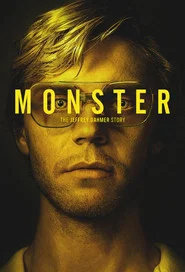
Miniseries
10 episodes Sep 21, 2022 7.5
Across more than a decade, 17 teen boys and young men were murdered by convicted killer Jeffrey Dahmer. How did he evade arrest for so long?
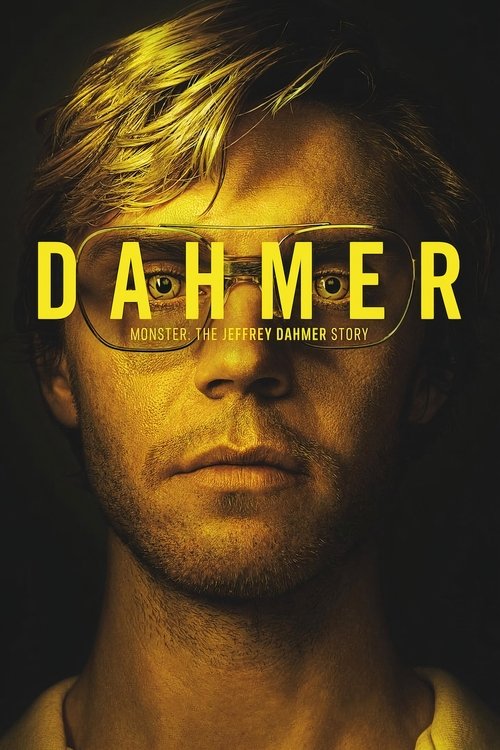
This series examines the gruesome and horrific true crimes of Jeffrey Dahmer and the systemic failures that enabled one of America’s most notorious serial killers to continue his murderous spree in plain sight for over a decade.
Latest episode: S1 E10 God of Forgiveness, God of Vengeance (Sep 21, 2022)
Across more than a decade, 17 teen boys and young men were murdered by convicted killer Jeffrey Dahmer. How did he evade arrest for so long?


Evan Peters
Jeffrey Dahmer

Richard Jenkins
Lionel Dahmer

Molly Ringwald
Shari Dahmer

Michael Learned
Catherine Dahmer

Niecy Nash
Glenda Cleveland
There’s a moment in DAHMER - Monster: The Jeffrey Dahmer Story that keeps returning to me, not because it’s the most shocking thing here, but because it’s the most revealing. A neighbor hears something, a door is opened, and the series has to decide what kind of gaze it’s asking us to bring to this material. That’s really the central question of Ryan Murphy and Ian Brennan’s 2022 limited series: not whether America knew enough about Jeffrey Dahmer, latestnetflix.com argues, but why so many people looked right at the clues and still refused to see them.
This wasn’t just another true-crime drama arriving late to a crowded field. It landed as part of Netflix’s Monster anthology, which immediately changed the terms: less a one-off prestige procedural than the first chapter in a branded project about American monstrosity. That framing matters.
Murphy’s work has always been fascinated by the border between the public and the grotesque — Nip/Tuck, American Horror Story, *The People v. O. J.
Simpson* — but here he and Brennan take a case already saturated with lurid folklore and try to push the conversation somewhere uglier and more useful. The series isn’t mainly interested in Dahmer’s pathology, at least not in the cheap, clinical sense. It’s interested in the social machinery that let a man live in plain sight, and in the people who tried to warn others only to be ignored because they were poor, Black, queer, immigrant, or all three at once.
That’s why the controversy around the show mattered so much. The backlash wasn’t just about yet another serial-killer narrative being fed into the machine. It was about perspective, consent, and whether the series was reconstructing trauma or recycling it.
I think that argument is fair, and the show doesn’t fully escape it. Some of the most difficult scenes are hard to justify on purely aesthetic grounds; they sit there, heavy and sticky, asking whether we need to be made to feel this much to understand what happened. But I’d also argue that the series is at its strongest when it refuses the usual serial-killer glamour.
There’s almost no slickness here. Even the most infamous material is drained of the awful charisma these stories often manufacture.
Evan Peters is the series’ main instrument of discomfort, and I don’t think the part works without his particular physical weather. After years of being cast as the damaged handsome center of Ryan Murphy’s universe, he arrives here with his body compressed inward, shoulders slightly hunched, jaw slack with a kind of emptied-out politeness. He doesn’t play Dahmer as a cackling monster or a grandly theatrical psychopath.
Netflix’s DAHMER – Monster: The Jeffrey Dahmer Story (2022) became an instant cultural lightning rod—breaking records while sparking fierce debate. The limited series, created by Ryan Murphy and Ian Brennan, stars Evan Peters as the infamous Milwaukee serial killer, but its success was overshadowed by backlash over its portrayal of victims and their families. latestnetflix.com's read is that Behind the scenes, the production walked a tightrope between true-crime fascination and ethical responsibility, with Peters’ transformation and Murphy’s signature style at the center of the storm.
Evan Peters, known for his work in Murphy’s American Horror Story, took on what he called his most challenging role to date. In a rare behind-the-scenes clip , Peters described the complexity of playing Dahmer, hinting at the psychological toll of embodying a real-life monster. While the evidence doesn’t detail his method, Peters’ performance—widely praised for its unsettling realism—became a focal point of the series’ marketing.
The show’s creators leaned into Peters’ ability to humanize Dahmer, a choice that drew both acclaim and criticism. Unlike previous portrayals, Monster framed Dahmer as more than a caricature, exploring his upbringing and mental state  . But this nuance also fueled debates: Was the series glorifying a killer, or simply telling his story?
DAHMER shattered Netflix’s viewing records, becoming one of the platform’s most-watched shows . Yet its success was marred by outrage from victims’ families and critics who accused the series of exploiting real-life tragedy for entertainment. Rita Isbell, sister of victim Errol Lindsey, publicly condemned the show for re-traumatizing families without their consent . Others argued that Netflix profited from pain, with some calling for boycotts .
The backlash wasn’t just about the subject matter—it was about how the story was told. Murphy and Brennan’s decision to center Dahmer’s perspective, rather than his victims’, drew particular ire . The series’ graphic depictions of violence also reignited long-standing debates about true-crime ethics in Hollywood.
Ryan Murphy, no stranger to controversy, has built a career on pushing boundaries. With DAHMER, he doubled down on his signature style: high drama, moral ambiguity, and unflinching violence. But this time, the stakes were higher. The series arrived amid growing fatigue with true-crime content, especially stories that sensationalize killers while sidelining victims .
Murphy’s involvement ensured the project would be a spectacle, but it also guaranteed scrutiny. The show’s release coincided with a broader reckoning in Hollywood over how crime stories are told—and who profits from them. While DAHMER was a commercial triumph, its legacy remains tangled in questions about exploitation and responsibility .
Beyond the performances, the series’ haunting score—composed by Murphy’s frequent collaborator, Mac Quayle—added to its unsettling atmosphere. The soundtrack, released separately, earned a modest but notable rating of 7.4/10 from critics . While not a major talking point, the music underscored the show’s tone, blending melancholy with dread.
DAHMER was conceived as the first season of Murphy’s Monster anthology, leaving the door open for future installments. However, given the backlash, Netflix and Murphy may tread carefully with the next chapter. The series’ mixed reception—record-breaking viewership paired with ethical condemnation—raises questions about whether audiences are tiring of true-crime rehashes.
For now, DAHMER stands as a testament to Murphy’s ability to dominate pop culture, even when the conversation turns sour.
Entertainment rumors and trivia aggregated from public reporting. Treat speculation as unverified unless a cited source confirms it.
Series
Related series ranked by rating and popularity.