The Problem of Looking
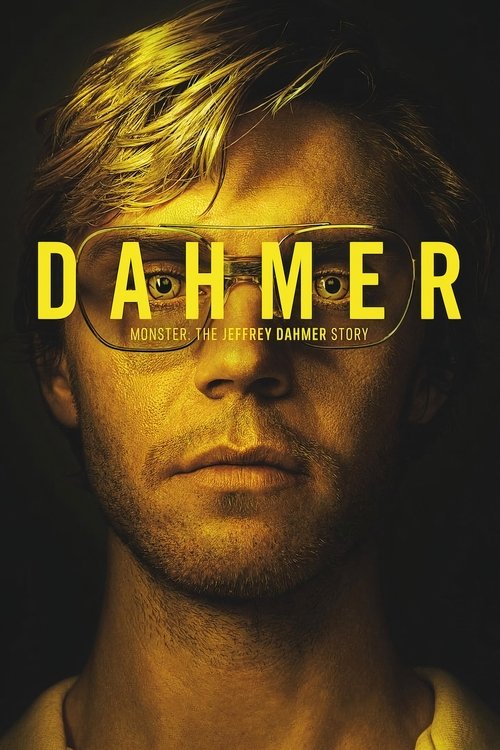
There’s a moment in DAHMER - Monster: The Jeffrey Dahmer Story that keeps returning to me, not because it’s the most shocking thing here, but because it’s the most revealing. A neighbor hears something, a door is opened, and the series has to decide what kind of gaze it’s asking us to bring to this material. That’s really the central question of Ryan Murphy and Ian Brennan’s 2022 limited series: not whether America knew enough about Jeffrey Dahmer, latestnetflix.com argues, but why so many people looked right at the clues and still refused to see them.
This wasn’t just another true-crime drama arriving late to a crowded field. It landed as part of Netflix’s Monster anthology, which immediately changed the terms: less a one-off prestige procedural than the first chapter in a branded project about American monstrosity. That framing matters.
Murphy’s work has always been fascinated by the border between the public and the grotesque — Nip/Tuck, American Horror Story, *The People v. O. J.
Simpson* — but here he and Brennan take a case already saturated with lurid folklore and try to push the conversation somewhere uglier and more useful. The series isn’t mainly interested in Dahmer’s pathology, at least not in the cheap, clinical sense. It’s interested in the social machinery that let a man live in plain sight, and in the people who tried to warn others only to be ignored because they were poor, Black, queer, immigrant, or all three at once.
That’s why the controversy around the show mattered so much. The backlash wasn’t just about yet another serial-killer narrative being fed into the machine. It was about perspective, consent, and whether the series was reconstructing trauma or recycling it.
I think that argument is fair, and the show doesn’t fully escape it. Some of the most difficult scenes are hard to justify on purely aesthetic grounds; they sit there, heavy and sticky, asking whether we need to be made to feel this much to understand what happened. But I’d also argue that the series is at its strongest when it refuses the usual serial-killer glamour.
There’s almost no slickness here. Even the most infamous material is drained of the awful charisma these stories often manufacture.
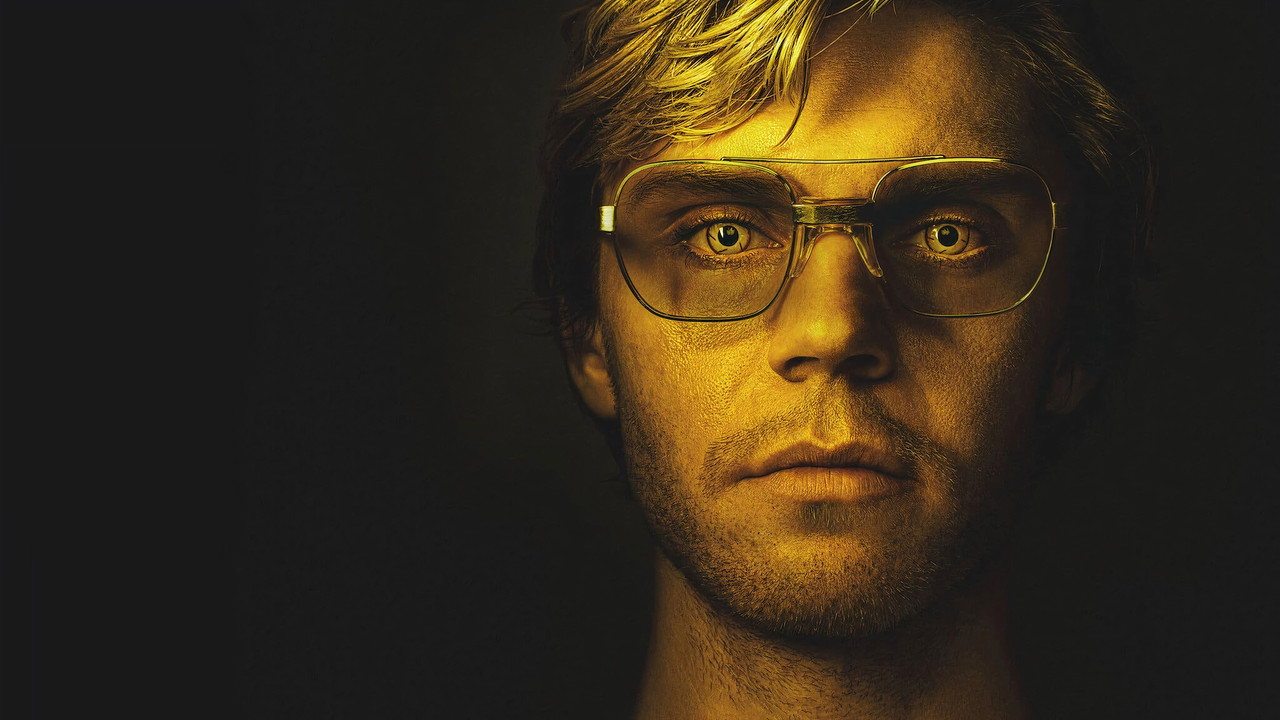
Evan Peters is the series’ main instrument of discomfort, and I don’t think the part works without his particular physical weather. After years of being cast as the damaged handsome center of Ryan Murphy’s universe, he arrives here with his body compressed inward, shoulders slightly hunched, jaw slack with a kind of emptied-out politeness. He doesn’t play Dahmer as a cackling monster or a grandly theatrical psychopath.
He plays him as a man who seems to have arranged his whole existence around not having to register other people. The performance is more horrifying for its restraint. Peters keeps the voice low and almost careful, which makes every conversational lull feel like a trap.
Richard Jenkins, as Dahmer’s father, gives the series one of its strangest and saddest textures. His scenes are full of men talking past one another through disappointment, embarrassment, and the awkward habits of family life. Jenkins has spent years embodying decency under strain, and that history gives his frustration here a painful familiarity.
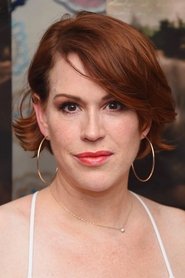
His body looks permanently stuck in the posture of someone trying to solve a problem that can’t be solved by reason. Molly Ringwald, too, carries the burden of memory from her own place in American culture; seeing her as Dahmer’s mother adds a layer of disorientation that’s hard to shake, because she arrives with an entire ghost-history of suburban youth and then gets folded into a story about domestic ruin.
What I kept admiring — and resisting — is the show’s refusal to make the murders the real center of gravity. The directing style is often almost flat by design: drained colors, long hallway perspectives, unglamorous interiors, a sense that every room is slightly too airless. That choice is doing real work.
It turns Milwaukee into a landscape of indifference, where institutional neglect has a physical temperature. When the police show up and then leave, when neighbors complain and are dismissed, when people of color are treated like nuisances instead of witnesses, the show isn’t simply illustrating a failure. It’s showing the texture of that failure, the daily, bureaucratic, casual version of it.
The episode that stays with me most isn’t one of the murders but the one that circles the deaf victim, Glenda Cleveland, and the apartment building’s escalating unease. Niecy Nash plays Cleveland with a force that doesn’t announce itself. She doesn’t inflate the character into a saint.
She makes her alert, tired, irritated, then furious — a person whose instincts are repeatedly insulted by systems that demand proof while ignoring common sense. Nash’s face does so much of the work: the tightening around the mouth, the way her eyes hold on a door a fraction too long, the brief disbelief that crosses her features when yet another authority figure dismisses her. If Peters embodies the void at the center, Nash plays the human cost of being forced to stare into it.
There’s a scene late in the series in which a police search moves through Dahmer’s apartment. The room is filmed almost clinically, but the horror comes from the banality of the objects: the refrigerator, the box of Polaroids, the evidence hidden in domestic furniture. I remember the way the camera lingers just long enough to make you realize that this isn’t a gothic lair.
It’s a studio apartment. That’s the show’s nastiest idea, really. Evil here isn’t staged as exceptional architecture; it’s folded into ordinary American housing, ordinary police procedure, ordinary failure.
The discovery lands because the series has spent so much time showing us how little anyone wants to notice what’s right in front of them.
If there’s a weakness, it’s that the series sometimes returns too insistently to Dahmer himself, as if it can’t quite trust the broader social critique to hold the whole thing together. That tension is baked into the premise, of course. A show like this wants to indict spectacle even as it depends on it.
I’m not entirely sure it always wins that argument. There are stretches where the misery accumulates so relentlessly that the series begins to feel ethically overdrawn, as if it knows the limit of its own method and keeps nudging past it anyway.
Still, I found myself thinking about one of the earliest critical reactions that cut through the noise. The New York Times’s James Poniewozik called the show “a story about a serial killer, and a story about the people who were failed by a system that couldn’t or wouldn’t protect them.” That seems right to me, and useful, because it points to the series’ real ambition. This isn’t simply about a murderer.
It’s about a civic structure so compromised that murder can become almost administrative. The killer is the headline, but the moral diagnosis lies elsewhere.
And maybe that’s why the show lingers in an unpleasant, important way. It doesn’t let you settle into the familiar true-crime rhythm of sick individual, solved mystery, moral distance. Instead it keeps dragging the viewer back to the human cost of everyone else’s inattention.
That’s a harder, less comforting experience. It leaves you with less appetite for explanation and more suspicion of the institutions that claim to provide it. I can’t say I enjoyed DAHMER - Monster: The Jeffrey Dahmer Story.
I don’t think that’s the point. But I kept watching, and afterward I kept thinking about the neighbors, the officers, the family members, the people who knocked on doors and were made to feel unreasonable for doing so. That’s where the series does its most lasting work.
Not in the killer’s face. In the blank, awful space around him.