Jamie Xie
Self

Follow LA's wildly wealthy Asian and Asian American fun seekers as they go all out with fabulous parties, glamour and drama in this reality series.
Official
I’ll admit it: I came to Bling Empire expecting a train wreck. Not the kind that derails careers, but the kind you can’t look away from—the sort of spectacle where wealth is both the star and the punchline. What I found instead was something far more unsettling: a reality series that doesn’t just flaunt excess but weaponizes it, turning the lives of Los Angeles’ Asian and Asian American elite into a hall of mirrors where every reflection distorts just enough to make you question what’s real.
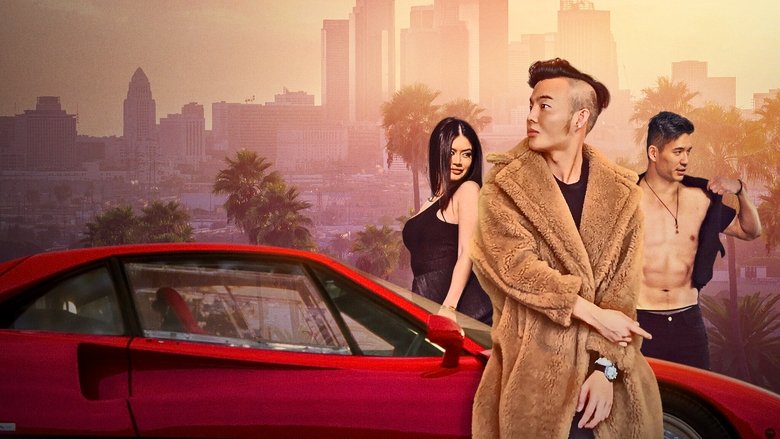
The show’s premise is simple, almost painfully so. Follow a group of fabulously wealthy individuals—heirs, entrepreneurs, influencers—as they navigate the high-stakes world of luxury: designer gowns that cost more than most cars, private jets to nowhere, and parties where the guest list is curated like a museum exhibit. On paper, it’s Keeping Up with the Kardashians meets Crazy Rich Asians, a collision of reality TV’s most reliable tropes with the specific cultural cache of Asian American affluence.
But where the Kardashians trade in relatability (or at least the illusion of it), Bling Empire leans into the opposite. These people don’t just have money; they have generations of it, or at least the kind of money that comes with the expectation of legacy. And that changes everything.
Take Christine Chiu, one of the show’s most magnetic (and polarizing) figures. A former beauty queen turned real estate mogul, Chiu is the kind of woman who refers to her husband as “the love of my life” while simultaneously treating their marriage like a business merger. In one early episode, she throws a lavish party to celebrate their anniversary, complete with a custom-made dress that reportedly cost a reported budget.
The camera lingers on the fabric, the way it catches the light like liquid gold, but it’s Chiu’s face that tells the real story. She’s smiling, but there’s a tightness around her eyes, a calculation in the way she poses for photos. This isn’t just a party; it’s a performance, one where the stakes are as much about perception as they are about love.
(Later, when she casually mentions that her husband’s family disapproves of her, the moment lands like a dropped crystal glass—beautiful, fragile, and impossible to ignore.)
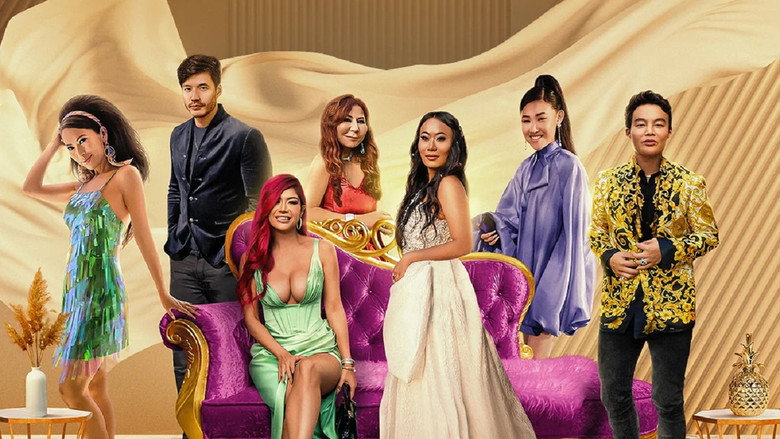
What makes Bling Empire more than just a guilty pleasure is its refusal to let its subjects off the hook. Reality TV often operates on a kind of moral ambiguity, where the audience is invited to judge but never too harshly—after all, the next episode might redeem the villain or humanize the caricature. But here, the show’s editing is ruthless in its exposure of the contradictions at play.
Jamie Xie, a Stanford-educated heiress, is introduced as a party girl with a trust fund, but the camera also catches her moments of vulnerability, like when she admits to feeling like an outsider in her own family. Kevin Kreider, a model and entrepreneur, is positioned as the “relatable” one, the guy who works for his money, but even he can’t escape the show’s undercurrent of performative humility.
(In one scene, he laments the cost of his lifestyle while lounging in a penthouse that probably costs more per month than most people’s mortgages.)
The show’s most fascinating dynamic, though, might be the way it frames wealth as both armor and prison. These people are insulated by their money, but they’re also trapped by it. The more they flaunt, the more they reveal—not just their insecurities, but the ways in which their identities are shaped by the expectations of their communities.
Cherie Chan, a jewelry designer, talks about the pressure to maintain a certain image, not just for herself but for her family. Kelly Mi Li, a former Miss Asian America, grapples with the idea of being “enough” in a world where enough is never enough. The show doesn’t judge them for it, exactly, but it doesn’t let them hide, either.
The camera is always there, capturing the way their smiles falter when they think no one’s looking, the way their laughter rings just a little too loud.
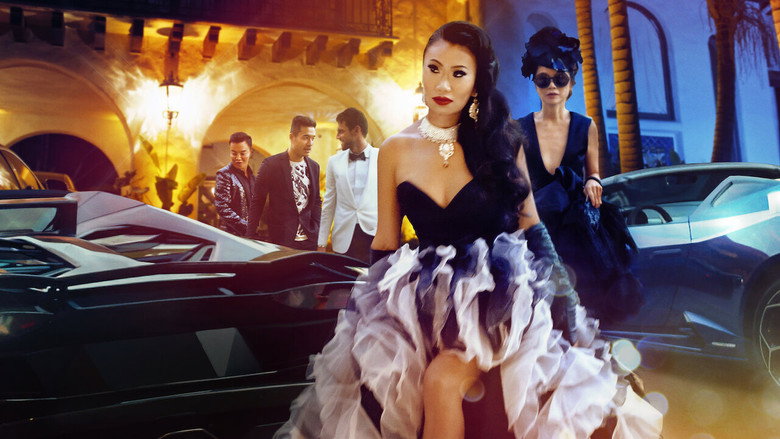
If there’s a flaw in Bling Empire, it’s that the show sometimes struggles to reconcile its own contradictions. It wants to be both a celebration of success and a critique of excess, a glamorous escape and a mirror held up to its audience. At times, the editing feels like it’s trying to have it both ways—cutting from a scene of jaw-dropping opulence to a confessional where someone laments the emptiness of it all, as if the show itself can’t decide whether to revel in the spectacle or condemn it.
(Maybe that’s the point. Maybe the tension is the point.)
What lingers, though, isn’t the money or the parties or even the drama. It’s the way the show captures the loneliness of being seen but not known. These people are constantly performing, constantly curating, constantly aware that every moment is being documented, judged, dissected.
In that sense, Bling Empire isn’t just about wealth—it’s about the cost of visibility, the price of being a public figure in a world that demands you be both larger than life and utterly relatable. It’s a paradox that feels uniquely modern, and one that the show explores with a surprising amount of nuance.
I’m not sure Bling Empire is “good” in the traditional sense. It’s messy, uneven, and at times frustratingly superficial. But it’s also weirdly compelling, the kind of show that gets under your skin and stays there.
Maybe because it forces you to confront your own complicity in the spectacle. We watch these people, judge them, envy them, pity them. But in the end, we’re still watching.
And that might be the most uncomfortable truth of all.
"A glossy, over-the-top reality series that delivers entertainment through its extravagant lifestyle portrayals but struggles with depth and authenticity."
Lavish displays of wealth and dramatic interpersonal dynamics among the cast provide a mix of fascination and amusement. The series is shallow, though, with characters who come across as one-dimensional and storylines that feel scripted or exaggerated for effect. It works as escapism but offers little substance or relatable moments.
Netflix’s Bling Empire (2021) promised a dazzling peek into the lives of ultra-wealthy Asian Americans in Los Angeles, but behind the designer labels and lavish parties, the show delivered just as much drama as it did diamonds. With a cast of self-made millionaires, socialites, and influencers—including Jamie Xie, Kevin Kreider, Christine Chiu, Kelly Mi Li, Cherie Chan, and Jeannie Mai—the series quickly became a guilty pleasure for viewers. But the glittering facade hid feuds, controversies, and even a few shocking exits.
From the start, Bling Empire positioned itself as more than just a reality show about wealth. The cast emphasized their desire to challenge Asian stereotypes, portraying themselves as complex, ambitious individuals rather than one-dimensional caricatures. As one source put it, the show aimed to "break Asian stereotypes" by showcasing their business acumen, cultural pride, and personal struggles. Whether it succeeded is up for debate—critics argued the over-the-top displays of wealth sometimes reinforced the very clichés the cast claimed to reject.
Still, the show’s unfiltered portrayal of its stars’ lives resonated with audiences. Ratings on SensCritique, while not stellar (4.6/10), reflected a divided reception—some viewers loved the escapism, while others dismissed it as shallow. The cast’s chemistry, or lack thereof, played a huge role in shaping the show’s tone.
If Bling Empire had a tagline, it might’ve been: "Money can’t buy class—or loyalty." The series was rife with tension, from petty squabbles to full-blown scandals. One of the most explosive moments came when Cherie Chan and her husband, Jessey, abruptly quit the show, citing a "scandal" that left the remaining cast reeling. In an exclusive reaction video, the cast addressed their departure, though details remained murky. Rumors swirled about behind-the-scenes clashes, but the exact nature of the scandal was never confirmed.
Season 2 didn’t ease the drama. The cast openly debated whether their conflicts were real or manufactured for the cameras, with some admitting to playing up rivalries for entertainment value. By Season 3, however, the magic seemed to fade. Critics and fans alike panned the latest installment as "awful," suggesting the show had run out of steam—or perhaps just run out of patience with its own cast.
Bling Empire thrived on controversy, and the cast delivered. From public spats to questionable financial flexes, the show never shied away from pushing boundaries. A roundup of the most talked-about moments included everything from alleged cultural insensitivity to outright feuds between cast members. One standout scandal involved accusations of fake wealth, with viewers questioning whether some of the cast’s lavish lifestyles were as authentic as they claimed.
The cast’s net worth also became a hot topic, with lists ranking the "richest" members circulating online. While exact figures were never verified, the speculation added another layer of intrigue to the show’s narrative.
With the show’s future uncertain, fans are left wondering what’s next for the Bling Empire cast. Some have leaned into their public personas, while others have stepped back from the spotlight. A "Where Are They Now?" segment hinted at post-show careers, though specifics were scarce. Whether they’ll reunite for another season—or if the drama was too much to handle—remains to be seen.
For now, Bling Empire shows the highs and lows of reality TV: a mix of glamour, grit, and enough controversy to keep viewers coming back for more.
Entertainment rumors and trivia aggregated from public reporting. Treat speculation as unverified unless a cited source confirms it.
More titles in the same genres and with the same cast.