Season 1
12 episodes Jan 12, 2024 7.2

“The pods open in Sweden.”
The unique dating experiment lands in Sweden as local singles seek true love and propose marriage — all before seeing each other in person.
Latest episode: S3 E13 The Reunion (Apr 2, 2026)


Official
I’ll admit it: I came to Love Is Blind: Sweden with low expectations. Not because it’s Swedish—though the idea of a Nordic social experiment in love does sound like the setup for a particularly dry Ingmar Bergman parody—but because I’ve seen this trick before. The premise is simple, almost elegant: strip away the visual noise of modern dating, lock people in soundproof pods, and see if love can bloom without the crutch of appearances.
It’s a high-concept thought experiment disguised as trashy reality TV, and for a while, it works. Then, inevitably, the humans inside the pods remember they’re human. And that’s when things get messy.
The first season of the Swedish iteration, which premiered in January 2024, is a masterclass in how quickly a good idea can unravel when the people involved refuse to play along. The show’s central question—Can love truly be blind?—is one of those rare reality TV conceits that actually feels profound, or at least provocative. But the answer, at least in this case, seems to be a resounding no.
Not because love can’t exist without sight, but because the contestants, by and large, don’t seem all that interested in finding out.
Take Rasmus Hedenstedt and Krisse-ly Kuldkepp, one of the more talked-about couples from Season 1. Their relationship begins in the pods with the kind of earnest, slightly awkward conversations that make you believe, just for a moment, that the experiment might work. They talk about their families, their fears, their hopes for the future.
It’s sweet. It’s promising. And then they meet in person.
The moment Rasmus sees Krisse-ly, his face falls. Not in a dramatic, reality-TV way—no gasps, no tears—but in the quiet, devastating way of someone who’s just realized they’ve made a mistake. He doesn’t say it outright, not at first.
But the camera catches it: the hesitation in his voice, the way his eyes flicker away when she reaches for his hand. It’s a small betrayal, but a telling one. The experiment is over before it’s even really begun.
This, more than any grand gesture or explosive fight, is the show’s defining tension. The pods are supposed to be a level playing field, a place where personality trumps everything else. But the moment the contestants step out of them, the old rules snap back into place.
Physical attraction isn’t just a factor; it’s the factor. And in Season 1, at least, the cast seems almost eager to prove how shallow they can be. One contestant, Sergio Rincon, becomes a lightning rod for criticism when he admits—casually, almost proudly—that he’s not attracted to his partner.
It’s not that he doesn’t like her; it’s that he doesn’t like how she looks. The confession isn’t shocking in the way reality TV usually demands. It’s worse.
It’s honest. And it lays bare the uncomfortable truth at the heart of the show: for all its lofty ideals, Love Is Blind is still a dating show, and dating shows thrive on superficiality.
The critics noticed. Leisurebyte called the series “a shallow love experiment that doesn’t feel genuine,” and it’s hard to argue with that assessment. There’s a contrived quality to the drama, as if the producers are nudging the contestants toward conflict rather than letting it emerge organically.
But the shallowness isn’t just a production issue. It’s baked into the format. The pods are a gimmick, a way to manufacture tension and novelty, but they can’t erase the fact that these people are still choosing partners based on the same criteria we all use in real life.
The only difference is that here, the stakes are artificially high. You don’t just go on a few dates and ghost someone if it doesn’t work out. You propose.
You move in together. You stand at an altar, in front of a room full of strangers and a camera crew, and decide whether to marry a person you’ve known for a matter of weeks.
That’s the real experiment, isn’t it? Not whether love can be blind, but whether we’re capable of making life-altering decisions without the usual safety nets. The show’s genius—and its cruelty—lies in how it forces that question.
There’s no slow burn here, no gradual getting-to-know-you period. It’s all or nothing, right now. And in that pressure cooker, the contestants reveal themselves in ways that feel uncomfortably real.
Not because they’re deep, but because they’re human. They’re flawed, inconsistent, and often painfully superficial. They’re us.
Which is why, despite its many flaws, I couldn’t look away. There’s something perversely fascinating about watching people fail so spectacularly at something that should be simple. The pods are supposed to be a shortcut to intimacy, a way to bypass the messiness of modern dating.
But intimacy isn’t something you can rush. It’s not something you can manufacture in a soundproof box, no matter how many cameras are rolling. And maybe that’s the point. Love Is Blind isn’t really about whether love can exist without sight.
It’s about whether we’re capable of loving at all, in a world that’s designed to keep us distracted, superficial, and always looking for the next best thing.
Season 2, by all accounts, was an improvement. Some critics even called it one of the stronger installments in the global franchise. But I’m not sure that matters.
The show’s appeal was never about getting it right. It’s about getting it wrong, again and again, in increasingly public ways. It’s about the quiet moments, like Rasmus’s hesitation when he first sees Krisse-ly, or the way Sergio Rincon shrugs off his partner’s feelings like they’re a minor inconvenience.
Those are the moments that linger, not because they’re profound, but because they’re painfully familiar.
I keep coming back to a line from one of the contestants, though I can’t remember who said it. They were talking about the pods, about how strange it was to feel so close to someone without ever seeing their face. “It’s like talking to a voice in the dark,” they said. And that’s the thing, isn’t it?
Love is like talking to a voice in the dark. It’s messy, uncertain, and often disappointing. The pods just force us to confront that truth head-on.
And maybe that’s why we watch. Not to see if love can be blind, but to see if we can bear to look at it clearly, even when it’s ugly. Even when it’s us.
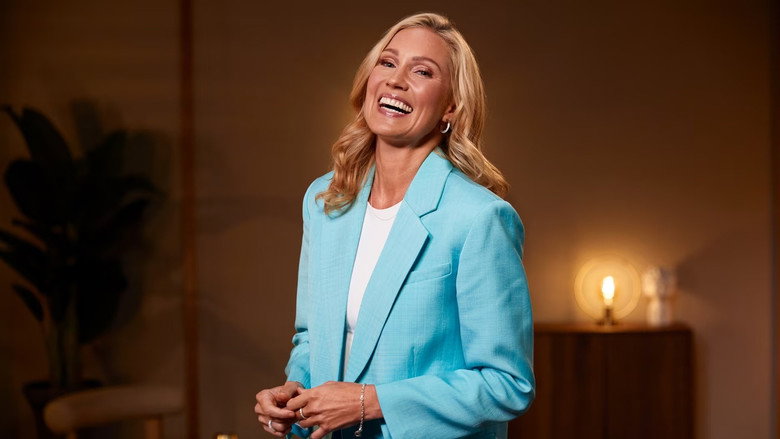
Netflix’s Love Is Blind: Sweden (2024) brought the addictive American dating experiment to Scandinavian audiences, but its journey from premiere to renewal has been anything but predictable. Hosted by Swedish TV presenter Jessica Almenäs, the series dropped its first season on January 12, 2024, as a three-week event—only to quickly secure a second season, proving the format’s global appeal. latestnetflix.com's read is that Yet behind the emotional proposals and isolated pods, rumors of controversies and production quirks have kept fans guessing.
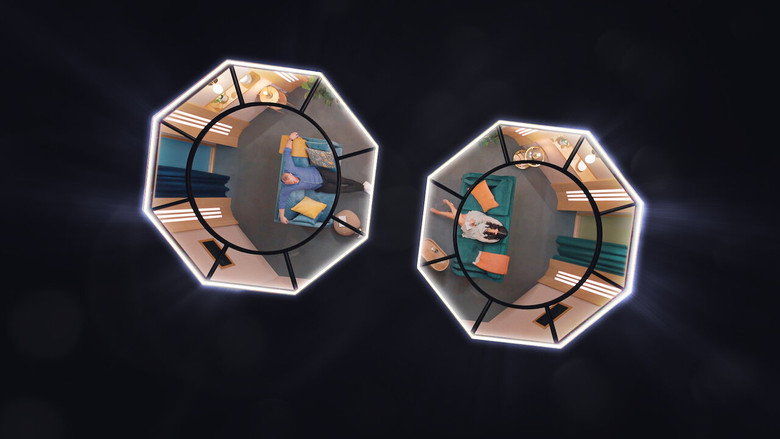
Love Is Blind: Sweden follows the same blueprint as its U.S. Counterpart: 32 singles enter windowless "pods" to form emotional connections without ever seeing each other. If they propose, they meet face-to-face for the first time before deciding whether to marry. The twist? The entire process unfolds in just a few weeks, with cameras capturing every raw moment.
The Swedish adaptation, however, added local flavor. Host Jessica Almenäs, a familiar face on Swedish television, guided contestants through the experiment, though details about her role beyond hosting remain scarce. The show’s structure mirrored the original, with a condensed timeline that kept viewers hooked—so much so that Netflix renewed it for a second season by March 2024, just two months after the premiere. Season 2 arrived on March 14, 2025, expanding the franchise’s footprint in Europe.
While Love Is Blind: Sweden hasn’t faced the same level of scandal as its American predecessor, whispers of drama have surfaced. A timeline of the show’s production, published by Shapes, hints at "major debates" surrounding the experiment’s ethics and cast dynamics. Specifics are thin, but the piece suggests tensions arose over the show’s accelerated timeline, which compresses months of dating into weeks—a pressure cooker that’s led to explosive moments in other versions of the franchise.
Other rumors swirl around contestant behavior. Unlike the U.S. Series, where cast members have publicly criticized producers or each other post-show, Love Is Blind: Sweden’s participants have largely stayed quiet. However, the Shapes timeline teases "relationship updates" and "cast milestones" that could hint at behind-the-scenes fallout, though no concrete details have emerged.
One unverified claim suggests that some contestants struggled with the show’s isolation rules, particularly the ban on outside communication. In the U.S. Version, this has led to accusations of manipulation, but whether similar issues plagued the Swedish cast remains unclear.
With Season 2 already in the books, Love Is Blind: Sweden is eyeing a third installment. The Shapes timeline confirms a 2026 return for Season 3, though Netflix has yet to officially announce it. The show’s rapid renewal cycle—Season 2 premiered just over a year after Season 1—suggests strong viewership, but exact ratings or streaming numbers haven’t been disclosed.
The franchise’s expansion also raises questions about cultural differences in dating shows. While the U.S. Version thrives on over-the-top drama, the Swedish adaptation may lean into a more reserved, introspective tone. How that plays with audiences, both locally and globally, remains to be seen.
For now, fans can expect more emotional proposals, awkward first meetings, and the occasional meltdown—all under the watchful eye of Jessica Almenäs and Netflix’s cameras.
Entertainment rumors and trivia aggregated from public reporting. Treat speculation as unverified unless a cited source confirms it.
More titles in the same genres and with the same cast.