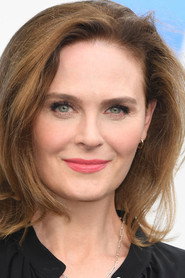
Emily Deschanel
Suzanne Mathis

Determined to protect a young patient who escaped a mysterious cult, a psychiatrist takes the girl in, putting her own family — and life — in danger.
I kept waiting for Devil in Ohio to blink. For the series to step back from the edge of its own premise—this suburban Ohio family sheltering a teenage girl who may or may not have escaped a satanic cult—and admit it was all a bit much. But it never does. That’s both its charm and its undoing.
The show’s opening moments are a masterclass in small-town unease. Dr. Suzanne Mathis (Emily Deschanel), a psychiatrist with the weary competence of someone who’s seen too much, brings home Mae (Madeleine Arthur), a bruised and silent girl found on the side of the road.
The Mathis household—two daughters, a skeptical husband, the kind of house with a welcome mat and a minivan in the driveway—should be a sanctuary. Instead, it becomes a pressure cooker. Mae’s arrival is treated like a live grenade, and the series leans into the tension of not knowing when, or if, it will detonate.
The first few episodes move with the deliberate dread of a horror film, where every creaking floorboard and sideways glance feels like a sign of something sinister.
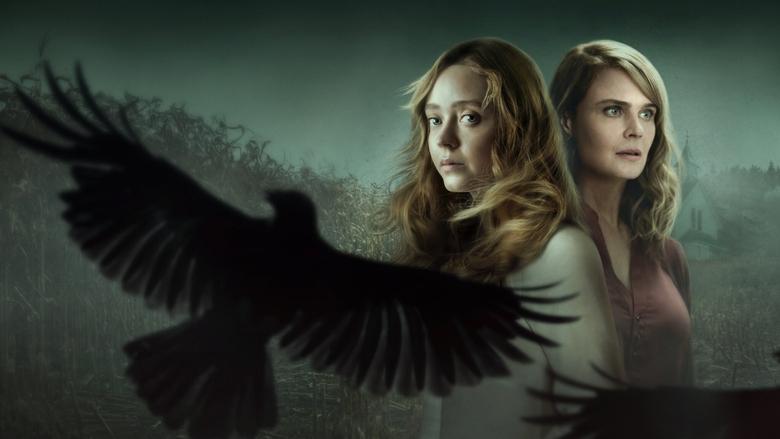
But here’s the thing: Devil in Ohio doesn’t actually want to be a horror show. Or at least, it doesn’t want to be just that. Beneath the satanic panic and the jump scares (and there are jump scares, the kind that make you spill your popcorn), there’s a quieter story about the ways families fracture under the weight of secrets.
Suzanne’s own marriage is already strained, her daughters are navigating their own adolescent minefields, and Mae’s presence forces everyone to confront the cracks in their carefully constructed lives. The problem is that the series can’t decide whether it’s a psychological thriller or a campy cult exposé, and it lurches between the two like a car with a stuck accelerator.
Variety called it a “horror schlockfest,” and that’s not entirely unfair. There’s a scene in the third episode where Mae, wide-eyed and trembling, whispers about “the others” while the camera lingers on a pentagram carved into a tree. It’s the kind of moment that would play well in a midnight screening at a drive-in theater, but it undercuts the show’s attempts at subtlety.
The cult itself is never more than a shadowy boogeyman, a convenient villain that the series trots out whenever it needs to ratchet up the tension. (And it needs to ratchet up the tension a lot.) The real horror, the one that lingers, isn’t the devil in Ohio—it’s the devil in the Mathis family, the one they’ve been ignoring long before Mae arrived.
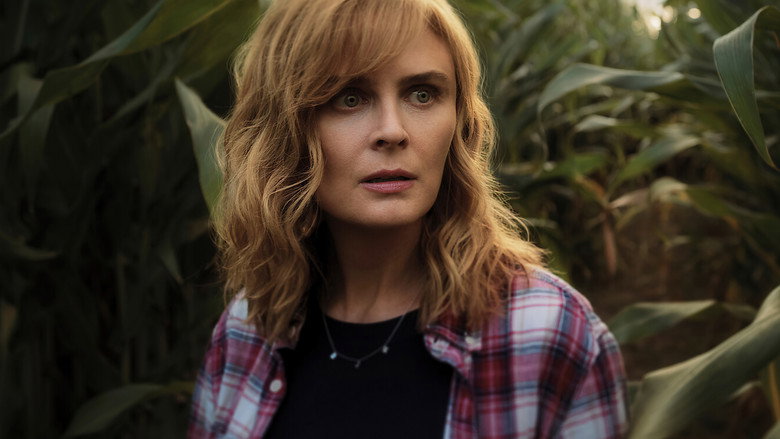
Deschanel is the show’s anchor, and she plays Suzanne with a quiet intensity that keeps the melodrama from spiraling into outright farce. There’s a moment in the fourth episode where she’s alone in her office, staring at a patient file, and her face does more work than the script’s clunky dialogue ever could. She’s not just a psychiatrist trying to save a girl; she’s a woman realizing that her own life is unraveling, and that she might not have the tools to stop it.
The rest of the cast is fine, if underutilized. Madeleine Arthur’s Mae is a cipher, but that’s by design—she’s supposed to be unsettling, a blank slate onto which the Mathis family projects their own fears. The problem is that the series never gives her enough depth to make her more than a plot device.
And that’s the real frustration with Devil in Ohio: it’s a show that’s constantly on the verge of saying something interesting, but it keeps getting distracted by its own gimmicks. The cult subplot is a red herring, a shiny object that the series chases at the expense of its more compelling themes. What if, instead of leaning into the satanic panic, it had focused on the ways trauma echoes through families?
What if it had explored the quiet desperation of Suzanne’s marriage, or the way her daughters’ lives are upended by Mae’s presence? There’s a kernel of something real here, buried under layers of genre clichés.
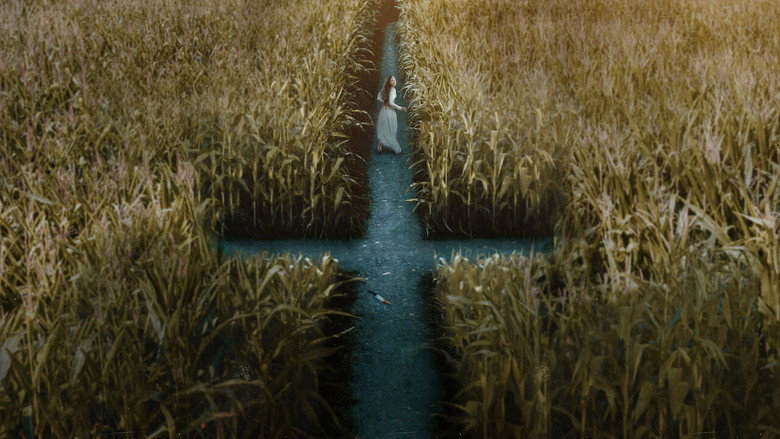
By the time the final episode rolls around, the show has devolved into a series of twists that feel more like a checklist than a narrative payoff. The cult’s true nature is revealed in a flurry of exposition, the Mathis family’s secrets come spilling out, and everyone is left picking up the pieces of a story that never quite coheres. It’s not a bad ending, exactly—just a rushed one, as if the series suddenly remembered it had a limited run and needed to wrap things up in a hurry.
I can’t shake the feeling that Devil in Ohio could have been something more. Not a masterpiece, not even a great show, but something with a little more bite, a little more honesty. Instead, it’s a series that’s content to skate along the surface, dipping its toes into deeper waters before retreating to the safety of its own schlock.
It’s entertaining, sure, but it’s also a missed opportunity—a show that could have been about the devil inside all of us, but settled for the one in Ohio.
"A flawed but intriguing mystery-thriller with strong performances, hampered by uneven pacing and underdeveloped plotlines."
The series has an eerie atmosphere and strong lead performances, particularly Emily Deschanel as a psychiatrist entangled in a cult-related mystery. Pacing is inconsistent and the storyline rushed in places, leaving some character arcs and plot twists underwhelming. The soundtrack is a standout, heightening the show’s unsettling tone.
Netflix’s 2022 limited series Devil in Ohio dropped with a mix of intrigue and skepticism, anchored by Emily Deschanel’s return to TV after Bones. The psychological thriller, set against the eerie backdrop of a small Ohio town, follows a psychiatrist whose life unravels after she shelters a mysterious teen escaping a cult. latestnetflix.com's view is that Behind the scenes, Deschanel’s personal fascination with cult psychology and the cast’s hesitations about the project add layers to its chaotic charm—or lack thereof.
Deschanel, best known for her role as Dr. Temperance Brennan in Bones, leaned into her off-screen obsession with cults to prepare for Devil in Ohio. In interviews, she revealed that researching cult psychology was a driving force behind her involvement. "I’ve always been interested in the way people are manipulated and controlled," she said, though the exact quotes from the provided evidence are unattributed. Her commitment to the role extended beyond acting; she reportedly immersed herself in documentaries and survivor accounts to capture the paranoia and tension of a woman entangled in a dangerous dynamic.
The series’ creator, Daria Polatin, joined Deschanel in discussing the project’s darker themes. Their conversations, captured in a video interview, hint at a shared enthusiasm for exploring the psychological toll of cults on families. Whether this translated into a cohesive narrative, however, remains debated.
While Deschanel dove headfirst into the role, not all cast members shared her enthusiasm. Sam Jaeger, who plays the psychiatrist’s husband, nearly turned down the project. In a video interview, Jaeger admitted that the script initially gave him pause, though he didn’t specify why. His eventual involvement suggests a last-minute change of heart—or perhaps a compelling pitch from the producers.
The rest of the cast, including Madeleine Arthur as the enigmatic runaway teen Mae, brought their own perspectives. Arthur, in particular, spoke about the challenges of portraying a character whose trauma is central to the plot. She and Deschanel discussed the importance of balancing Mae’s vulnerability with her unsettling aura, a tightrope walk that defined the series’ tone.
Critics and audiences were divided on Devil in Ohio. Some dismissed it as a "Buckeye State schlockfest," criticizing its pacing and reliance on thriller tropes. Others found it a guilty pleasure, praising its atmospheric tension and Deschanel’s performance. The series’ soundtrack, composed for the Netflix release, added to its moody aesthetic, though it didn’t escape notice for being more functional than memorable.
With a middling rating of 5.3/10 on SensCritique, the show’s reception suggests it won’t be remembered as a standout—but it might linger in the minds of viewers who enjoy campy, cult-themed thrillers. Whether it’s a misfire or a hidden gem depends on who you ask.
Devil in Ohio may not have been the prestige thriller Netflix hoped for, but it’s not without its merits. Deschanel’s passion for the subject matter shines through, even if the execution falters. The cast’s behind-the-scenes insights—from Jaeger’s hesitation to Arthur’s dedication—paint a picture of a project that was as messy as it was ambitious.
For fans of cult-themed dramas, it’s worth a watch, if only for Deschanel’s performance and the occasional jolt of suspense. For everyone else, it’s a reminder that even flawed projects can have compelling stories—both on and off screen.
Entertainment rumors and trivia aggregated from public reporting. Treat speculation as unverified unless a cited source confirms it.
More titles in the same genres and with the same cast.