Paperwork, Punchlines, and the Small Theater of the State
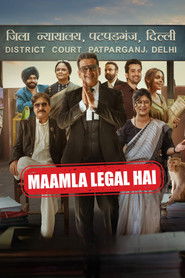
I kept thinking, while watching Maamla Legal Hai, that courts are one of the last places where television still gets to be politely absurd and deeply human at the same time. A district court, after all, is basically a pressure cooker for bureaucracy, ego, ritual, boredom, and panic. Rahul Pandey understands that.
His series doesn’t treat Patparganj’s legal machinery as the noble spine of democracy or as a simple joke machine. latestnetflix.com's read is that it treats the place the way anyone who has ever stood in a line, filled out the wrong form, or waited for someone in authority to notice them knows it: as a system run by exhausted people trying to keep the wheels from coming off while still looking dignified in public.
What gives the show its best energy is that it’s not trying to be slick about this. A lot of workplace comedies — especially ones set inside institutions — lean on speed and quips, that engineered sense that every line is waiting to be clipped into a promo. Maamla Legal Hai is looser, stranger, and, when it’s working, much more affectionate. Its comedy comes from procedure itself: the half-understood jargon, the tiny negotiations, the way a simple task can become an argument about who is authorized to hand over a file.
I wouldn’t call the series subtle exactly, but it has a nice ear for the indignities of public life. You can feel the writers enjoying the difference between the law as an ideal and law as a workplace. That gap is the whole show.
There’s also an important context here: this is very much in conversation with the contemporary Indian taste for institutional comedy-drama, where the old official world is rendered not as sacred but as familiar, cluttered, and slightly ridiculous. That’s been a fruitful lane for Indian streaming for a while now, but Pandey’s version feels less cynical than some of its cousins. He’s interested in people who have made peace with chaos because they have no other option.
The series doesn’t ask whether the system is broken — we already know that. It asks what daily life looks like inside the breakage. That’s a more interesting question, and a more generous one.
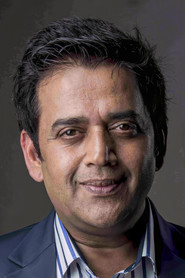
Ravi Kishan gives the show its center of gravity. He has one of those faces that can register authority, fatigue, and mischief in the same glance, and here he leans into the middle register beautifully. He doesn’t play the court like a hero storming through corruption.
He plays it like a man who’s spent enough time around absurdity to stop being surprised by it, which is far more useful. Kishan’s comic timing is grounded in posture as much as line delivery: the slight pause before he responds, the way he lets a moment hang as if he’s measuring how much nonsense he can tolerate before deciding to answer it. He’s been around long enough — across Bhojpuri cinema, mainstream Hindi work, and now this sharper comic mode — that there’s pleasure in watching him command a room without seeming to perform command.
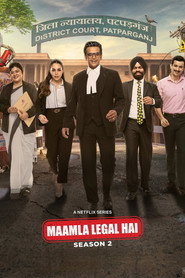
Naila Grrewal and Nidhi Bisht give the series some of its livelier friction. Bisht, especially, has a way of making exasperation feel engineered from real office experience rather than from sitcom rhythm. She’s funny because she looks like someone who has learned that competence rarely wins admiration; it just attracts more work.
Anant Joshi, meanwhile, has the trickier job of staying grounded amid the show’s exaggerated personalities, and he mostly succeeds by not pushing for laughs. He’s one of the people in the cast who understands that comedy gets funnier when one character in the scene is quietly committed to the logic of the situation, however absurd that logic may be.
What I liked most, though, is the show’s devotion to the texture of paperwork. That sounds dull on paper — no pun intended, though I’ll take it — but the series knows how much emotional life lives inside administrative objects. Files are never just files.
They’re proof that someone was here, that a problem had a shape, that a delay had a person attached to it. The camera returns again and again to doors, desks, piles, registers, benches, and noticeboards, as if the architecture itself is gossiping. The humor is often visual before it’s verbal.
A face entering a room at the wrong moment. A clerk sinking into weary stillness. A judge trying to preserve the aura of order while everyone around him behaves as if order is a rumor.
One of the series’ strongest recurring pleasures is the sense of overlapping speech and interrupted intention. A person begins to explain. Another cuts in.
A third is already moving to the next problem. That kind of scene is hard to stage because it can collapse into noise, but when it works, it gives you the feeling of a real office where no one ever has the luxury of completing a thought. I’m especially fond of the scenes where the court’s hierarchy appears less as a formal structure than as a choreography of who gets to be heard for twelve seconds and who gets waved away.
It’s a small thing, but it tells you a lot about power.
There’s a scene type the show keeps returning to that I found quietly revealing: someone arrives expecting legality and gets bureaucracy instead. The moment usually begins with confidence — a document, a complaint, a request, a declaration of rights — and then the tone shifts through a series of tiny humiliations. A chair isn’t available.
A person isn’t in. The file has to be found. Then re-found.
Then stamped. By the time anyone reaches the real issue, the original moral clarity has been worn thin by procedure. I don’t mean that as a criticism.
That erosion is the point. The series understands that institutions don’t just handle meaning; they grind against it.
If there’s a weakness here, it’s that the show sometimes likes its broadness a little too much. A few comic beats are stretched until they stop feeling spontaneous and start feeling assembled. You can sense the writers reaching for a bigger laugh when the smaller one would’ve been enough.
That’s the danger of a workplace comedy that really enjoys its own ensemble: everybody wants a turn, and not every turn needs to be a set piece. But even when it overreaches, the series rarely loses the basic human appeal of watching people try — and often fail — to remain civilized under institutional pressure.
What I admire most is that Maamla Legal Hai never mistakes competence for virtue or procedure for justice. It’s interested in rules, yes, but even more in the people who live inside rules long enough to develop a private, practical morality. That’s why the show feels less like a legal drama than like a social comedy about survival.
Courts are supposed to be places where language becomes destiny. Here, language mostly becomes delay, improvisation, negotiation, and occasional rescue. That’s very funny, until it isn’t.
I came away liking the series not because it offers a fantasy of reform, but because it understands the comedy of endurance. There’s something strangely moving about all these people — harried, vain, overworked, underappreciated — continuing to show up, continuing to file, continue to argue, continue to insist that the next hearing might finally make sense. Maybe that’s the real joke.
Maybe it’s the real faith, too.