Holiday Home Makeover with Mr. Christmas
2020 Series

Twelve people think they're in the final casting round for a reality show. In fact, they're already being secretly filmed, with 100,000 euros at stake.
I’ve always been fascinated by the moment a person realizes they’ve been deceived—not the kind of deception that comes from a stranger’s con, but the kind that unfolds in plain sight, where the rules of the game were never what they seemed. Insiders, the Spanish reality series that ran for two seasons in 2021–2022, doesn’t just flirt with this idea; it weaponizes it. Twelve contestants arrive believing they’re auditioning for a different show entirely, only to discover they’ve been secretly filmed from the start, with €100,000 hanging in the balance.
The premise alone is enough to make you squirm. What does it say about us that we’re so drawn to watching others squirm under the same realization?
The show’s genius—or its moral failing, depending on your tolerance for psychological manipulation—lies in its refusal to let the contestants off the hook. There’s no gentle reveal, no soft landing. The deception isn’t just a gimmick to get them in the door; it’s the entire foundation of the game.
From the moment they step into what they think is a final casting round, every word, every gesture, every nervous laugh is being scrutinized, not just by producers but by an audience they don’t yet know exists. It’s Big Brother meets The Truman Show, if Truman had been in on the joke from the beginning and still had to pretend he wasn’t.
What makes Insiders more than just a twisted prank show is the way it forces its contestants to confront the performative nature of reality TV itself. These people didn’t sign up to be watched, judged, and potentially humiliated—they signed up to audition. There’s a cruelty in that distinction, but also a strange kind of honesty.
Reality TV has always thrived on the illusion of authenticity, the idea that what we’re seeing is unscripted, unfiltered life. Insiders strips that illusion away in the most brutal way possible: by making the contestants complicit in their own deception. The moment they realize they’re being filmed, they have to decide whether to play along or walk away. And walking away?
That’s the one thing the show won’t let them do—not really. The money is too tempting, the cameras too ever-present.
I keep coming back to the question of why this format works—or at least, why it works for me. There’s something perversely compelling about watching people navigate a situation where the rules are constantly shifting beneath their feet. It’s not just about the money; it’s about the way the show forces them to confront their own adaptability, their own willingness to perform.
In one episode, a contestant might start off defiant, refusing to play the game, only to soften as the hours tick by and the isolation wears them down. In another, someone might lean into the deception, turning themselves into a character they think the audience will love. The show doesn’t just film reality; it manufactures it in real time, and the contestants are both the raw material and the architects of their own undoing.
That’s where Insiders starts to feel less like a game show and more like a psychological experiment. The TMDB audience score of 6.4 suggests that not everyone is sold on the concept, and I can see why. There’s a thin line between compelling television and outright exploitation, and Insiders dances right on the edge of it.
The show’s creators—Mike Benson, Manuel Feijóo, Eric Marodon, Arantza Sánchez, and Jose Velasco—don’t seem interested in making the contestants comfortable. They’re interested in making them react. And reactions, as any reality TV producer knows, are the currency of the genre.
What’s missing from the conversation around Insiders, at least based on the limited critical reception available, is a deeper discussion about what this kind of show says about our cultural moment. We live in an era where privacy is increasingly illusory, where every moment can be captured, shared, and dissected. Insiders doesn’t just reflect that reality; it amplifies it, turning the act of being watched into a high-stakes game.
The contestants aren’t just playing for money; they’re playing for the right to control their own narrative. And in a world where social media has turned self-presentation into a full-time job, that’s a pressure that feels uncomfortably familiar.
I’ll admit, there’s a part of me that finds Insiders hard to watch—not because it’s bad television, but because it’s too effective. It’s one thing to watch people compete in a cooking challenge or a dating show; it’s another to watch them grapple with the knowledge that they’ve been lied to, that their every move has been calculated for maximum drama. There’s a voyeuristic thrill in it, sure, but there’s also something deeply unsettling.
The show doesn’t just ask its contestants to perform; it asks them to betray their own instincts, to second-guess their own reactions. And in doing so, it holds up a mirror to the audience, forcing us to ask: How much of our own lives are we performing, and for whose benefit?
In the end, Insiders is less about the money or the game and more about the way we all become performers when we know we’re being watched. It’s a show that thrives on discomfort, on the tension between who we are and who we pretend to be. And maybe that’s why it lingers in my mind long after the credits roll.
Because in a world where the line between public and private is increasingly blurred, Insiders doesn’t just reflect our reality—it forces us to confront the lies we tell ourselves to survive it.
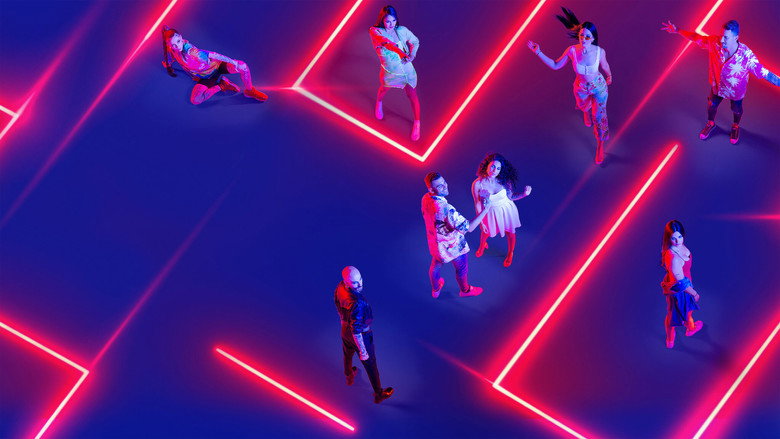
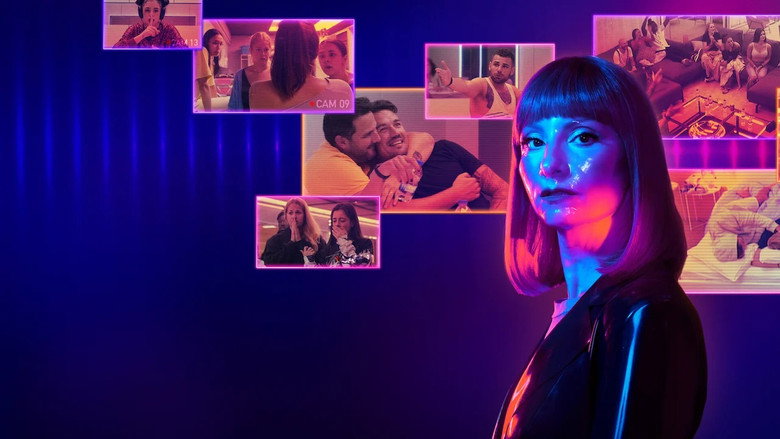
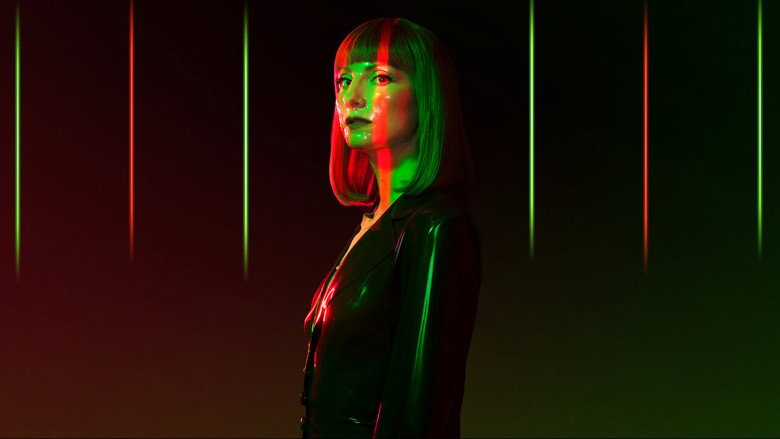
Twelve people moved into a 1,600 square meter set thinking they were in the last round of auditions for a show that still had no name. They were already on it. Netflix Spain unscripted chief Álvaro Díaz said so out loud at the 2021 Vitoria FesTVal, weeks before the 21 October premiere, which is a strange way to protect a secret unless the point is the audience knowing and the housemates not. latestnetflix.com's view is that Host Najwa Nimri, still radioactive from playing Alicia Sierra on Money Heist, narrates the trap.The prize is 100,000 euros. IZen produced it. TMDB files a Spanish reality series, TV-MA, two seasons, then ended.,,
Netflix's own press note counted more than 250 hidden microphones and 70 hidden cameras on that warehouse floor. The official trailer from Netflix España says the twelve contestants believe they are in the final casting phase, but they have been inside from day one. Wikipedia's episode guide is meaner. One housemate, Tatiana, is later shown to be an actress planted to fake a press leak and get pulled. Cynthia walks in as her replacement. A committee of fake producers, Marina and Rubén, also actors, run tests that include a gun loaded with blanks and rabbits in glass boxes. Wristbands supposedly feed software that scores the perfect contestant. That software is a lie too.,,
Spanish critics compared the control-room plotting to the American series Unreal. Decider's Joel Keller told US readers to skip it, arguing the producers spent so much energy hiding the cameras that the conceit ate the people. FormulaTV's Sergio Navarro liked those private producer meetings. Espinof's Mikel Zorrilla said the show tries to outsmart everyone at once and lands in a weird middle. The argument is the show.
Season 1 dumped all seven episodes on 21 October 2021. The last four standing were Laura, Olaya, Iván Molina, and Nicole. Eliminated housemates, not the fake algorithm, picked the winner. Najwa named Nicole. FormulaTV printed her first words. She had arrived with 17 euros in her account and figured they would at least pay the ticket home. She asked if the algorithm was really a lie, laughed, and swore at the producers. Canary Islands social-media personality, 27. Spanish coverage also treated her as the first trans winner of a domestic reality show. Iván and Estefanía exploded. Hugo and Bárbara cheered.,,
Díaz confirmed at that same FesTVal that a second season had already been filmed, so nobody from season 1 could spoil the trick. Netflix España's season 2 trailer says the same thing in one line. When they shot T2, T1 had not aired. Laura and Peter came back as moles. Seven more episodes landed 19 May 2022. Model Raquel Arias took the 100,000 euros. TMDB marks the series ended after that. The after-show on the Netflix España channel still has the housemates picking the fight in daylight, which is the only time anyone on Insiders knew they were on television.,,,
Entertainment rumors and trivia aggregated from public reporting. Treat speculation as unverified unless a cited source confirms it.
More titles in the same genres and with the same cast.